Cottage Cheese Calories: 1%, 2%, 4% and Nonfat
How many calories are in cottage cheese – per cup, half cup and 100 g, for 1%, 2%, 4% and nonfat – plus protein, sodium and what to check on the label.
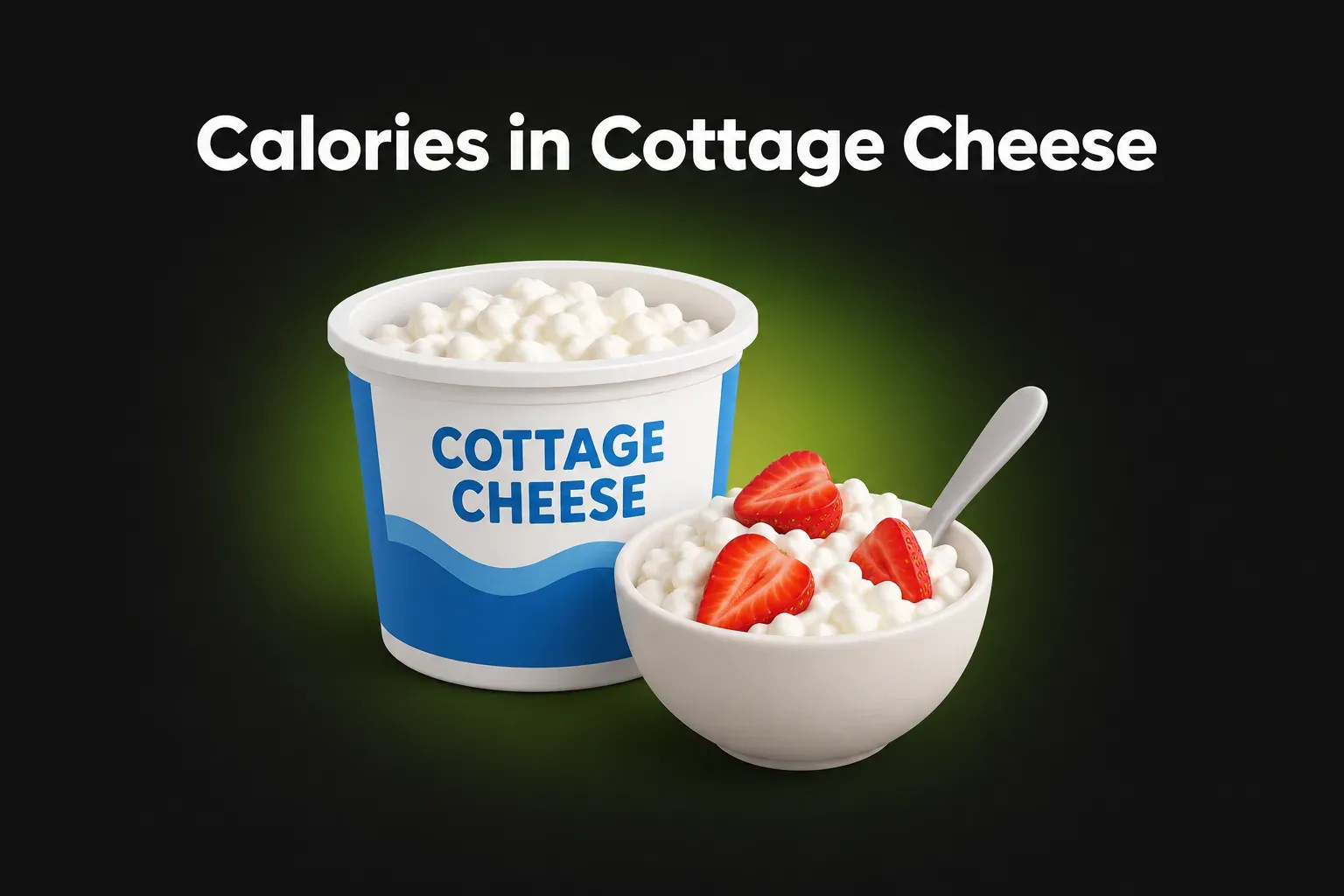
Cottage cheese is back in fashion. People eat it for breakfast, blend it into “whipped” cottage cheese and use it in high-protein recipes. It’s known as a diet food – but how many calories does cottage cheese have, and which type should you buy?
The short answer: half a cup (113 g) of 4% cottage cheese has about 110 calories and 12.5 g of protein. 1% cottage cheese has about 81 calories and 14 g of protein in the same amount. A full cup has 160–220 calories, depending on the fat. Cottage cheese is one of the best protein foods per calorie – but it’s also salty, and some brands add thickeners, preservatives or sugar.
Calories in cottage cheese by type
Values are from the US Department of Agriculture (USDA FoodData Central):
| Type | ½ cup (113 g) | 1 cup | Protein per ½ cup |
|---|---|---|---|
| 4% milkfat (regular) | 111 kcal | 220 kcal (225 g) | 12.5 g |
| 2% milkfat | 92 kcal | 183 kcal (226 g) | 11.8 g |
| 1% milkfat | 81 kcal | 163 kcal (226 g) | 14.0 g |
| Nonfat | 81 kcal | 104–160 kcal | 11.6 g |
Per 100 g, cottage cheese has 98 calories (4%), 81 calories (2%) and 72 calories (1% and nonfat).
Tip: the most common serving in a single-serve cup is 4–5.3 oz (113–150 g). Check the label – the calories per container can be higher than you think if you eat the whole tub.
Cottage cheese nutrition facts
| Nutrient | 4%, per 100 g | 1%, per 100 g |
|---|---|---|
| Calories | 98 kcal | 72 kcal |
| Protein | 11.1 g | 12.4 g |
| Fat | 4.3 g | 1.0 g |
| – of which saturated | 1.7 g | 0.6 g |
| Carbohydrates | 3.4 g | 2.7 g |
| – of which sugars | 2.7 g | 2.7 g |
| Calcium | 83 mg | 61 mg |
| Sodium | 315 mg | 406 mg |
Cottage cheese is mostly casein, a slow-digesting milk protein. It keeps you full for hours, which is why many people eat it before bed or as a snack. It has few carbs and little sugar. The weak spot is sodium: half a cup has 350–460 mg, about 15–20% of the daily limit.
Cottage cheese with toppings
| Food | Portion | Calories |
|---|---|---|
| 1% cottage cheese + ½ cup berries | ½ cup + ½ cup | about 120 kcal |
| 1% cottage cheese + 1 tbsp honey | ½ cup + 1 tbsp | about 145 kcal |
| 4% cottage cheese + pineapple chunks | ½ cup + ½ cup | about 150 kcal |
| Cottage cheese with fruit (ready-made cup) | 1 cup (150 g) | about 130–170 kcal |
| 4% cottage cheese + granola | ½ cup + ¼ cup | about 250–260 kcal |
| Cottage cheese on toast with tomato | 1 slice | about 170–200 kcal |
| Whipped cottage cheese (blended, plain) | ½ cup | about 80–110 kcal |
Ready-made fruit cups often have added sugar or syrup – sometimes 10–15 g per cup. Plain cottage cheese with your own fresh fruit is usually lighter and has less sugar.
What to check on the label
Cottage cheese is a packaged food, and brands differ a lot. Look at:
- Ingredients: the best ones have just milk, cream, salt and cultures. Some brands add thickeners like guar gum, xanthan gum or carrageenan, or preservatives like potassium sorbate.
- Sodium: compare brands – some have half the salt of others.
- Sugar: plain cottage cheese has about 3 g per 100 g from milk. More than that means added sugar or fruit preparation.
- Live cultures: some brands add probiotic cultures, which is a plus.
Is cottage cheese good for weight loss?
Yes. Half a cup of 1% cottage cheese gives you 14 g of protein for about 80 calories. Protein keeps you full and helps you keep muscle while you lose fat.
How to make it work:
- Choose 1% or 2% – they save calories without tasting much different from 4%.
- Buy plain and add fresh fruit, cinnamon or vegetables yourself.
- Use it in recipes instead of cream cheese, ricotta or sour cream.
- Measure the toppings: honey, granola and nuts add calories fast.
Remember that you lose weight only when you eat fewer calories than you burn. Read more about the calorie deficit and find your number with our calorie calculator. If you’re comparing cottage cheese with yogurt, see our guide to the healthiest yogurt.
Spot the best cottage cheese in the store in seconds. With NutriSmart, you scan the barcode or photograph the label, and the app shows you the additives, the risks of each one and a health score out of 100 – so you can compare two brands right on the shelf. At home, snap a photo of what you eat, and the app counts the calories and protein for you.Get the app free
You can also read about high protein foods, high protein snacks and the healthiest cheese.
The bottom line
Half a cup of cottage cheese has about 80–110 calories and 12–14 g of protein, depending on the fat. A cup has 160–220 calories. It’s one of the best protein foods for weight loss, but it’s salty. Choose plain 1% or 2% cottage cheese with a short ingredient list, add your own fruit and compare the sodium between brands.
FAQ
How many calories are in a cup of cottage cheese?
It depends on the fat: a cup of 4% (regular) cottage cheese has about 220 calories, 2% about 183, 1% about 163 and nonfat about 104–160, depending on the brand.
How many calories are in half a cup of cottage cheese?
About 110 calories for 4% cottage cheese, 92 for 2% and 81 for 1%. Half a cup (113 g) has 12–14 g of protein.
How many calories are in 100 g of cottage cheese?
About 98 calories for 4%, 81 for 2% and 72 for 1% or nonfat cottage cheese. Each has 10–12 g of protein per 100 g.
Is cottage cheese good for weight loss?
Yes. It's high in protein and low in calories, so it keeps you full. Half a cup of 1% cottage cheese has 14 g of protein for about 80 calories. Choose plain cottage cheese and add your own fruit.
How much protein is in cottage cheese?
About 25 g in a cup of 4% cottage cheese and 28 g in a cup of 1%. That's as much as in 4 eggs.
Is cottage cheese high in sodium?
Yes, quite. Half a cup has about 350–460 mg of sodium, which is 15–20% of the daily limit. Look for low-sodium or no-salt-added versions if you watch your salt.