Healthiest Cheese: 11 Cheeses Ranked by Protein, Salt and Fat
What is the healthiest cheese? 11 cheeses ranked by calories, protein, salt and fat, which ones to limit, and what to check on shredded and sliced cheese.
Cheese has a reputation as a “bad” fatty food – but it’s also one of the best sources of protein and calcium, and large studies don’t show that cheese lovers have more heart disease. The difference between cheeses is big, though: some are light and high in protein, others are very salty or processed. So what is the healthiest cheese?
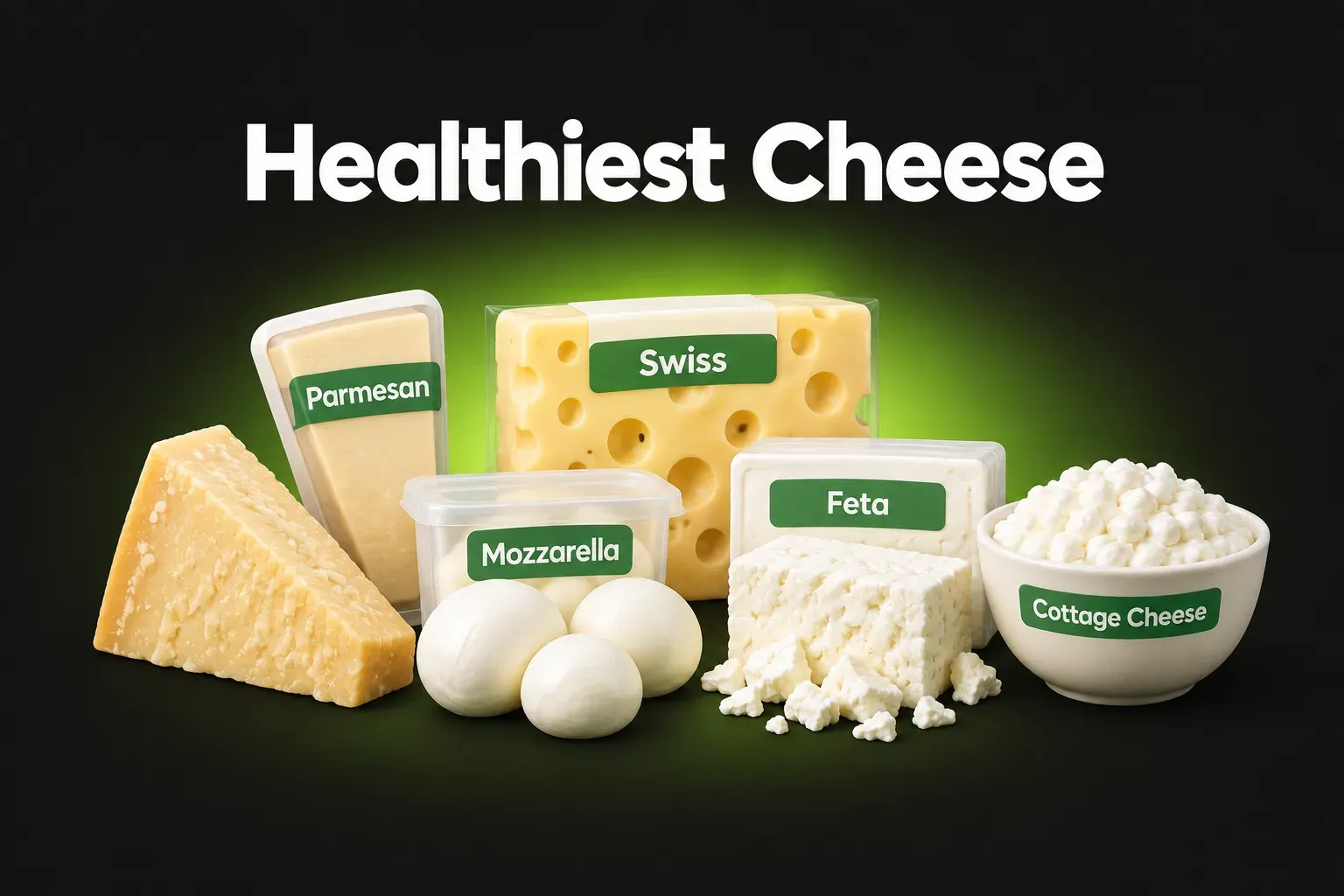
The short answer: cottage cheese, part-skim ricotta and part-skim mozzarella are the healthiest everyday cheeses – fewer calories and less saturated fat for the protein you get. Swiss is the lowest in salt, and parmesan has the most protein and calcium per bite. The cheeses to limit are processed American cheese, cheese spreads and very salty cheeses eaten in large amounts.
11 cheeses compared
| Cheese (1 oz / 28 g) | Calories | Protein | Sat. fat | Sodium | Calcium |
|---|---|---|---|---|---|
| Cottage cheese, 2% | 23 | 2.9 g | 0.3 g | 86 mg | 31 mg |
| Ricotta, part-skim | 39 | 3.2 g | 1.4 g | 28 mg | 76 mg |
| Mozzarella, part-skim | 71 | 6.8 g | 2.8 g | 173 mg | 219 mg |
| Feta | 74 | 4.0 g | 3.7 g | 319 mg | 138 mg |
| Goat cheese, soft | 74 | 5.2 g | 4.1 g | 129 mg | 39 mg |
| Brie | 94 | 5.8 g | 4.9 g | 176 mg | 52 mg |
| Blue cheese | 99 | 6.0 g | 5.2 g | 322 mg | 148 mg |
| American, processed | 102 | 5.1 g | 5.1 g | 468 mg | 291 mg |
| Swiss | 110 | 7.6 g | 5.1 g | 52 mg | 249 mg |
| Parmesan | 110 | 10.0 g | 4.1 g | 330 mg | 330 mg |
| Cheddar | 115 | 6.8 g | 5.4 g | 180 mg | 199 mg |
Values from USDA FoodData Central. Brands differ, especially in salt – check the label.
Keep the serving in mind: 1 oz of hard cheese is about the size of two dice or one slice. Cottage cheese and ricotta are usually eaten by the half cup – that’s about 90 calories and 12 g of protein for 2% cottage cheese.
The healthiest cheeses
1. Cottage cheese
The protein champion per calorie: half a cup has about 12 g of protein and 90 calories. It’s great for breakfast, snacks and weight loss. The catch is salt – about 350 mg per half cup – so look for lower-sodium versions. More in our article on calories in cottage cheese.
2. Part-skim ricotta
Soft, mild and low in salt (about 120 mg per half cup). Good in pasta, on toast or with fruit.
3. Part-skim mozzarella
Moderate in calories and fat, with lots of calcium. Fresh mozzarella balls usually have even less salt than the low-moisture blocks used for pizza.
4. Swiss
The lowest-salt hard cheese – only about 50 mg of sodium per ounce, compared with about 180 mg for cheddar – with plenty of protein and calcium.
5. Parmesan
The most protein (10 g) and calcium per ounce. It’s salty and rich, but its strong taste means one tablespoon (about 5 g grated) is often enough.
6. Feta and goat cheese
Lower in calories than most hard cheeses. Feta is very salty (it’s stored in brine), and soft goat cheese is a good choice for people who find cow’s milk cheese hard to digest.
Is cheese good or bad for your heart?
Cheese has saturated fat and salt, which raise cholesterol and blood pressure. But the evidence on whole cheese is better than you’d expect:
- A review of 15 large studies that followed people for years found that people who ate the most cheese had a 14% lower risk of coronary heart disease and a 10% lower risk of stroke than people who ate the least. The lowest risk was at about 40 g (1.5 oz) a day (Chen et al., European Journal of Nutrition, 2017).
- Scientists think the way cheese is built – its calcium, protein and how the fat is packed (the “dairy matrix”) – may soften the effect of its saturated fat.
These studies only watched what people ate, so they don’t prove cheese protects your heart. But they suggest moderate amounts of real cheese fit into a healthy diet. Salt is the bigger issue for people with high blood pressure.
Cheeses to limit
| Cheese | Why |
|---|---|
| Processed American slices | About 470 mg sodium per ounce, emulsifying salts, often colors |
| Cheese spreads and “cheese product” | Mostly milk solids, oil, salt and phosphates |
| Canned cheese sauce | High salt, oils, flavors and preservatives |
| Big portions of salty cheese | Blue, feta and parmesan add a lot of sodium fast |
Processed cheese is real cheese melted with emulsifying salts like sodium phosphate or sodium citrate so it melts smoothly. “Cheese product” or “cheese food” on the label means it has even less real cheese.
What to check on shredded and sliced cheese
- Anti-caking agents: shredded cheese is coated with powdered cellulose or potato starch so it doesn’t clump. Harmless, but it makes it melt less smoothly.
- Natamycin: a mold inhibitor sprayed on some shredded and sliced cheeses.
- Colors: orange cheddar gets its color from annatto.
- Sodium: compare brands – the same type of cheese can differ by 100 mg or more per ounce.
Pick the healthiest cheese in the store. With NutriSmart, you photograph the label or scan the barcode. The app shows the protein, salt and saturated fat per serving, flags emulsifying salts, preservatives and colors, explains each one and gives the cheese a health score out of 100.Get the app free
You can also read our guides to the healthiest yogurt and high protein snacks.
The bottom line
Cheese can be part of a healthy diet: it’s rich in protein and calcium, and large studies even link moderate cheese eating to slightly less heart disease. The healthiest everyday choices are cottage cheese, part-skim ricotta and part-skim mozzarella; Swiss is the lowest in salt, and a little parmesan goes a long way. Limit processed American cheese, cheese spreads and big portions of very salty cheeses.
FAQ
What is the healthiest cheese?
Cottage cheese, part-skim ricotta and part-skim mozzarella are among the healthiest: they have fewer calories and less saturated fat for the protein you get. Swiss is lowest in salt, and parmesan has the most protein and calcium, so a little goes a long way. Processed American cheese and cheese spreads are the least healthy.
Is cheese healthy?
In normal amounts, yes. Cheese gives you protein, calcium and vitamin B12. A review of 15 large studies found people who ate cheese had a slightly lower risk of heart disease and stroke than people who ate little. The downsides are calories, saturated fat and salt, so portion size matters.
Which cheese has the least salt?
Swiss cheese and ricotta are the lowest in salt – about 30–50 mg of sodium per ounce. Feta, blue cheese, parmesan and especially processed American cheese are the saltiest.
Which cheese has the most protein?
Parmesan has the most protein by weight – about 10 g per ounce. Per calorie, cottage cheese is the winner: half a cup has about 12 g of protein for about 90 calories.
What is the best cheese for weight loss?
Cottage cheese, part-skim ricotta and part-skim mozzarella give the most protein for the fewest calories. Strong cheeses like parmesan, feta and blue cheese are also useful, because a small amount adds a lot of flavor.
Is American cheese real cheese?
It's a processed cheese: real cheese melted with emulsifying salts, milk solids and sometimes other ingredients, so it melts smoothly. It's one of the saltiest cheeses – about 470 mg of sodium per ounce – and often has more additives than natural cheese.