Sodium Citrate (E331): What It Is, Uses and Is It Safe?
What sodium citrate (E331) is, why it's in cheese sauce, sodas and gummies, how it makes cheese melt smooth, and whether it's safe to eat.
Sodium citrate shows up on the labels of cheese sauces, processed cheese, lemon-lime sodas, sports drinks, gummies and jams – and it’s also a favorite trick of home cooks who want silky mac and cheese. Here’s what it is, why it’s used, and whether it’s safe.
The short answer: sodium citrate (E331) is the sodium salt of citric acid. It controls acidity, keeps drinks stable and acts as an emulsifying salt that makes cheese melt smooth. In normal food amounts it’s considered safe, and NutriSmart rates it as low risk. Two things to keep in mind: it adds sodium, and a large French study linked higher intake to a slightly higher risk of type 2 diabetes (an observational link, not proof).
What is sodium citrate?
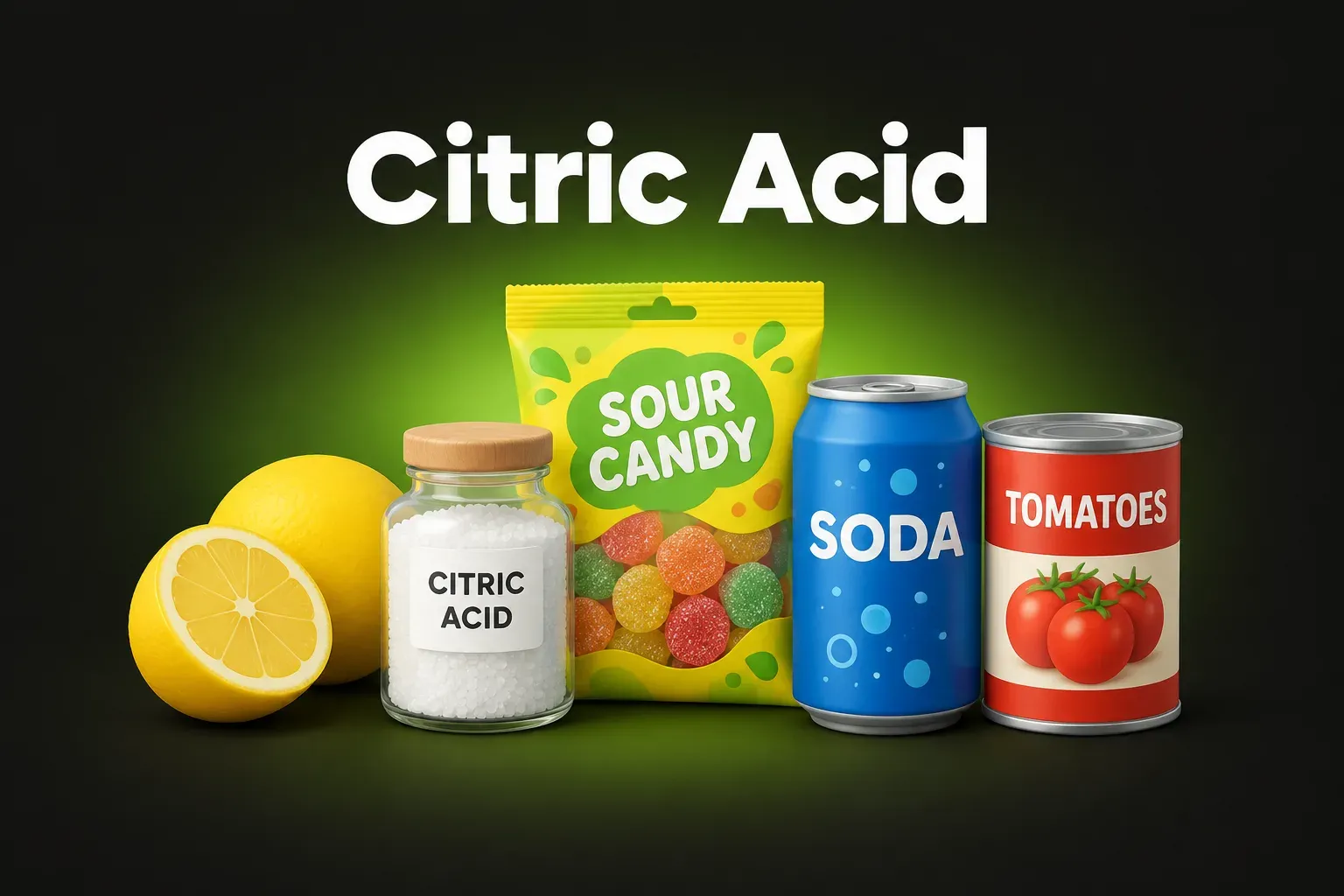
Sodium citrate is made from citric acid – the acid that makes lemons sour. Today, citric acid is produced by fermenting sugar with a mold, then combined with sodium to make a white, slightly salty and sour powder.
On labels, you may see:
| Name | Code |
|---|---|
| Sodium citrate / trisodium citrate | E331(iii) |
| Monosodium citrate | E331(i) |
| Disodium citrate | E331(ii) |
In the EU and UK, all three are grouped as E331. Related additives are citric acid (E330) and potassium citrate (E332).
What is sodium citrate used for?
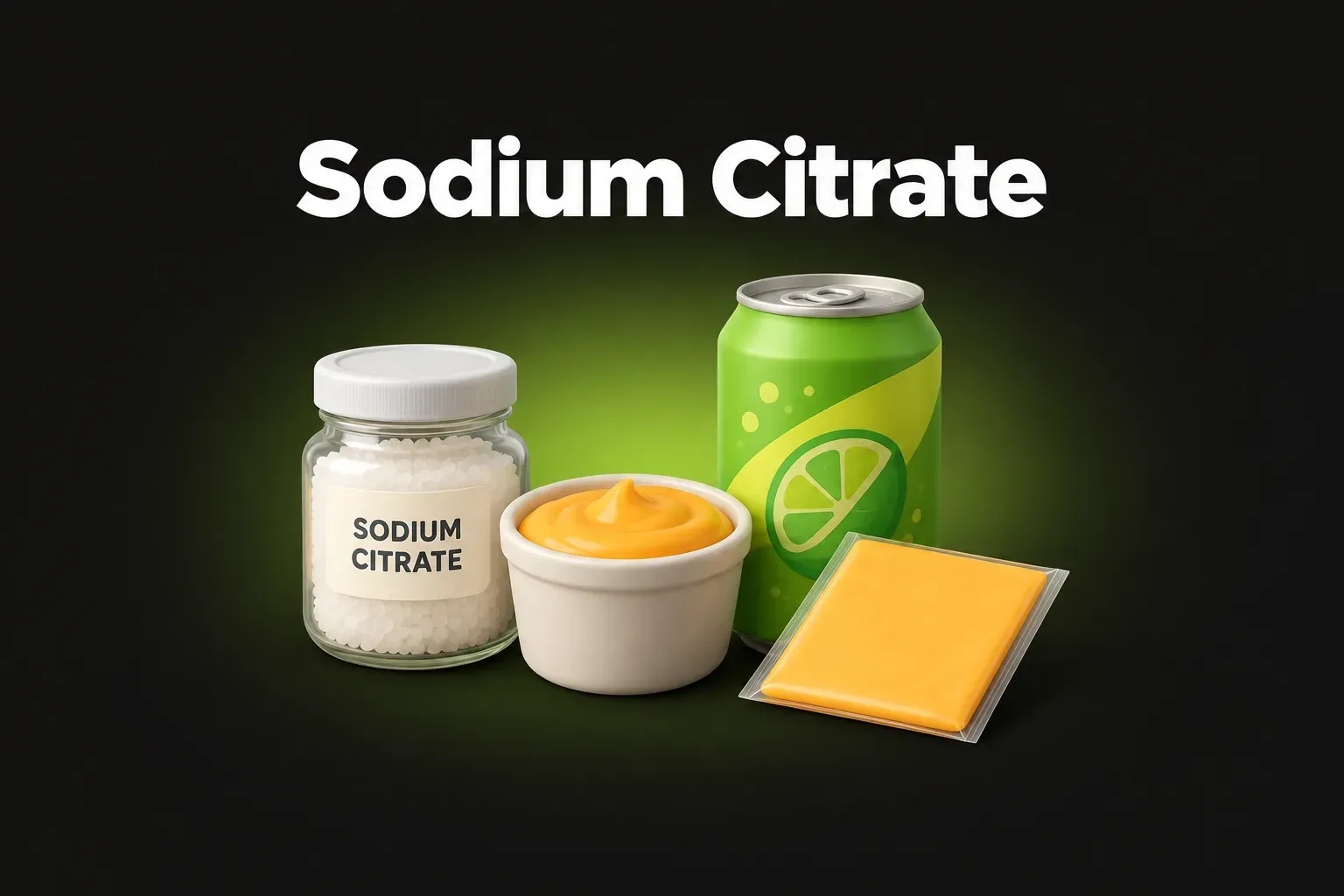
- Emulsifying salt: in processed cheese, cheese slices, nacho cheese and cheese sauces, it keeps fat and water mixed, so cheese melts into a smooth sauce instead of separating.
- Acidity regulator: it softens the sour taste in sodas, sports drinks, jams, gummies and sour candy, and keeps the acidity stable.
- Stabilizer: it helps milk drinks, creamers and plant-based milks stay smooth.
- Medicine: in higher doses, it’s used to make urine less acidic (for some kidney stones) and to stop stored blood from clotting.
In the kitchen: many cooks add a small amount to homemade mac and cheese or cheese sauce, so real cheddar melts as smoothly as processed cheese.
Is sodium citrate safe?
Food agencies consider sodium citrate safe at the levels used in food. The WHO’s expert committee on food additives didn’t set a numerical daily limit, because citrate is a normal part of human metabolism and is broken down like the citrate in fruit.
There are two things worth knowing:
Sodium
About 23% of sodium citrate is sodium. One gram adds roughly 235 mg of sodium – about 10% of the daily limit of 2,300 mg. On its own, that’s small. But the foods that use it most – processed cheese, cheese sauces and snacks – are usually salty already. If you watch your blood pressure, check the total sodium on the label.
A link with type 2 diabetes
In the French NutriNet-Santé study, researchers followed more than 100,000 adults for about seven years. People who consumed more sodium citrate had a slightly higher risk of type 2 diabetes: about 4% higher for every extra 500 mg a day (Salame et al., The Lancet Diabetes & Endocrinology, 2024). Several other emulsifiers, like carrageenan, guar gum and xanthan gum, showed similar links.
This is an observational study, so it can’t prove that sodium citrate itself causes diabetes – people who eat more processed foods may differ in other ways. That’s why NutriSmart rates sodium citrate as low risk, not moderate.
Sodium citrate vs citric acid
| Citric acid (E330) | Sodium citrate (E331) | |
|---|---|---|
| Taste | Very sour | Mildly salty and sour |
| Main use | Adds sourness | Controls acidity, melts cheese |
| Sodium | None | About 23% |
| NutriSmart rating | Low | Low |
Which foods contain sodium citrate?
- Processed cheese, cheese slices and cheese spreads
- Nacho cheese, cheese sauces and boxed mac and cheese
- Lemon-lime and fruit sodas, energy and sports drinks
- Gummies, sour candy and jellies
- Ice cream, whipped toppings and coffee creamers
- Plant-based milks and protein drinks
How to eat less sodium citrate
- Choose real cheese over processed cheese slices and sauces when you can.
- Check sodium on cheese products and snacks – that’s the bigger issue.
- Drink water instead of sodas and sports drinks.
- Cook more meals from scratch – fewer processed foods means fewer emulsifiers overall.
Spot sodium citrate on any label in seconds. With NutriSmart, you photograph the ingredient list or scan the barcode, and the app tells you right away if the product has sodium citrate. Turn on an alert for it, and the app warns you every time a product you scan contains it. You’ll also see every other additive, the risks of each one and a health score out of 100.Get the app free
You can also read about other emulsifiers: mono- and diglycerides, sodium phosphate and polysorbate 80, or see the full E numbers list.
The bottom line
Sodium citrate (E331) is the sodium salt of citric acid. It controls acidity in drinks and candy and makes processed cheese melt smoothly. It’s considered safe in food amounts, and NutriSmart rates it low risk. Keep an eye on the sodium in cheesy and processed foods, and remember that a large study linked emulsifiers like sodium citrate to a slightly higher diabetes risk – one more reason to eat fewer ultra-processed foods.
FAQ
What is sodium citrate?
Sodium citrate is the sodium salt of citric acid, the acid in lemons. It's made by fermenting sugar into citric acid and neutralizing it with sodium. It tastes slightly salty and sour, and it's used to control acidity, keep drinks stable and make cheese melt smoothly.
Is sodium citrate safe to eat?
In the amounts used in food, it's considered safe and NutriSmart rates it as low risk. The main things to watch are the sodium it adds and a link in one large French study between higher intake of sodium citrate and a slightly higher risk of type 2 diabetes. That study can't prove cause and effect.
Why is sodium citrate used in cheese sauce?
It's an emulsifying salt. It loosens the proteins in cheese so the fat and water stay mixed when the cheese melts. That's why processed cheese, nacho cheese and some homemade mac and cheese recipes melt into a smooth sauce instead of turning oily and grainy.
Is sodium citrate the same as citric acid?
No. Citric acid (E330) is the sour acid itself. Sodium citrate (E331) is its salt: it's much less sour, a bit salty, and it's used to reduce acidity rather than add it.
How much sodium is in sodium citrate?
About 23% of its weight is sodium. One gram of sodium citrate adds roughly 235 mg of sodium – about 10% of the daily limit of 2,300 mg.
Is sodium citrate natural?
It's made from citric acid, which today is produced by fermenting sugar with a mold, then combined with sodium. It's identical to the citrate found in the body, but the ingredient itself is made in factories.