Modified Food Starch: What It Is, Gluten and Safety
What modified food starch is, how it's made, whether it contains gluten, what the E-numbers E1404–E1452 mean and what EFSA concluded about its safety.
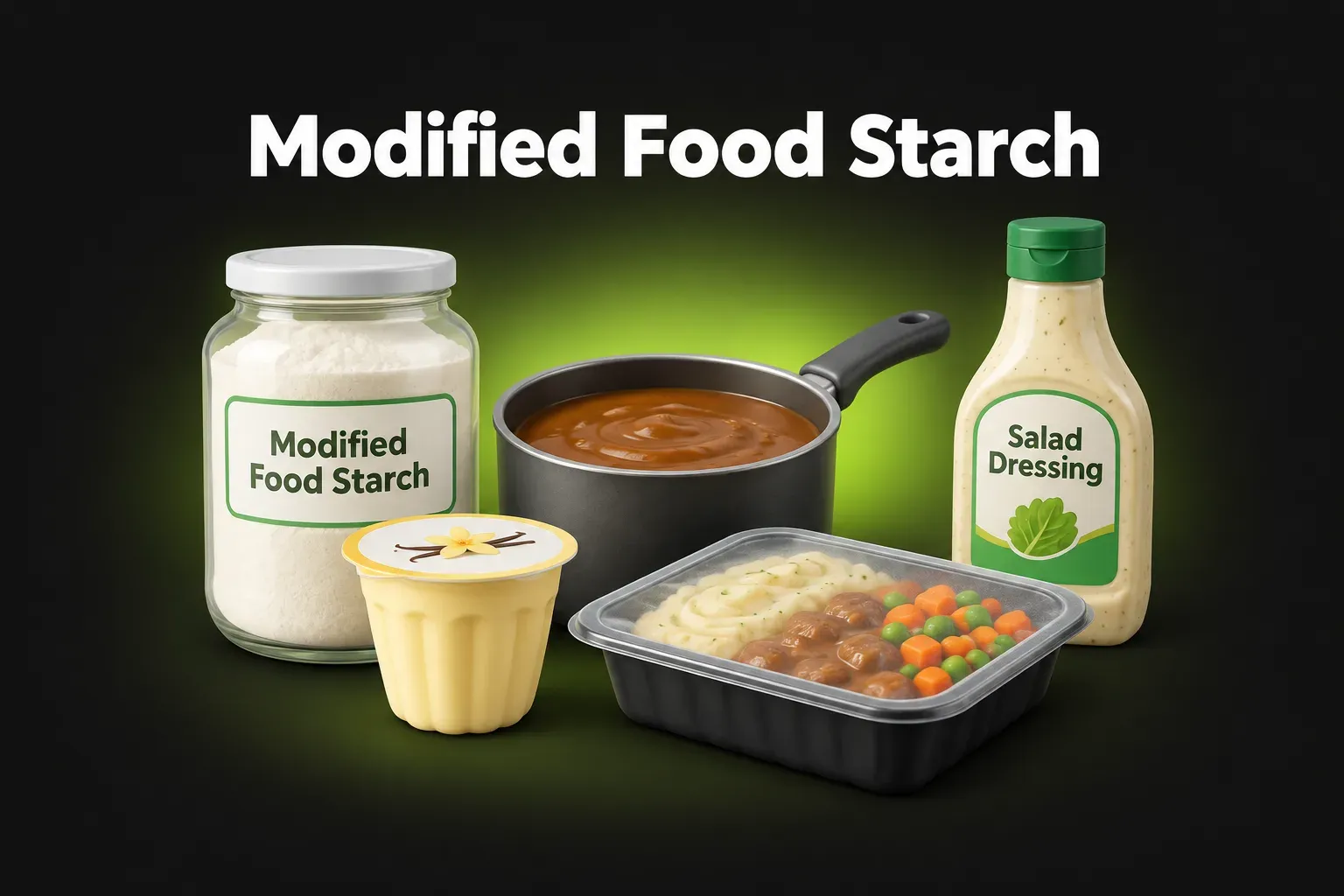
Modified food starch sounds like something from a lab – and many people worry it means genetically modified food. It’s on the labels of gravies, soups, puddings, frozen meals, dressings and countless other products. In fact, “modified” refers to how the starch is processed, not to its genes. Here’s what it really is and whether you need to avoid it.
The short answer: modified food starch is regular starch (from corn, wheat, potato or tapioca) treated with heat, acid, enzymes or small amounts of chemicals so it thickens better and survives freezing, cooking and long shelf lives. In 2017, the European Food Safety Authority found no safety concern and no need for a daily limit. It’s usually gluten-free, but not always. The real downside isn’t the starch itself – it’s that it’s a typical ingredient of ultra-processed foods and adds fast-digesting carbs.
What is modified food starch?
Normal starch has limits: it gets thin when heated for long, turns watery when frozen, and breaks down in acid. That’s a problem for a frozen lasagna or a bottled dressing that has to last months. So manufacturers change the starch a little:
- Physically – with heat or pressure (pre-gelatinized starch)
- With enzymes or acids – to break it into smaller pieces
- Chemically – by linking starch chains together or attaching small groups (like phosphate, acetyl or hydroxypropyl) in tiny amounts
The result thickens reliably, stays smooth after freezing and holds up in acidic or salty foods.
On labels, you’ll see:
| Label | What it means |
|---|---|
| Modified food starch, modified corn starch | US labels – source often corn |
| Modified wheat starch | Made from wheat – contains gluten |
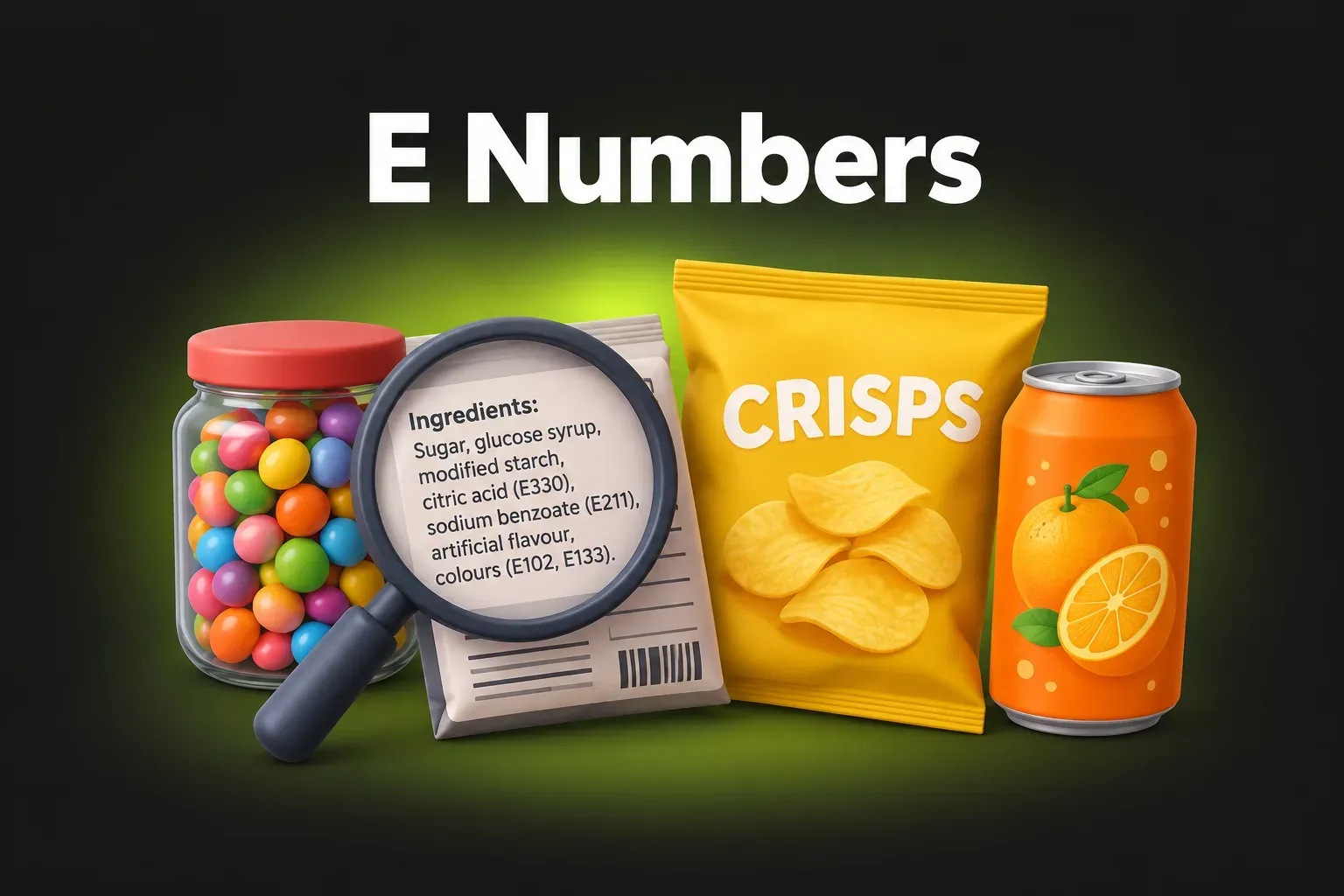
| Modified starch, E1404–E1452 | EU labels – the exact type is often not named |
| Starch sodium octenyl succinate (E1450) | Used as an emulsifier, e.g. in drinks and baby formula |
Where you’ll find modified food starch
- Sauces, gravies and soups – especially instant and canned
- Puddings, custards and pie fillings
- Frozen meals and pizzas
- Salad dressings and mayonnaise-type spreads
- Yogurts and dairy desserts
- Processed meats and fish sticks
- Snacks, baked goods and candy
- Baby foods (only some types are allowed)
Is modified food starch safe? What the research says
What EFSA says
In 2017, the European Food Safety Authority re-evaluated twelve modified starches (E1404–E1452). In animal studies, rats were fed very high amounts – up to 31 g per kg of body weight a day – with no harmful effects relevant to humans. Modified starches are mostly broken down like normal starch. EFSA found no safety concern for the general population and no need for a numerical daily limit (EFSA, 2017). Only one type, E1452, is used mainly in supplements, and its intake stayed low.
Gluten
Most modified starch in the US is made from corn. If it’s made from wheat, US law requires the label to say so, and in the EU wheat must be highlighted as an allergen. Wheat-based starch is highly refined and some products meet gluten-free limits, but people with celiac disease should check the label or choose products marked gluten-free.
Blood sugar
Most modified starches are digested like regular starch, so they raise blood sugar like white bread. A few types are made to be resistant starch – they resist digestion and act more like fiber, with a smaller effect on blood sugar. But the label rarely tells you which kind you’re eating.
Digestion
In large amounts, some modified starches can cause gas or loose stools, because part of them reaches the large intestine. This is rare at the amounts in normal food.
The real issue: ultra-processed food
Modified starch itself is one of the milder additives. But it’s a marker of industrial processing: you won’t find it in a home kitchen. Foods that need it – instant soups, frozen meals, creamy sauces, desserts – are usually ultra-processed, often high in salt, sugar and refined carbs. Large studies link a diet high in ultra-processed food to weight gain, type 2 diabetes and heart disease. Read more about ultra-processed foods.
Modified starch vs other thickeners
| Thickener | Source | Main notes |
|---|---|---|
| Modified starch (E14xx) | Corn, wheat, potato, tapioca | Safe per EFSA; raises blood sugar like starch |
| Xanthan gum (E415) | Bacterial fermentation | Bloating; risk for premature babies |
| Guar gum (E412) | Guar beans | Fiber; bloating in large amounts |
| Carrageenan (E407) | Seaweed | Gut inflammation in animal studies |
| Maltodextrin | Starch | Raises blood sugar very fast |
How to eat less modified food starch
- Cook sauces and soups at home – a little flour or cornstarch does the job.
- Choose fresh or simply frozen foods (plain vegetables, fish fillets) over ready meals.
- Pick plain yogurt instead of creamy desserts.
- Check for “wheat” if you have celiac disease.
- Read the whole label – a long list of thickeners usually means a highly processed product.
Spot modified starch on any label in seconds. With NutriSmart, you photograph the ingredient list or scan the barcode, and the app tells you right away if the product has modified starch. Turn on an alert for it, and the app warns you every time a product you scan contains it. You’ll also see every other additive, the risks of each one and a health score out of 100.Get the app free
The bottom line
Modified food starch is regular starch processed to thicken better and survive freezing and cooking. “Modified” doesn’t mean genetically modified, and EFSA found no safety concern. It’s usually gluten-free, unless it’s made from wheat. The starch itself isn’t the problem – but it’s a typical sign of an ultra-processed food that’s often high in salt, sugar and fast carbs. Cooking simple meals at home is the easiest way to eat less of it.
FAQ
What is modified food starch?
Modified food starch is starch – usually from corn, wheat, potato or tapioca – that has been treated with heat, acids, enzymes or small amounts of chemicals. This changes how it behaves: it thickens better, survives freezing and heating, and stays smooth on the shelf. It's used in sauces, soups, puddings, frozen meals and dressings.
Is modified food starch bad for you?
As an additive, it's considered safe. In 2017, the European Food Safety Authority found no safety concern for the general population and no need for a daily limit, even though animals were fed very large amounts. The bigger issue is that it's a sign of an ultra-processed food and adds fast-digesting carbs.
Does modified food starch contain gluten?
Usually not, but it can. Most modified food starch in the US is made from corn. If it's made from wheat, US labels must say "modified wheat starch" or list wheat. In the EU, wheat must be highlighted as an allergen. People with celiac disease should check the label.
Is modified food starch genetically modified?
"Modified" refers to the processing, not the plant's genes. But in the US, much of it is made from corn that may be genetically modified. Organic products can't use genetically modified corn.
Does modified food starch raise blood sugar?
Most types are digested like regular starch, so they raise blood sugar like white flour. Some types, called resistant starches, are built to resist digestion and act more like fiber. The label usually doesn't tell you which kind is used.
What are E1404 to E1452?
They're the European codes for different modified starches, such as oxidized starch (E1404), distarch phosphate (E1412), acetylated distarch adipate (E1422), hydroxypropyl distarch phosphate (E1442) and starch sodium octenyl succinate (E1450). On EU labels they're often listed simply as "modified starch".