Is Tofu Healthy? Nutrition, Soy Myths and 10 Brands
Is tofu healthy? Protein, calcium and iron by firmness, what research says about soy, hormones and cancer, and 10 tofu brands compared.
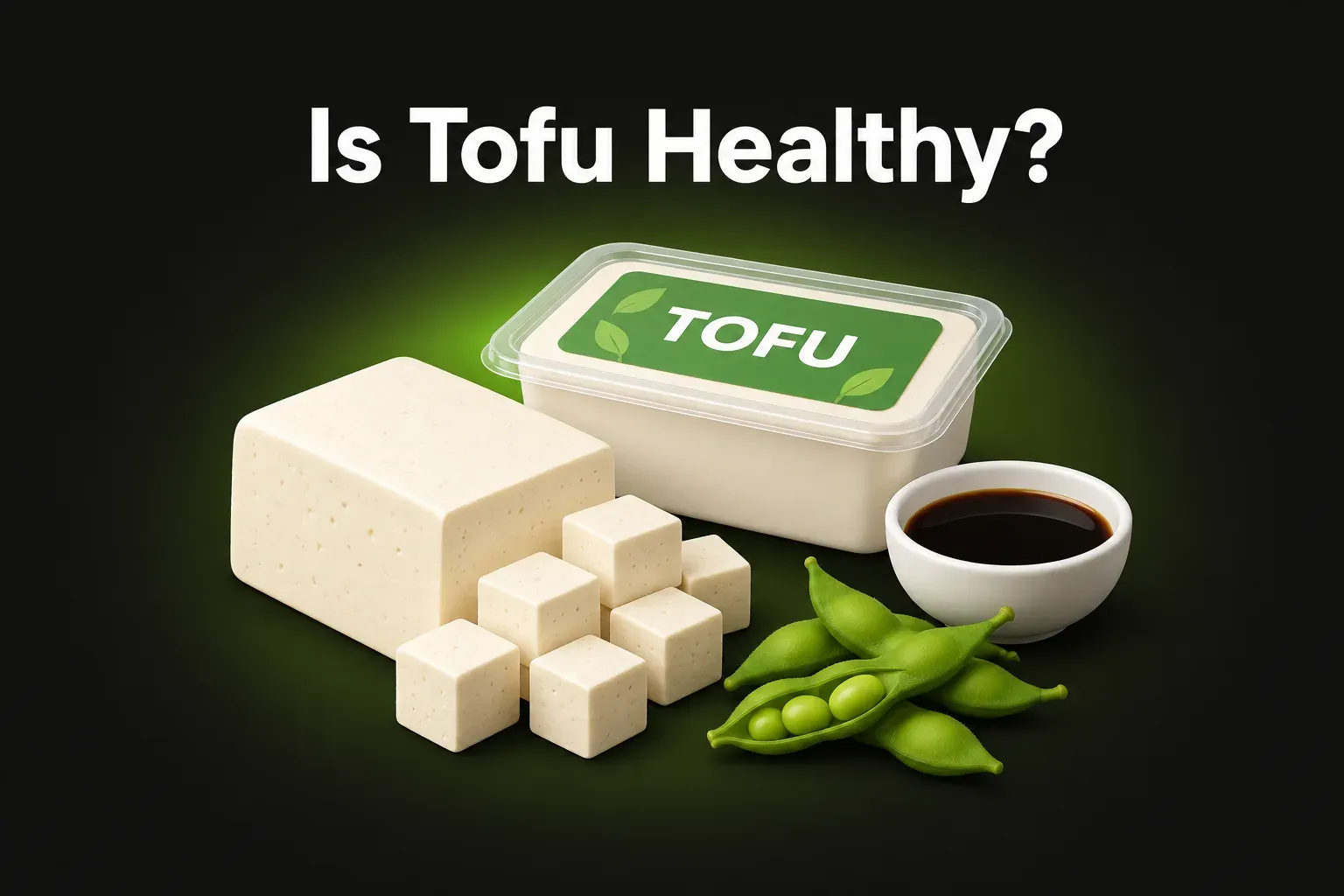
Tofu is made by curdling soy milk and pressing it into a block, a bit like cheese. Some call it a superfood. Others worry about soy and hormones.
The short answer: plain tofu is a healthy food for most people. A 3 oz (85 g) serving has about 50–130 calories, 4–14 g of protein, almost no sugar and almost no salt. Tofu made with calcium sulfate is also rich in calcium. Large studies in people show that soy foods don’t harm hormones in men and don’t raise breast cancer risk. Watch out for flavored and baked tofu, which add salt and some sugar. And skip tofu if you have a soy allergy.
Tofu nutrition by firmness
Tofu comes in many textures. The firmer it is, the less water it holds. So firmer tofu has more protein and calories in each bite.
| Tofu type (3 oz / 85 g) | Calories | Protein | Fat | Calcium | Iron |
|---|---|---|---|---|---|
| Silken, soft | 47 | 4.1 g | 2.3 g | 26 mg | 0.7 mg |
| Silken, firm | 53 | 5.9 g | 2.3 g | 27 mg | 0.9 mg |
| Soft (calcium sulfate + nigari) | 52 | 6.1 g | 3.1 g | 94 mg | 0.9 mg |
| Regular (calcium sulfate) | 65 | 6.9 g | 4.1 g | 298 mg | 4.6 mg |
| Firm (calcium sulfate + nigari) | 66 | 7.7 g | 3.5 g | 171 mg | 1.4 mg |
| Extra firm (nigari) | 71 | 8.5 g | 4.5 g | 240 mg | 1.7 mg |
| Firm, dense (calcium sulfate) | 122 | 14.7 g | 7.4 g | 581 mg | 2.3 mg |
Source: USDA FoodData Central – silken soft, silken firm, soft, regular, firm, extra firm, firm, dense. Values per 100 g, multiplied to 3 oz and rounded. The two silken rows are Mori-Nu samples.
What stands out:
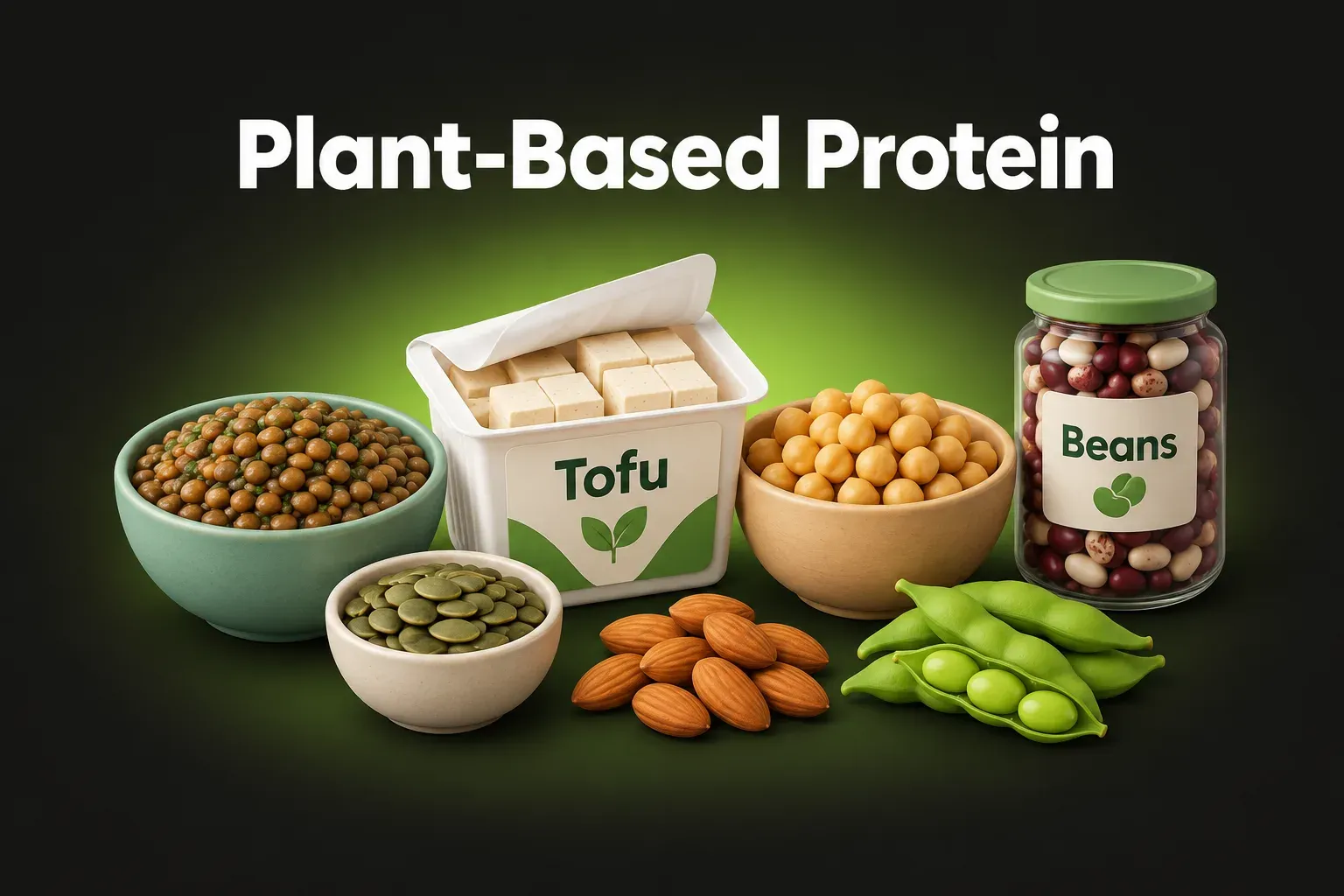
- Protein: tofu is a complete protein. That means it has all nine amino acids (protein building blocks) your body can’t make. See more options in our guides to plant-based protein and high-protein foods.
- Calcium: this depends on the coagulant – the ingredient that turns soy milk into curds. Calcium sulfate (a mineral also called gypsum) adds a lot of calcium. Nigari (magnesium chloride from sea water) adds less. Silken tofu often uses other coagulants and has little calcium. The dense tofu in the last row gives about 45% of the 1,300 mg daily value.
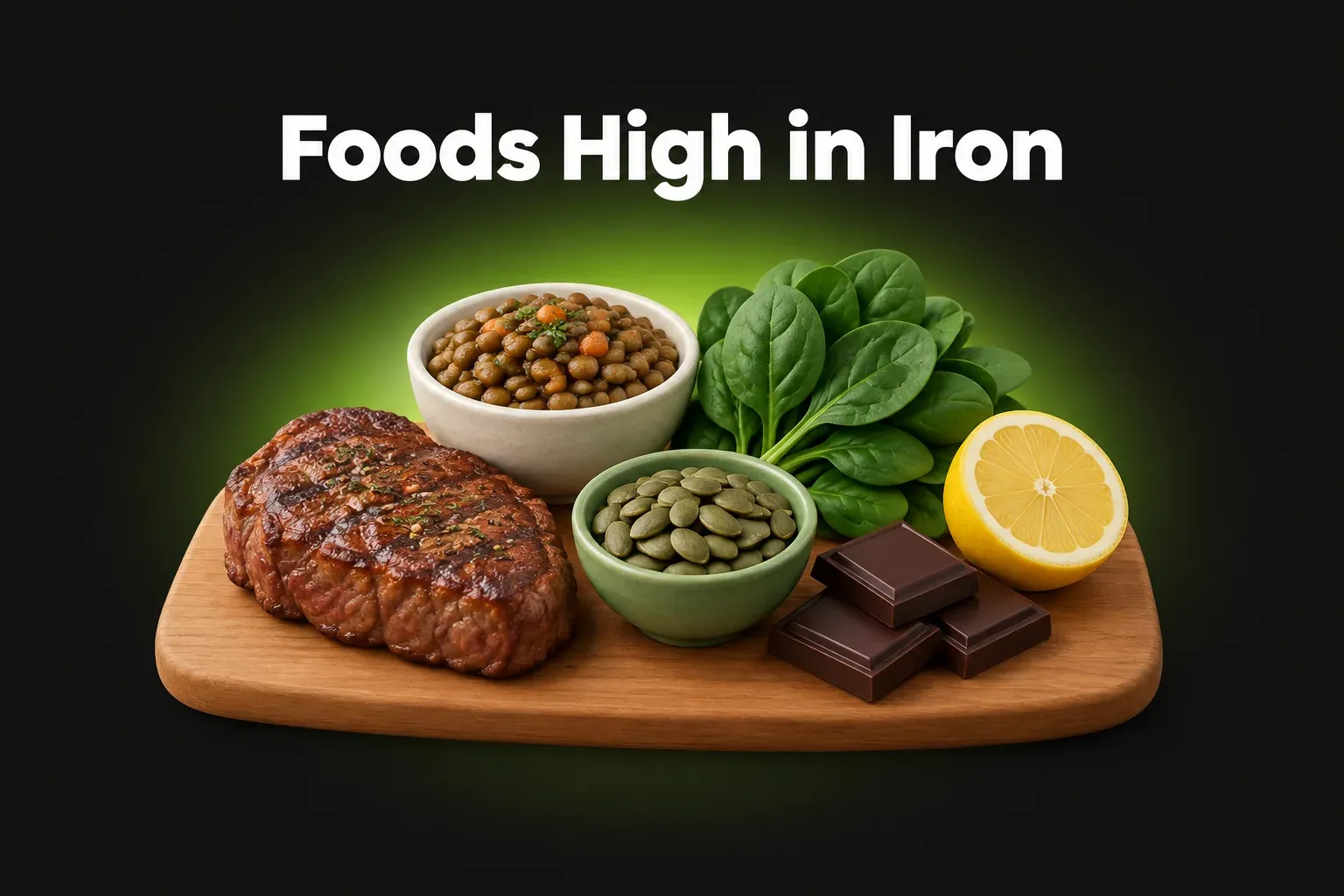
- Iron: tofu has a fair amount of iron for a plant food. This is the plant type of iron, which your body absorbs less well than iron from meat. Eat it with vitamin C foods, like peppers or broccoli, to absorb more. Find more ideas in our list of foods high in iron.
- Fat: most of it is the healthy, unsaturated kind. Saturated fat is only about 1 g or less per serving.
10 tofu brands compared
Here are 10 real products sold in the US. Brands list nutrition per serving, so the serving sizes differ a bit.
| Product | Serving | Calories | Protein | Sodium | Sugar (added) | Calcium (% DV) |
|---|---|---|---|---|---|---|
| House Foods Premium Firm | 3 oz (85 g) | 70 | 7 g | 10 mg | 0 g (0 g) | 10% |
| Nasoya Organic Extra Firm | 3 oz (85 g) | 90 | 9 g | 5 mg | 1 g (0 g) | 10% |
| 365 Whole Foods Market Organic Extra Firm | 3 oz (85 g) | 90 | 10 g | 0 mg | 0 g (0 g) | 4% |
| Hodo Organic Extra Firm | 3 oz (85 g) | 120 | 14 g | 0 mg | 0 g (0 g) | 20% |
| Wildwood Organic High Protein Super Firm | 3.2 oz (91 g) | 130 | 14 g | 10 mg | 0 g (0 g) | 6% |
| Trader Joe’s High Protein Organic Super Firm | 3 oz (84 g) | 130 | 14 g | 15 mg | 0 g (0 g) | 4% |
| Mori-Nu Silken Firm | 3 oz (85 g) | 50 | 6 g | 20 mg | <1 g (0 g) | 2% |
| Wildwood Organic Baked Tofu Teriyaki | 3.5 oz (99 g) | 180 | 17 g | 250 mg | 3 g (2 g) | 8% |
| Nasoya Baked Tofu Teriyaki | 3.5 oz (99 g) | 180 | 17 g | 390 mg | 4 g (3 g) | 8% |
| Trader Joe’s Organic Baked Tofu Teriyaki | 3.5 oz (99 g) | 190 | 15 g | 530 mg | 2 g (2 g) | 6% |
Sources: label photos and data on Open Food Facts for House Foods, Nasoya Extra Firm, 365, Hodo, Wildwood High Protein, Trader Joe’s High Protein, Mori-Nu, Wildwood Baked, Trader Joe’s Baked, plus the label on Nasoya’s website for Nasoya Baked, checked November 2026. Recipes change – always check the package.
What to notice:
- Plain tofu is simple. Most plain blocks list just water, soybeans and one or two coagulants. House Foods and Hodo use only calcium sulfate.
- Protein ranges from 6 to 14 g. Hodo, Wildwood and Trader Joe’s High Protein are the densest blocks. So they have the most.
- Calcium varies a lot. Hodo gives 20% of the daily value. Trader Joe’s High Protein has 14 g of protein but only 4% calcium. 365 also has just 4%.
- Mori-Nu is different. It’s sold in a shelf-stable box. Its label lists soy protein isolate (a protein powder made from soybeans), glucono-delta-lactone (a mild acid made from sugar) and calcium chloride.
Flavored and baked tofu: watch the salt
Baked tofu comes cooked and seasoned, so it’s handy for salads and wraps. But the sauce changes the numbers.
Plain tofu has 0–20 mg of sodium per serving. The three baked teriyaki products have 250–530 mg per piece. Trader Joe’s has the most: 530 mg, or 23% of the daily value. Eat two pieces, and you get over 1,000 mg.
They also add some sugar, like cane sugar, brown rice syrup or agave syrup. But it’s only 2–3 g of added sugar per piece. That’s a small amount. The Nasoya and Wildwood teriyaki also list caramel color.
So baked tofu is still a good protein – just count it as a salty food. If you watch your blood pressure, season plain tofu yourself.
Tofu, soy and hormones: what research shows
Soy has isoflavones. These are plant compounds that look a bit like the hormone estrogen. They can attach to the same spots in cells, but their effect is much weaker. A standard soy serving has about 25 mg of isoflavones, says the American Institute for Cancer Research (AICR). That’s why people worry about soy. Here’s what the studies show.
Breast cancer
The fear started with lab and animal studies. Scientists put human breast cancer cells into mice. The mice had no ovaries, so they made very little estrogen. Some mice ate pure genistein, the main soy isoflavone, at 750 ppm in their food. Their tumors grew larger (Hsieh et al., Cancer Research, 1998). A second study by the same group fed mice soy protein with 15 to 300 ppm of genistein. The more genistein in the food, the faster the tumors grew (Allred et al., Cancer Research, 2001).
Why do animal studies matter? Mice share most of our genes and body processes. And testing a possible cancer risk on people would put their health in danger. So these results were taken seriously.
But studies in women point the other way. A study in Shanghai followed 5,042 breast cancer survivors for about 4 years. Women who ate the most soy were compared with those who ate the least. They had a 29% lower risk of death. They also had a 32% lower risk of the cancer coming back (Shu et al., JAMA, 2009). A later study pooled 9,514 survivors from the US and China. Women who got 10 mg or more of isoflavones a day had 25% fewer cancer returns (Nechuta et al., American Journal of Clinical Nutrition, 2012).
What about getting breast cancer in the first place? A review of 35 studies found lower risk in Asian women who ate more soy. In Western women, who eat much less soy, there was no link either way (Chen et al., PLoS One, 2014).
These human studies are observational. They show links, not proof of cause. But they are large, and they keep finding no harm. The AICR says it is safe to eat 1–2 servings of soy foods a day, even after breast cancer. It warns that isoflavone pills can give much more than people get from food. Given the mouse results, that’s a good line to draw. Tofu is fine. High-dose isoflavone pills are not the same thing. If you have breast cancer, ask your doctor before you take them.
Men and estrogen
A popular myth says soy makes men “feminine.” A 2021 review pooled 41 studies in men. Soy and isoflavones did not change testosterone or estrogen levels. That held true at every dose and study length (Reed et al., Reproductive Toxicology, 2021). An earlier review found no change in testosterone either (Hamilton-Reeves et al., Fertility and Sterility, 2010). To be fair, one author of both reviews works with soy industry groups. But the studies they pooled measured hormones directly in men’s blood.
Thyroid
A review of 18 trials found that soy did not change thyroid hormone levels. It caused a very small rise in TSH. That’s the signal that tells the thyroid to work. Doctors don’t know if this small rise matters (Otun et al., Scientific Reports, 2019).
There are two things to watch. First, lab and animal studies suggest soy could be a problem when you get too little iodine. So make sure you get enough – iodized salt and seafood help (Messina and Redmond, Thyroid, 2006). Second, soy can lower how much thyroid medicine you absorb. Doctors described a woman who needed unusually high doses. She took a soy protein drink right after her pill. When she spaced them apart, a lower dose worked again (Bell and Ovalle, Endocrine Practice, 2001). So if you take thyroid pills, take them a few hours away from tofu.
Tofu and your heart
In 1999, the FDA let soy foods carry a heart health claim. The claim says 25 g of soy protein a day may lower heart disease risk. It only counts as part of a diet low in saturated fat. In 2017, the FDA proposed to remove the claim, because newer studies were mixed (FDA, 2017). As of November 2026, the claim is still in the federal rules (21 CFR 101.82).
What do the studies say? Researchers pooled the same 46 trials the FDA looked at. About 25 g of soy protein a day lowered LDL (“bad”) cholesterol by about 3–4% (Blanco Mejia et al., Journal of Nutrition, 2019). That’s a small drop, not a cure.
A Harvard study followed about 210,000 US adults for over 20 years. Some ate tofu at least once a week. They had an 18% lower risk of heart disease than people who ate it less than once a month (Ma et al., Circulation, 2020). Tofu eaters may have other healthy habits too. Still, swapping some red meat for tofu is a sensible move.
Is tofu GMO?
Most US soybeans are genetically engineered (GE) – 96% of soybean acres in 2025, says the USDA. Tofu is different. Five of the seven plain tofus in our table are USDA Organic, and organic rules don’t allow GE crops. House Foods Premium carries the Non-GMO Project seal. If this matters to you, look for one of those two seals.
Who should be careful with tofu
- People with a soy allergy. Soy is one of the nine major food allergens in the US.
- People who take thyroid pills. Keep a few hours between your pill and soy foods.
- People with breast cancer. Tofu as food looks safe. Ask your doctor before you take any isoflavone supplement.
How to pick and cook tofu
- Pick the texture for the dish. Silken tofu blends into smoothies, sauces and desserts. Firm and extra firm tofu hold their shape in stir-fries, on the grill and in the oven. Silken tofu is also great in miso soup.
- Check the coagulant. “Calcium sulfate” on the label usually means more calcium.
- Press it. Wrap a block of firm tofu in a towel and put something heavy on top for 15–20 minutes. Less water means a crispier outside.
- Bake or air-fry it. Cut it into cubes. Toss with 1 teaspoon of oil and a little soy sauce or spices. Bake at 400°F (200°C) for about 25 minutes, and turn the cubes once.
- Go easy on the sauce. One tablespoon of regular soy sauce has about 880 mg of sodium (USDA). Use a light splash or a lower-sodium version.
Want to fit tofu into your day? Use our protein calculator to set your daily target. Then try it in your high-protein meal prep.
See what’s really in your tofu. With NutriSmart, you photograph the label or scan the barcode. The app lists the sweeteners, preservatives and colors, explains the risks of each one and gives the product a health score out of 100. It also tells you right away if a baked or flavored tofu is ultra-processed, and which ingredients make it so. Set an alert for an ingredient you want to avoid, like caramel color. The app then warns you whenever a pack you scan contains it.Get the app free
The bottom line
Plain tofu is a healthy, low-calorie protein. A 3 oz serving gives about 4–14 g of complete protein with almost no salt or sugar. Tofu made with calcium sulfate is also a strong source of calcium. Large human studies show soy foods don’t hurt men’s hormones and don’t raise breast cancer risk. Survivors who ate more soy even did a little better. Pick plain firm or extra firm tofu with calcium sulfate. Treat baked and flavored tofu as a salty food. If you take thyroid pills or have breast cancer, talk to your doctor about timing and supplements.
FAQ
Is tofu healthy?
Yes, plain tofu is a healthy food for most people. A 3 oz serving has about 50–130 calories, 4–14 g of protein and almost no sodium or sugar. Tofu made with calcium sulfate is also a good source of calcium.
Does tofu raise estrogen or lower testosterone in men?
No. A 2021 review pooled 41 studies in men. Soy foods and soy isoflavones did not change testosterone or estrogen levels, at any dose or study length.
Is tofu safe if you had breast cancer?
Large studies of breast cancer survivors found no harm from soy foods. Women who ate more soy had fewer cancer returns. The American Institute for Cancer Research says 1–2 servings of soy foods a day are fine. Isoflavone pills are a different story.
Is tofu bad for your thyroid?
Not if your thyroid works normally and you get enough iodine. If you take thyroid pills, soy can lower how much you absorb. Take your pill a few hours apart from soy and tell your doctor.
Which tofu has the most protein?
Extra firm and super firm tofu. They have less water, so they pack 9–14 g of protein in 3 oz. Silken tofu has about 4–6 g.
Is baked or flavored tofu healthy?
It's still a good protein, but it has more salt and sugar. Some baked teriyaki tofu has 250–530 mg of sodium per piece. Plain tofu has 0–20 mg.