Sodium Hexametaphosphate (E452): Uses and Is It Safe?
What sodium hexametaphosphate (E452) is, why it's in processed cheese, frozen shrimp and soda, what EFSA says about phosphates, and who should limit it.
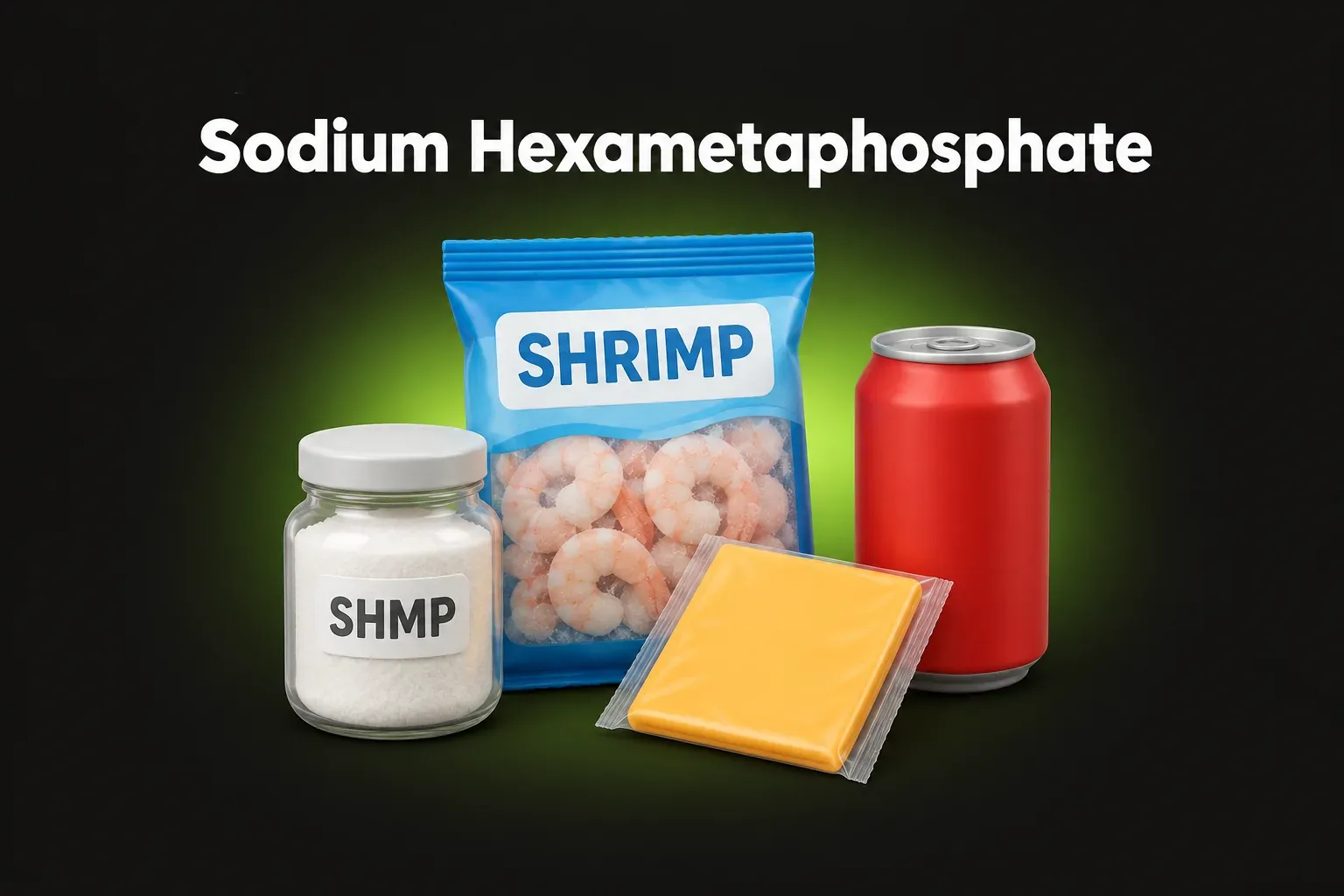
Sodium hexametaphosphate – often shortened to SHMP – is a mouthful of a name you’ll see on processed cheese, frozen shrimp and seafood, deli meats, soft drinks, ice cream and syrups. It’s also in some whitening toothpastes. Here’s what it does and what you should know.
The short answer: sodium hexametaphosphate is a polyphosphate (part of E452). It binds minerals, helps meat and seafood hold water, and keeps cheese and drinks smooth and stable. At normal levels it’s considered safe, but it adds to your intake of phosphate additives, which are absorbed much more easily than natural phosphorus. EFSA found that children can exceed the safe limit for phosphates, and extra phosphate is a problem in kidney disease. NutriSmart rates it as moderate risk.
What is sodium hexametaphosphate?
It’s a salt made of chains of phosphate units with sodium. It dissolves easily and “grabs” minerals like calcium and magnesium. Chemically, it belongs to the polyphosphates, grouped in the EU as E452:
| Name | Code |
|---|---|
| Sodium hexametaphosphate (sodium polyphosphate) | E452(i) |
| Potassium polyphosphate | E452(ii) |
| Sodium calcium polyphosphate | E452(iii) |
| Calcium polyphosphate | E452(iv) |
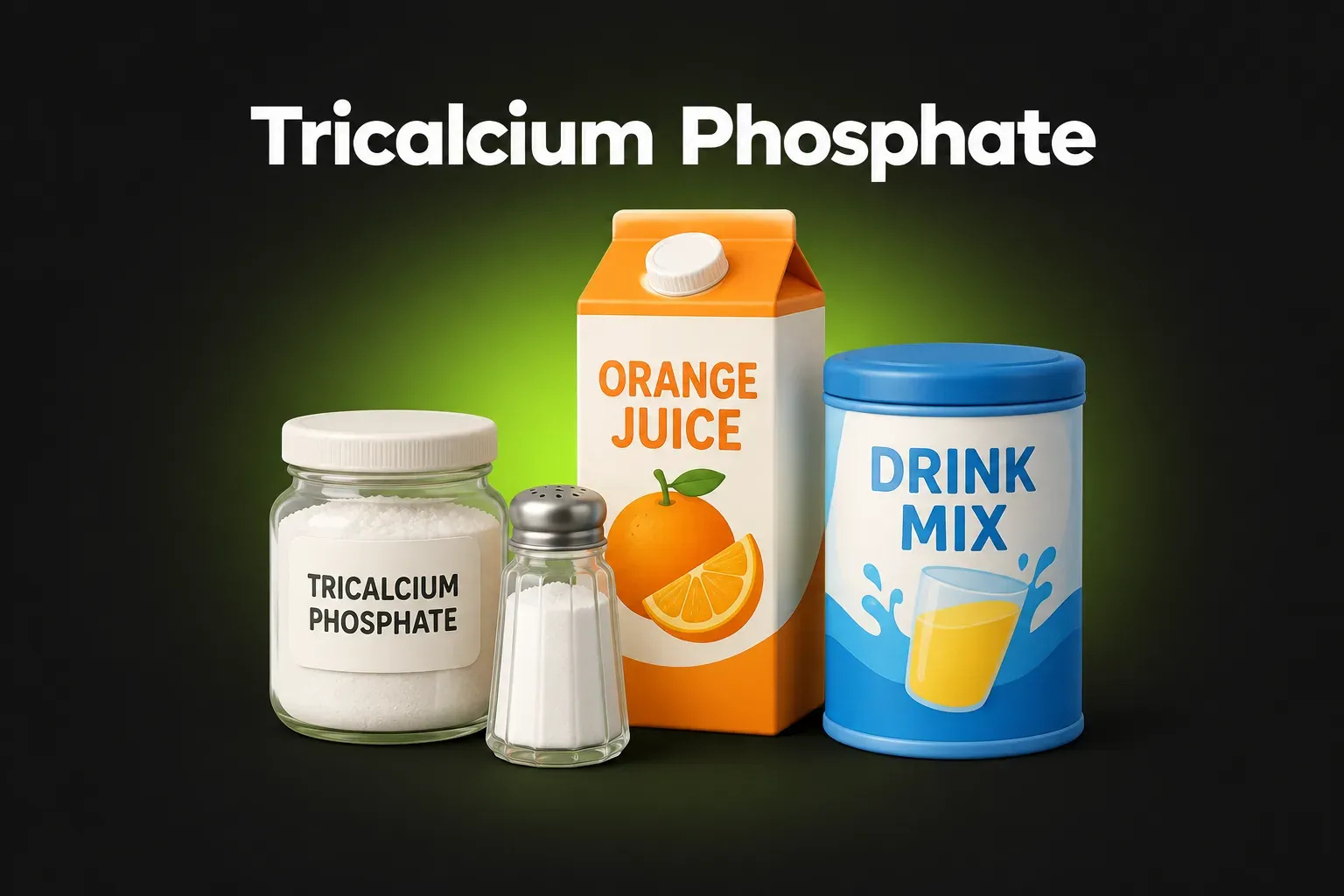
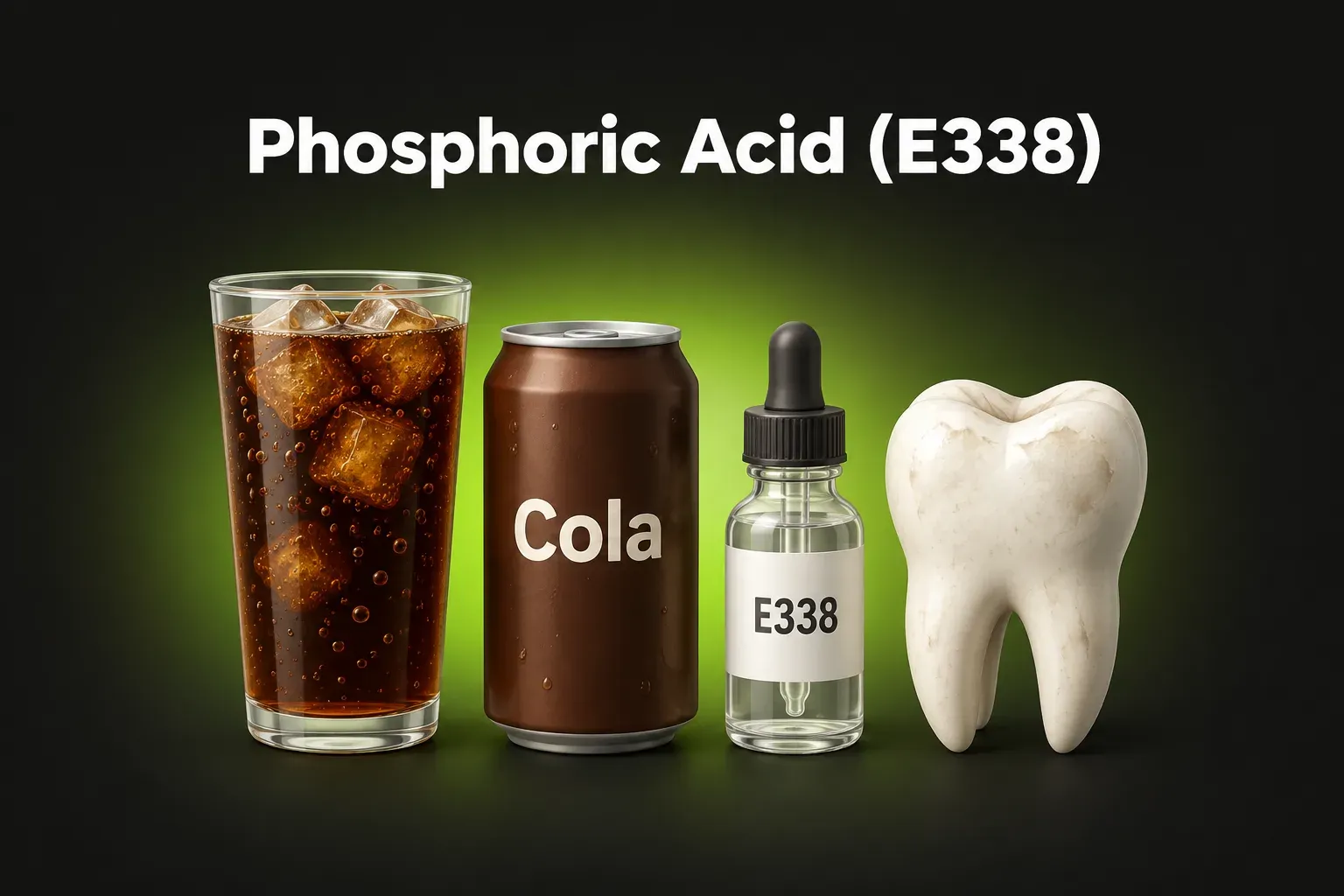
Related phosphates include sodium phosphate (E339), tricalcium phosphate (E341) and phosphoric acid (E338).
What is it used for?
- Seafood and meat: frozen shrimp, scallops, fish fillets, chicken and deli meats are often treated with phosphates so they hold more water and stay juicy.
- Processed cheese: it works as an emulsifying salt, so cheese melts smoothly.
- Drinks and syrups: it binds minerals, keeps flavors and colors stable and helps preservatives work.
- Ice cream and dairy desserts: it keeps proteins from clumping.
- Toothpaste: it helps remove stains and tartar.
- Industry: it’s also used in water treatment and detergents – but food-grade SHMP is purified and tested separately.
Tip for seafood: phosphate-treated shrimp often look shiny and feel slippery, and they can shrink a lot when cooked, because the extra water comes out. Look for shrimp labeled “chemical-free” or without phosphates in the ingredients.
Is sodium hexametaphosphate safe?
On its own, at the amounts used in a single product, it’s considered safe. The concern is about all phosphate additives together:
- They’re absorbed almost completely. Natural phosphorus in meat, beans and grains is only partly absorbed (about 40–60%), while phosphate additives are absorbed up to about 90%. Kidney specialists have warned that high blood phosphate is linked to heart and blood vessel disease (Ritz et al., Deutsches Ärzteblatt International, 2012).
- Children can exceed the safe limit. In 2019, EFSA set a group safe daily limit of 40 mg of phosphorus per kg of body weight for phosphate additives and found that infants, toddlers, children and teenagers can go over it (EFSA, 2019).
- Kidney disease. When kidneys don’t work well, phosphate builds up in the blood and can harden blood vessels. Kidney patients are usually told to avoid ingredients with “phos” in the name.
- Sodium. It also adds a little sodium, on top of foods that are often salty already.
That’s why NutriSmart rates sodium hexametaphosphate, like other polyphosphates, as moderate risk.
How to eat fewer phosphate additives
- Look for “phos” on labels: sodium hexametaphosphate, sodium tripolyphosphate, sodium phosphate, phosphoric acid, E338–E341, E450–E452.
- Buy untreated seafood and meat – check the ingredient list on frozen shrimp and chicken.
- Limit cola, processed cheese, deli meats and fast food.
- Cook from fresh ingredients more often.
- If you have kidney disease, ask your doctor or dietitian about a low-phosphate diet.
Spot sodium hexametaphosphate on any label in seconds. With NutriSmart, you photograph the ingredient list or scan the barcode, and the app tells you right away if the product has sodium hexametaphosphate. Turn on an alert for it, and the app warns you every time a product you scan contains it. You’ll also see every other additive, the risks of each one and a health score out of 100.Get the app free
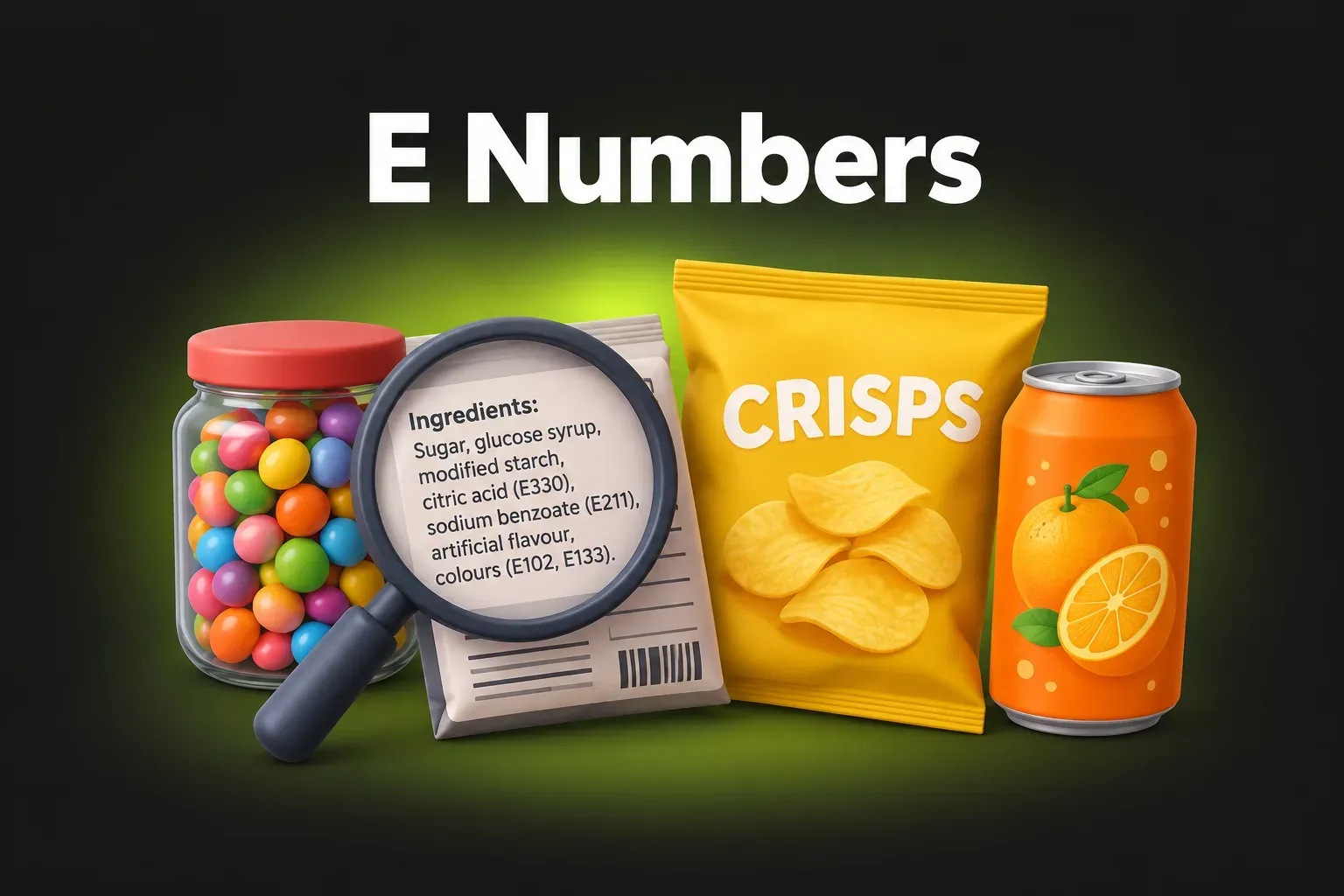
You can also read about sodium phosphate, phosphoric acid and tricalcium phosphate, or see the full E numbers list.
The bottom line
Sodium hexametaphosphate (E452) is a polyphosphate used to keep seafood and meat juicy, make processed cheese smooth and stabilize drinks. It’s considered safe in single products, but phosphate additives add up, are absorbed much more easily than natural phosphorus, can push children over the safe daily limit and are harmful in kidney disease. NutriSmart rates it moderate risk – and choosing fresh, untreated foods is the easiest way to avoid it.
FAQ
What is sodium hexametaphosphate?
Sodium hexametaphosphate (SHMP) is a polyphosphate – a chain of phosphate units with sodium. In food it binds minerals, keeps proteins and water together, and stops ingredients from separating. In the EU it's part of E452 (polyphosphates).
Is sodium hexametaphosphate safe?
At normal food levels it's considered safe, but it adds to your total intake of phosphate additives, which are absorbed far more easily than natural phosphorus. EFSA found that children can exceed the safe daily limit for phosphates, and extra phosphate is harmful in kidney disease. NutriSmart rates it as moderate risk.
Why is sodium hexametaphosphate in frozen shrimp?
Seafood and meat are often soaked in phosphate solutions so they hold more water. That keeps them juicy after freezing – but it also means you pay for extra water, and the shrimp can shrink when cooked. Labels may say "sodium tripolyphosphate" or "sodium hexametaphosphate".
Is sodium hexametaphosphate in toothpaste the same as in food?
It's the same compound. In toothpaste it helps remove and prevent surface stains and tartar. You swallow very little of it from toothpaste, so most exposure comes from food.
Who should avoid phosphate additives?
People with chronic kidney disease should limit them, because their kidneys can't remove extra phosphate. Parents may also want to limit processed foods for children, who are the most likely to go over the safe daily limit.