Are Veggie Straws Healthy? What's Really in the Bag
Are veggie straws healthy? What's in Garden Veggie Straws, calories and salt per ounce, the lawsuits, and 8 snacks compared, from chips to popcorn.
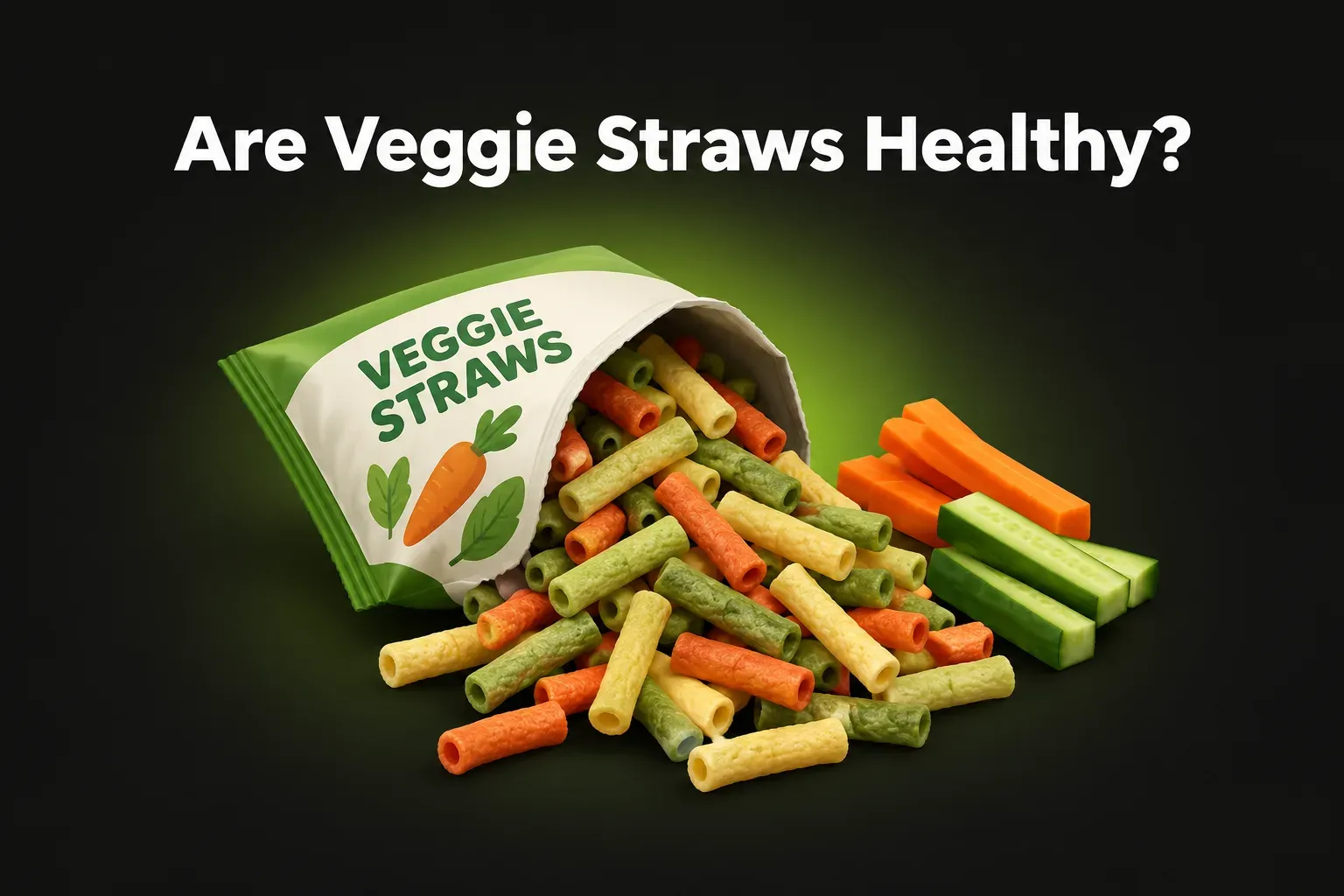
Veggie straws look like a smart swap for chips. The bag shows fresh vegetables, and the straws come in bright green, red and yellow. But are veggie straws healthy, or just chips in a garden costume?
The short answer: veggie straws are not much healthier than potato chips. The main ingredients are potato starch and potato flour, fried in oil. The vegetables are mostly spinach and tomato powder for color. One ounce has about 140 calories, 200 mg of sodium and less than 1 g of fiber and protein. They have a bit less fat than regular chips. But they don’t count as a serving of vegetables. Enjoy them as a treat, and pick real veggies, popcorn or pea crisps for everyday snacking.
What’s in Garden Veggie Straws
The best-known brand is Garden Veggie Straws, sold for years as Sensible Portions. Here is the current Sea Salt Veggie Straws Made with Avocado Oil label:
Ingredients: potato starch, potato flour, corn starch, cane sugar, sweet potato powder, salt, calcium chloride, potassium chloride, spinach powder, tomato powder, beetroot powder (color), turmeric (color), beta-carotene (color), avocado oil, sea salt (Garden Veggie Snacks).
| Per 1 oz (28 g, about 38 straws) | Amount |
|---|---|
| Calories | 140 |
| Fat | 6 g |
| Saturated fat | 1 g |
| Sodium | 200 mg |
| Carbs | 19 g |
| Fiber | less than 1 g |
| Sugar | less than 1 g |
| Protein | less than 1 g |
| Potassium | 220 mg |
Source: Garden Veggie Snacks – Sea Salt Veggie Straws Made with Avocado Oil, checked November 2026. The older recipe with canola, sunflower or safflower oil has 130 calories, 7 g of fat and 220 mg of sodium (Garden Veggie Snacks). Both may be in stores.
What does that list tell you?
- It’s mostly potato. Potato starch is the first ingredient. Starch is the pure carb part of the potato, with the skin, fiber and most vitamins removed. Potato flour comes second.
- The veggies are tiny. Labels list ingredients from most to least by weight. Spinach powder and tomato powder come after salt. So each bag has less spinach powder than salt.
- The colors come from plants. The brand says red straws get their color from tomato and green ones from spinach. The light yellow ones are potato only (Garden Veggie Snacks FAQ). Beetroot, turmeric and beta-carotene add more color. There are no artificial dyes.
- They are fried. The brand’s FAQ says the straws are fried, not baked.
- The other additives are mild. Calcium chloride keeps the texture firm. Potassium chloride is a salt swap that adds a salty taste with less sodium. If you have kidney disease or take certain blood pressure pills, ask your doctor about potassium.
Flavored straws add more. The Ranch version has a seasoning with buttermilk, maltodextrin (a starch-based powder), yeast extract and natural flavors. It also has 270 mg of sodium per ounce (Garden Veggie Snacks).
Do veggie straws count as vegetables?
No. A serving gives you less than 1 g of fiber and almost no vitamins. Compare that with half a cup of carrot sticks (64 g). It has about 1.8 g of fiber and more than half the vitamin A an adult needs in a day (USDA FoodData Central).
Real vegetables matter for your health. A large review pooled 95 studies. People who ate an extra 200 g (about 7 oz) of fruits and vegetables a day had a 10% lower risk of death from any cause. The benefits kept growing up to about 800 g (28 oz) a day (Aune et al., International Journal of Epidemiology, 2017). Studies like these show a link, not proof of cause. These studies counted whole fruits and vegetables. A pinch of spinach powder in a fried snack isn’t the same thing.
The “health halo” problem
A healthy-sounding name can make you eat more. In one study, 99 female college students tasted oatmeal-raisin cookies. Some were told the cookies were healthy. Others were told they were not. The students who heard “healthy” ate about 35% more (Provencher et al., Appetite, 2009).
Veggie straws are light and airy, so it’s easy to eat a lot. A 6 oz bag has 6 servings and about 840 calories. If you eat from the bag, put one ounce in a bowl instead.
The lawsuits
In 2017, shoppers filed a class action against Hain Celestial, the company behind the brand. A class action is a lawsuit filed for a large group of buyers. They said the name, the “garden” wording and the vegetable pictures made the snack look healthier than it is. They pointed out that the main ingredients are potato starch, potato flour and corn starch. They also said vegetable powders lack the nutrients of whole vegetables.
A federal court in New York dismissed the case in 2018. The judge said the word “veggie” was fair because the straws do contain vegetable ingredients. The court also said the straws look “nothing even remotely like a fresh or ripe vegetable” (FreshPlaza, 2018). So the court found the label fair. Still, the case shows how easy it is to read too much into a name.
A newer suit was filed in September 2026 in federal court in California. It claims the straws “Made with Avocado Oil” may contain cheaper oils that aren’t on the label. It points to a 2026 study from UC Davis. The researchers tested chips, mayo and dressings labeled with avocado oil. According to the complaint, 48 of 54 samples didn’t match pure avocado oil. Both veggie straw samples were in that group. These claims are not proven, and no court has ruled (Open Class Actions, 2026). Read more about seed oils and what the research says.
Veggie straws vs chips, pretzels and popcorn
Here are 8 popular US snacks, per 1 oz (28 g) serving, plus a real-veggie plate for comparison.
| Snack | Calories | Fat | Sodium | Fiber | Protein | First ingredient |
|---|---|---|---|---|---|---|
| Garden Veggie Straws Sea Salt | 140 | 6 g | 200 mg | under 1 g | under 1 g | Potato starch |
| Garden Veggie Wavy Chips Sea Salt | 130 | 7 g | 230 mg | under 1 g | under 1 g | Potato flour |
| Pirate’s Booty Aged White Cheddar | 140 | 6 g | 190 mg | 0 g | 3 g | Cornmeal |
| Lay’s Classic | 160 | 10 g | 140 mg | 1 g | 2 g | Potatoes |
| Baked Lay’s Original | 130 | 5 g | 135 mg | 1 g | 2 g | Dried potatoes |
| SkinnyPop Original (about 3¾ cups) | 150 | 10 g | 75 mg | 3 g | 2 g | Popcorn |
| Rold Gold Tiny Twists | 120 | 1 g | 370 mg | 1 g | 3 g | Enriched flour |
| Harvest Snaps Lightly Salted | 130 | 5 g | 75 mg | 4 g | 5 g | Green peas |
| Carrot + cucumber sticks with 2 tbsp hummus* | about 105 | about 5.5 g | about 175 mg | about 4 g | about 3 g | Vegetables |
Sources: Garden Veggie Snacks labels for Veggie Straws and Wavy Chips (both made with avocado oil); Open Food Facts labels for Pirate’s Booty, Lay’s Classic, Baked Lay’s, SkinnyPop, Rold Gold and Harvest Snaps, checked November 2026. Some store listings show 7 g of fat and 210 mg of sodium for Pirate’s Booty. *½ cup carrot sticks (64 g), ½ cup cucumber (52 g) and 2 tbsp hummus (30 g), worked out from USDA FoodData Central (carrots, cucumber, hummus). Recipes change – check the bag.
What stands out:
- Veggie straws vs Lay’s. The straws have 20 fewer calories and 4 g less fat. But they have more sodium, less fiber and less protein. That’s not a big win.
- Baked Lay’s now has fewer calories and less sodium than veggie straws. It also uses olive oil.
- Pretzels are low in fat but high in salt. Rold Gold has almost twice the sodium of veggie straws.
- SkinnyPop has about the same calories as the straws, but you get a big bowl – about 3¾ cups. It’s a whole grain, with 3 g of fiber and just three ingredients. Read more in is popcorn healthy.
- Harvest Snaps are the best packaged pick here. Green peas come first, so you get 4 g of fiber and 5 g of protein, with little salt.
- Real veggies with hummus give the most food for the fewest calories. A plate of 146 g has fewer calories than 28 g of veggie straws. See is hummus healthy for the best tubs.
For more brands, see our guide to the healthiest chips.
Are veggie straws ultra-processed?
Yes. They are made from refined starches, sugar, oil and added colors. Food scientists call this kind of food ultra-processed. That means it’s built from parts of foods rather than whole foods. Open Food Facts puts them in NOVA group 4, the ultra-processed group (Open Food Facts).
Why does that matter? In a US government lab, 20 adults lived in a clinic for four weeks. For two weeks, they ate ultra-processed meals. For two weeks, they ate unprocessed meals. They could eat as much as they wanted. On the ultra-processed diet, they ate about 500 more calories a day. They gained about 2 lb (0.9 kg) in two weeks (Hall et al., Cell Metabolism, 2019).
A larger study followed over 120,000 US adults for up to 20 years. People who added a daily serving of potato chips gained the most weight – about 1.7 lb every 4 years. People who ate more vegetables gained less (Mozaffarian et al., New England Journal of Medicine, 2011). That study didn’t look at veggie straws. But they are a fried potato snack, much like chips. Learn more in our guide to ultra-processed food.
Are veggie straws OK for kids?
Many parents pack veggie straws for toddlers. They are light and easy to hold. As a treat, that’s fine. But they shouldn’t replace vegetables or fruit.
A serving gives kids starch and salt, with almost no fiber, protein or vitamins. Better snacks for kids include:
- Soft cooked carrots or peas
- Banana or apple slices
- Plain yogurt with fruit
- Cheese with whole grain crackers
How to snack smarter
- Treat veggie straws like chips. Enjoy them, but don’t count them as a vegetable.
- Put one ounce in a bowl. That’s about 38 straws. Close the bag.
- Check the first ingredient. Pick snacks where a whole food comes first – peas, beans, popcorn or a real vegetable.
- Look at the sodium. By FDA rules, “low sodium” means 140 mg or less per serving.
- Go for fiber and protein. They keep you full longer. See our lists of low-calorie snacks and high-protein snacks.
- Pair real veggies with a dip. Carrots, cucumber or bell peppers with hummus give you crunch and nutrients.
Check your veggie straws before you buy. With NutriSmart, you photograph the label or scan the barcode. The app lists the sweeteners, preservatives and colors, explains the risks of each one and gives the product a health score out of 100. It also tells you right away if a snack is ultra-processed and which ingredients make it so. You can set an alert for an ingredient you want to avoid, like maltodextrin. The app then warns you whenever a product you scan contains it.Get the app free
The bottom line
Veggie straws aren’t bad for you, but they aren’t a health food either. They are a fried snack made mostly from potato starch and potato flour. The vegetables are mostly powders for color. One ounce has about 140 calories and 200 mg of sodium, with almost no fiber or protein. They have a little less fat than Lay’s Classic, but more salt. For a better crunch, try popcorn, Harvest Snaps or real veggies with hummus. If you love veggie straws, enjoy one ounce in a bowl now and then.
FAQ
Are veggie straws healthy?
Not really. They are a fried potato snack with a little vegetable powder for color. A 1 oz serving has about 140 calories, 200 mg of sodium and almost no fiber or protein. They're fine now and then, but they don't replace real vegetables.
Are veggie straws healthier than potato chips?
Only a little. Garden Veggie Straws have about 140 calories and 6 g of fat per ounce. Lay's Classic has 160 calories and 10 g of fat. But the straws have more salt and less fiber and protein.
Do veggie straws count as a serving of vegetables?
No. The main ingredients are potato starch and potato flour. The spinach and tomato come as powders, and the label lists them after salt. A serving gives you less than 1 g of fiber.
How many calories are in veggie straws?
About 140 calories per 1 oz (28 g) serving, which is about 38 straws. That's for Garden Veggie Straws Sea Salt made with avocado oil. The older recipe with canola, sunflower or safflower oil has 130 calories.
Are veggie straws good for toddlers?
They're a fun treat, but not a good everyday snack for kids. They give salt and starch but almost no fiber, protein or vitamins. Soft cooked vegetables, fruit or plain yogurt are better choices.
Was there a lawsuit about veggie straws?
Yes. In 2017, shoppers sued the maker, saying the name and pictures made a mostly potato snack look like vegetables. A federal court dismissed the case in 2018. A new suit filed in 2026 claims the avocado oil isn't pure, but nothing has been proven.