Calories in Butter: Per Tablespoon, Teaspoon and Pat
How many calories are in butter – per tablespoon, teaspoon, pat and stick – plus saturated fat, butter vs margarine, olive oil and ghee, and how to use less.
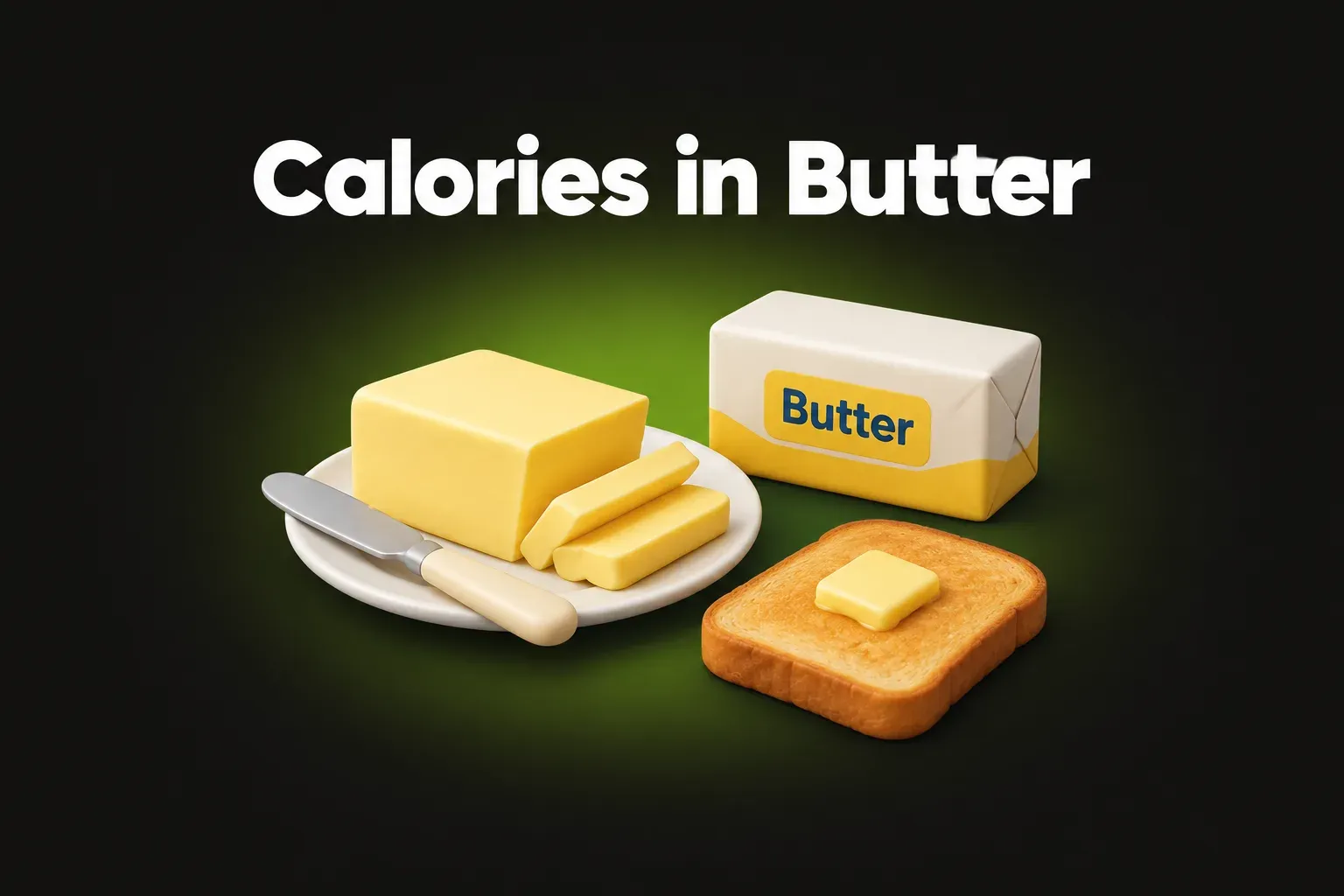
Butter makes almost everything taste better: toast, vegetables, pasta, steak and baking. But it’s also one of the most calorie-dense foods in the kitchen. If you’re watching your weight, how many calories does butter really add?
The short answer: a tablespoon of butter (14 g) has about 102 calories, a teaspoon about 34 and a restaurant pat about 36. Butter is about 81% fat, and half of that is saturated fat. A little butter is fine – the problem is how easily a “little” becomes two or three tablespoons.
Calories in butter by portion
Values are for salted butter, from the US Department of Agriculture (USDA FoodData Central):
| Portion | Weight | Calories | Fat |
|---|---|---|---|
| 1 teaspoon | 4.7 g | 34 kcal | 3.8 g |
| 1 pat (restaurant) | 5 g | 36 kcal | 4.1 g |
| 1 tablespoon | 14.2 g | 102 kcal | 11.5 g |
| 2 tablespoons | 28.4 g | 204 kcal | 23 g |
| 1 stick (½ cup) | 113 g | 810 kcal | 92 g |
| 100 g | 100 g | 717 kcal | 81 g |
Tip: a “thin” layer of butter on a slice of toast is often 1–2 teaspoons (35–70 calories). A thick layer can easily be a full tablespoon.
Butter nutrition facts
| Nutrient | Per 100 g | Per tablespoon (14.2 g) |
|---|---|---|
| Calories | 717 kcal | 102 kcal |
| Fat | 81.1 g | 11.5 g |
| – of which saturated | 51.4 g | 7.3 g |
| Carbohydrates | 0.1 g | 0 g |
| Protein | 0.9 g | 0.1 g |
| Cholesterol | 215 mg | 31 mg |
| Sodium (salted) | 643 mg | 91 mg |
| Vitamin A | 684 µg | 97 µg |
One tablespoon of butter has about a third of the saturated fat you should eat in a whole day. Diets high in saturated fat raise LDL cholesterol, which increases the risk of heart disease. Butter also has some vitamin A, but you get far more from vegetables like carrots.
Butter vs margarine, oils and ghee
| Fat (1 tablespoon) | Calories | Saturated fat |
|---|---|---|
| Butter | 102 kcal | 7.3 g |
| Whipped butter | about 65–70 kcal | about 4.5 g |
| Light butter | about 50 kcal | about 3.5 g |
| Soft tub margarine / spread | about 60–100 kcal | about 1.5–3 g |
| Olive oil | 119 kcal | 1.9 g |
| Ghee (clarified butter) | about 112–123 kcal | about 8 g |
| Coconut oil | 121 kcal | 11.2 g |
Olive oil has a few more calories than butter but much less saturated fat – it’s the better choice for cooking. Soft spreads have less saturated fat, but many contain emulsifiers, colorings, flavorings and sometimes palm oil. Ghee and coconut oil are just as rich in saturated fat as butter. Read more about olive oil.
Calories butter adds to everyday foods
| Food | Calories |
|---|---|
| Toast + 1 tsp butter | about 110 kcal |
| Baked potato + 1 tbsp butter | about 260 kcal |
| Popcorn with 2 tbsp melted butter (3 cups) | about 300 kcal |
| Steamed vegetables + 1 tbsp butter | about 150 kcal |
| Steak with butter basting (1 tbsp) | +100 kcal |
| Pancakes (3) + 1 tbsp butter + syrup | about 600–700 kcal |
| Croissant | about 230 kcal (mostly from butter) |
Is butter bad for weight loss?
Not in small amounts. Butter doesn’t make you gain weight by itself, but it’s one of the most calorie-dense foods: 100 g has over 700 calories. A few extra tablespoons a day can add 200–300 calories without you noticing.
How to use less:
- Measure it with a teaspoon instead of spreading from the block.
- Use soft butter – it spreads thinner than cold butter.
- Cook with olive oil or a non-stick pan, and add a little butter just for flavor.
- Season vegetables with herbs, lemon and garlic instead of butter.
- Try whipped or light butter if you love the taste.
Remember that you lose weight only when you eat fewer calories than you burn. Read more about the calorie deficit and find your number with our calorie calculator.
Compare butter and spreads in seconds. With NutriSmart, you scan the barcode or photograph the label, and the app shows you the additives, the risks of each one and a health score out of 100 – so you can compare butter and spreads right in the store. At home, snap a photo of what you eat, and the app counts the calories for you.Get the app free
You can also read how many calories are in peanut butter, in cream cheese and in a croissant.
The bottom line
A tablespoon of butter has about 102 calories and a teaspoon about 34. Butter is 81% fat, and half of it is saturated fat, so it’s best in small amounts. Measure it with a spoon, cook with olive oil when you can, and check the ingredient list on spreads – the simplest products are usually the best.
FAQ
How many calories are in a tablespoon of butter?
About 102 calories. A tablespoon of butter (14 g) has 11.5 g of fat, of which 7.3 g is saturated fat.
How many calories are in a teaspoon of butter?
About 34 calories. A pat of butter (5 g), like the small ones served in restaurants, has about 36 calories.
How many calories are in a stick of butter?
About 810 calories. A stick (113 g, ½ cup) is 8 tablespoons.
Is butter or margarine better?
Soft tub spreads made from vegetable oils have less saturated fat than butter, which is better for your heart. But many contain emulsifiers, colorings and sometimes palm oil. Butter has a simple ingredient list. Use either in small amounts, and choose olive oil for cooking when you can.
Is butter bad for weight loss?
Not in small amounts, but it's very calorie-dense. One tablespoon has about 100 calories, and it's easy to use two or three without noticing. Measure it with a spoon instead of spreading freely.
Does whipped butter have fewer calories?
Per tablespoon, yes – about 65–70 calories, because air is whipped in. Per gram it's the same as regular butter.