Calories in Olive Oil: Per Tablespoon, Teaspoon and Cup
How many calories are in olive oil – per teaspoon, tablespoon, ¼ cup and 100 ml – plus healthy fats, extra virgin vs light, oil sprays and how to measure it.
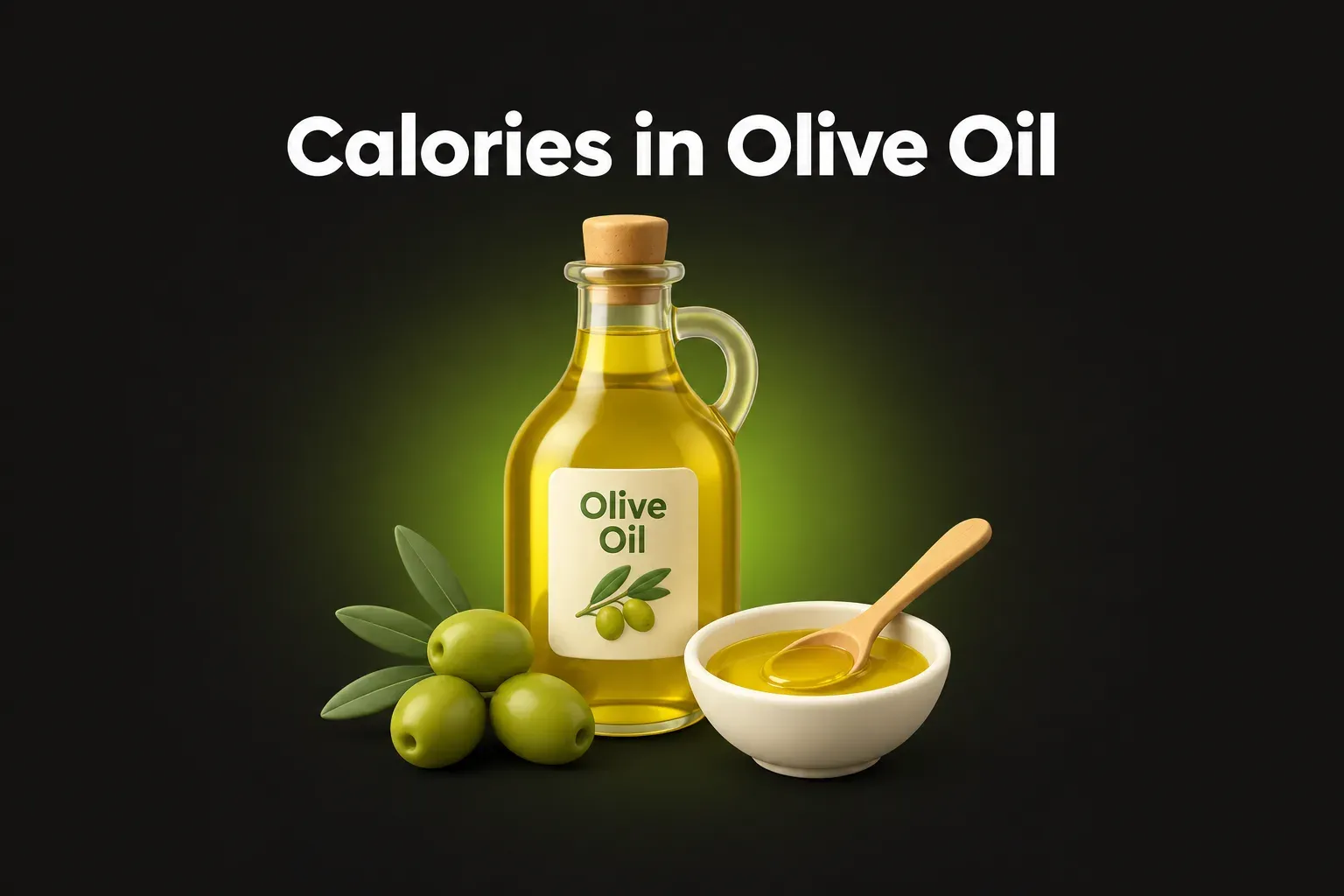
Olive oil is the heart of the Mediterranean diet and one of the healthiest fats you can eat. But it’s still oil: pure fat, with more calories per gram than anything else on your plate. So how many calories does olive oil add – and how much should you use?
The short answer: a tablespoon of olive oil (13.5 g) has about 119 calories, and a teaspoon about 40. All types – extra virgin, regular and “light” – have the same calories. Olive oil is rich in heart-healthy monounsaturated fat, but because it’s so calorie-dense, a generous pour on a salad can add 200–300 calories.
Calories in olive oil by portion
Values are from the US Department of Agriculture (USDA FoodData Central):
| Portion | Weight | Calories |
|---|---|---|
| 1 spray (about 1 second) | 0.25 g | 2 kcal |
| 1 teaspoon | 4.5 g | 40 kcal |
| 1 tablespoon | 13.5 g | 119 kcal |
| 2 tablespoons | 27 g | 239 kcal |
| ¼ cup | 54 g | 477 kcal |
| 100 ml | 92 g | 813 kcal |
| 1 cup | 216 g | 1,909 kcal |
Tip: pouring from the bottle is the easiest way to underestimate calories. A “drizzle” over a salad is often 2 tablespoons – about 240 calories. Measure with a spoon, at least until you know what a tablespoon looks like.
Olive oil nutrition facts
| Nutrient | Per tablespoon (13.5 g) | Per 100 g |
|---|---|---|
| Calories | 119 kcal | 884 kcal |
| Fat | 13.5 g | 100 g |
| – monounsaturated | 9.9 g | 73 g |
| – saturated | 1.9 g | 13.8 g |
| – polyunsaturated | 1.4 g | 10.5 g |
| Vitamin E | 1.9 mg | 14 mg |
| Vitamin K | 8 µg | 60 µg |
| Carbs, protein | 0 g | 0 g |
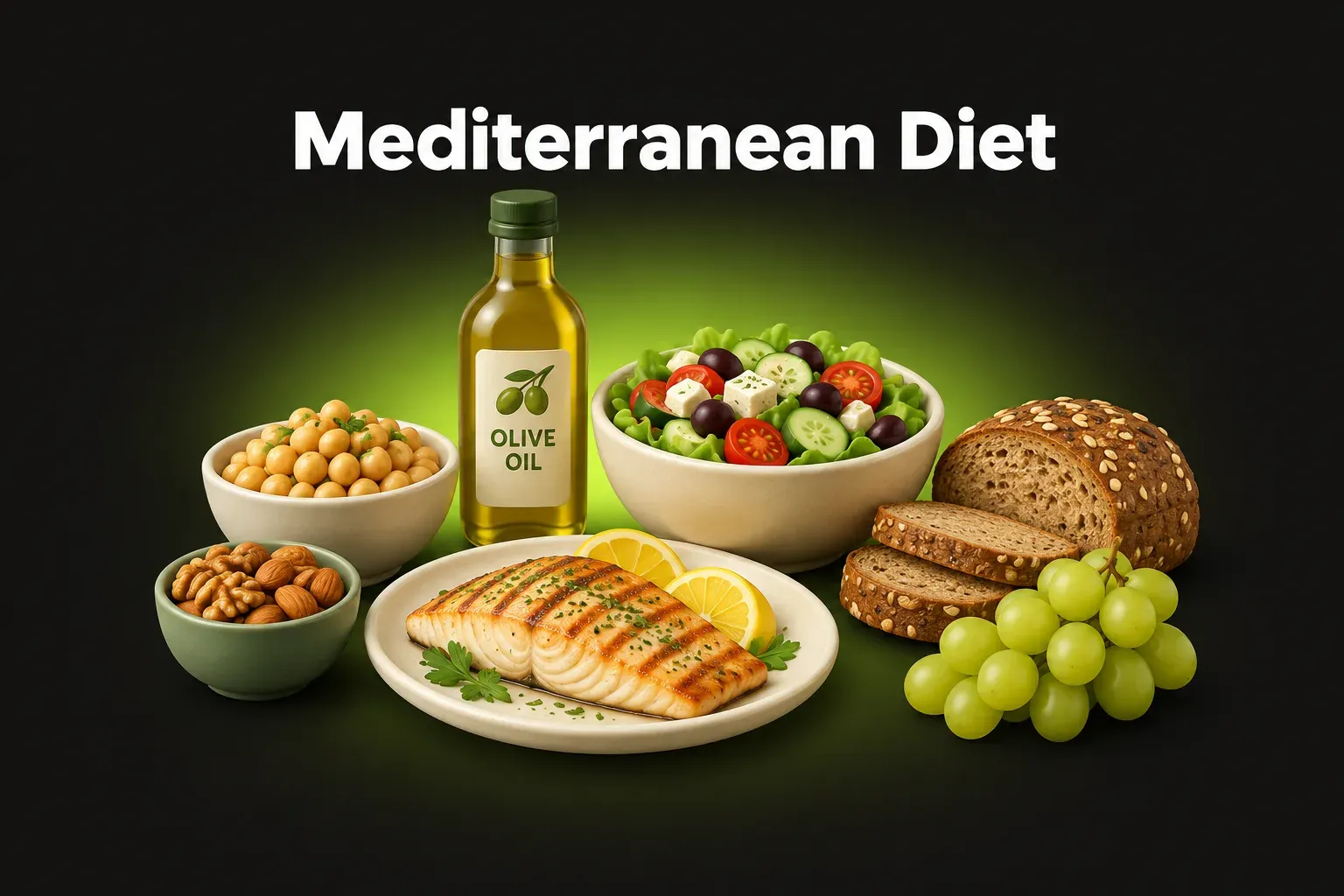
Olive oil is mostly monounsaturated fat (oleic acid), which helps lower LDL cholesterol when it replaces saturated fat. Extra virgin olive oil also has polyphenols – plant compounds that work as antioxidants. In the large Spanish PREDIMED study, people who followed a Mediterranean diet with extra virgin olive oil (about 4 tablespoons a day) had about 30% fewer heart attacks and strokes than people on a lower-fat diet. Read more about the Mediterranean diet.
Olive oil vs other fats
| Fat (1 tablespoon) | Calories | Saturated fat |
|---|---|---|
| Olive oil | 119 kcal | 1.9 g |
| Canola oil | 124 kcal | 1.0 g |
| Sunflower oil | 120 kcal | 1.4 g |
| Butter | 102 kcal | 7.3 g |
| Coconut oil | 121 kcal | 11.2 g |
All oils have about the same calories. The difference is the type of fat: olive oil and canola oil have little saturated fat, while butter and coconut oil have a lot.
Calories olive oil adds to dishes
| Dish | Calories from oil |
|---|---|
| Salad with 1 tbsp olive oil vinaigrette | about 120 kcal |
| Restaurant salad (2–3 tbsp dressing) | about 240–360 kcal |
| Bread dipped in olive oil (2 tbsp) | about 240 kcal + bread |
| Pan-frying vegetables (1 tbsp) | about 120 kcal |
| Roasted potatoes (2 tbsp for 4 servings) | about 60 kcal per serving |
| Pasta with olive oil and garlic | about 200–300 kcal from oil |
What to check on the label
- Extra virgin is the least processed and has the most polyphenols and flavor.
- “Light” or “pure” olive oil is refined: milder taste, same calories, fewer polyphenols.
- Blends may mix olive oil with cheaper oils. Read the ingredient list.
- Harvest date and dark glass help: olive oil loses quality with light, heat and time.
Is olive oil good for weight loss?
It can be – in measured amounts. Studies on the Mediterranean diet found that olive oil doesn’t lead to weight gain when it replaces other fats, and it makes vegetables and salads more satisfying. But at 119 calories per tablespoon, it’s easy to overdo.
How to use it wisely:
- Measure with a spoon for salads and cooking.
- Use a non-stick pan so you need less oil.
- Make a vinaigrette with more vinegar or lemon and less oil.
- Count the “free pour” on bread, pasta and restaurant salads.
Remember that you lose weight only when you eat fewer calories than you burn. Read more about the calorie deficit and find your number with our calorie calculator.
Count the calories in your salad without guesswork. With NutriSmart, you snap a photo of what you eat, and the app counts your calories, protein, carbs and fat – including the dressing – and shows how much you have left for the day.Get the app free
You can also read how many calories are in avocado and about sunflower oil.
The bottom line
A tablespoon of olive oil has about 119 calories and a teaspoon about 40 – the same for extra virgin, regular and light. Olive oil is one of the healthiest fats, rich in monounsaturated fat and, if extra virgin, polyphenols. Enjoy it every day, but measure it: a free pour can easily add a few hundred calories.
FAQ
How many calories are in a tablespoon of olive oil?
About 119 calories. A tablespoon (13.5 g) is pure fat: about 10 g of monounsaturated, 1.9 g of saturated and 1.4 g of polyunsaturated fat.
How many calories are in a teaspoon of olive oil?
About 40 calories. A teaspoon is 4.5 g.
Does extra virgin olive oil have fewer calories?
No. All olive oils – extra virgin, virgin, regular and 'light' – have the same calories, about 119 per tablespoon. Extra virgin has more polyphenols, the plant compounds behind many of its health benefits.
What does 'light' olive oil mean?
'Light' refers to the color and taste, not the calories. Light olive oil is refined and has a milder flavor, but exactly the same calories as extra virgin.
Is olive oil good for weight loss?
It's a healthy fat, but very calorie-dense. Studies on the Mediterranean diet found that olive oil doesn't cause weight gain when it replaces other fats. The key is to measure it, because a 'splash' can be 2–3 tablespoons.
Do olive oil sprays have zero calories?
No. Labels can say 0 calories because one spray (about 0.25 g) is tiny. A 3–5 second spray can still add 20–50 calories.