How Are Food Products Rated in NutriSmart?
How NutriSmart calculates a product's health score out of 100: 65% additives and risky ingredients, 35% Nutri-Score. The full method, penalties and sources.
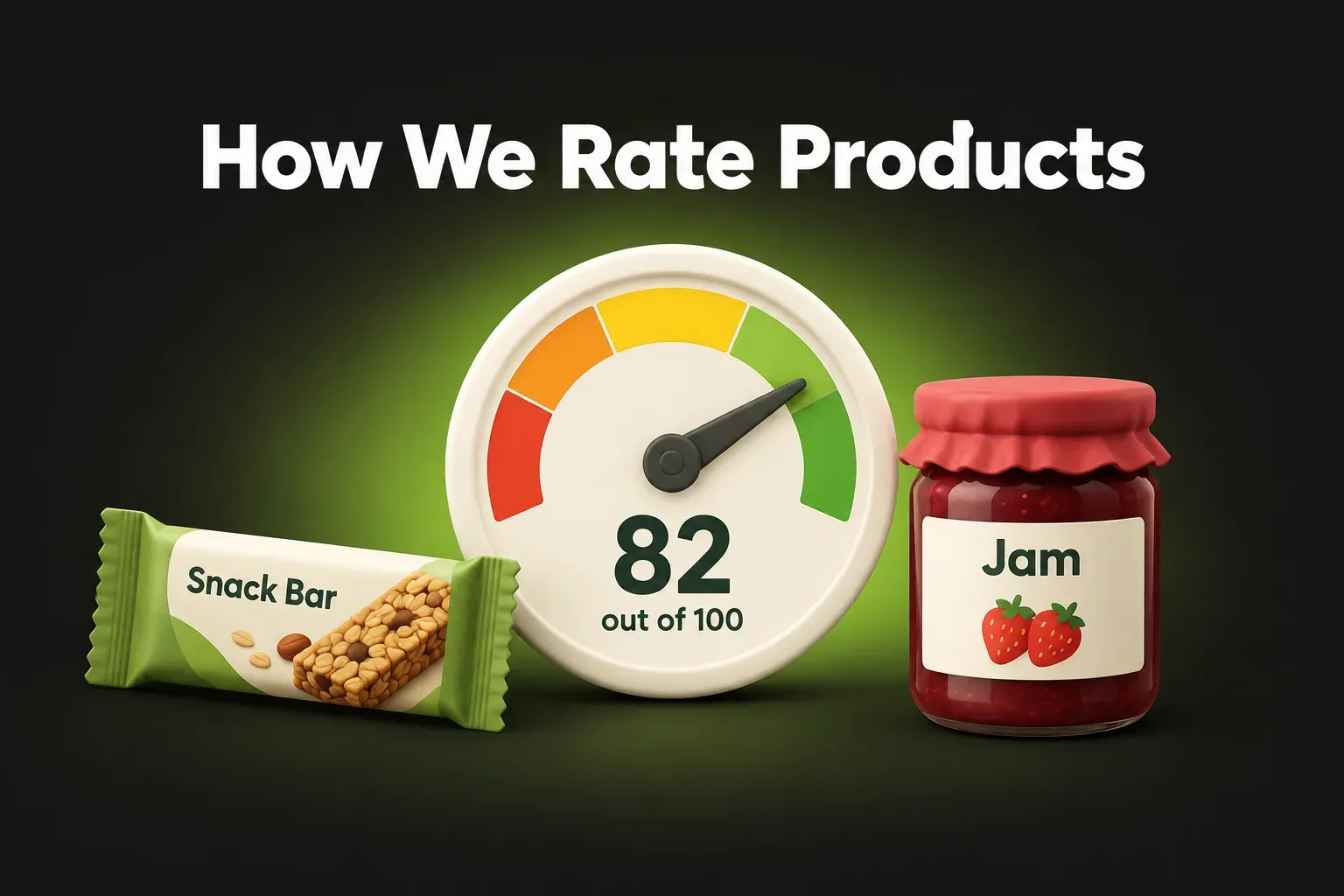
Food products in NutriSmart get a score based on two things:
1. Additives and risky ingredients (NutriSmart score) – 65% of the score 2. How healthy the nutrients are (Nutri-Score) – 35% of the score
The final score is shown out of 100.
Nutrients – 35% (Nutri-Score)
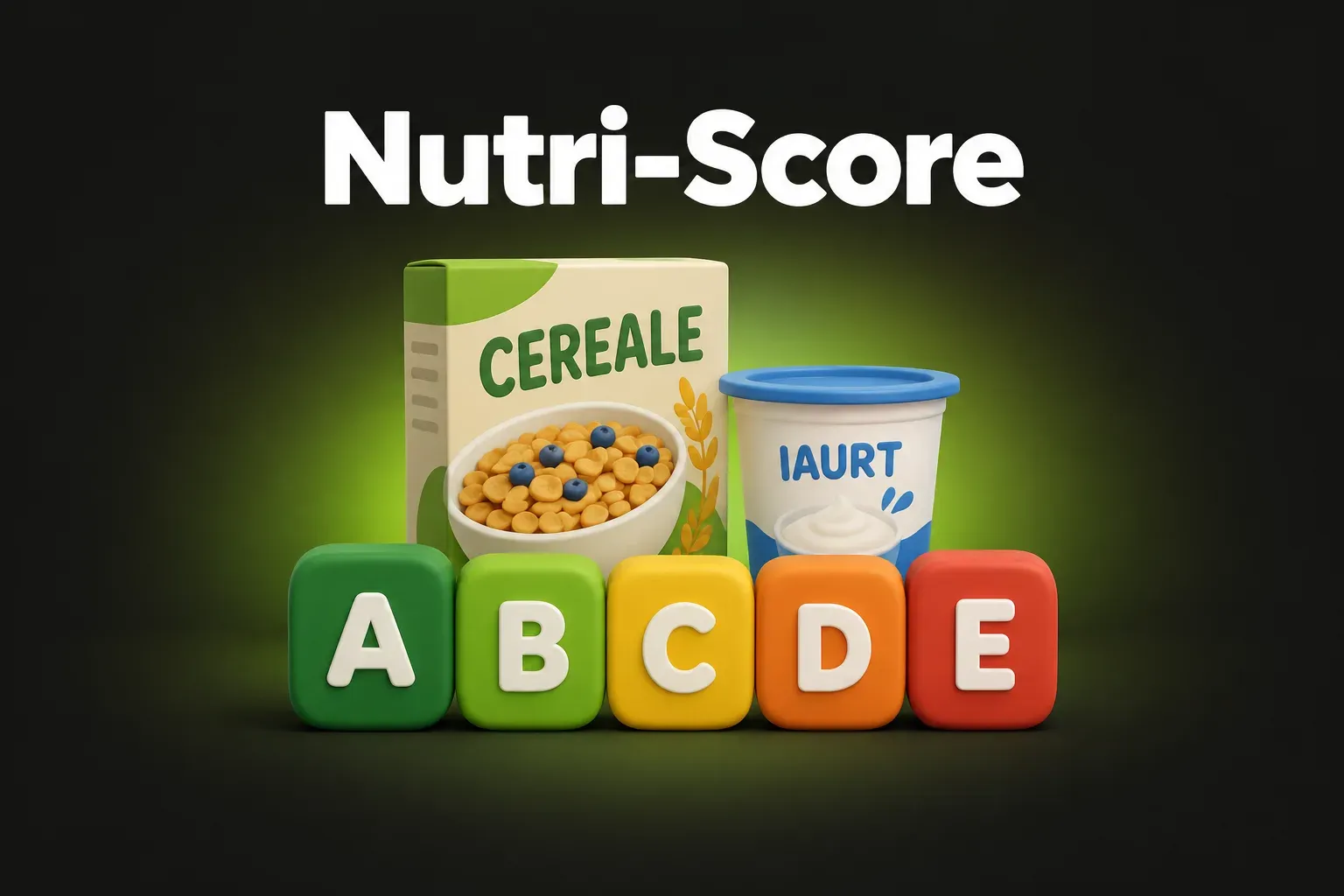
To see how balanced a product is, we use Nutri-Score. It’s a science-based label used officially in 8 European countries: France, Belgium, Germany, Luxembourg, the Netherlands, Spain, Switzerland and, since 2024, Portugal. The method is supported by the IARC, the World Health Organization’s cancer agency. IARC says the method has a solid scientific basis and helps people choose healthier food.
How it works (per 100 g or 100 ml):
- raises the score: fiber, protein, fruits and vegetables;
- lowers the score: calories, sugars, saturated fat and salt.
How much it counts: the Nutri-Score result is turned into a score out of 100 and makes up 35% of the total.
Missing data on the label: sometimes the label doesn’t say everything – for example, what percentage of the product is fruit or vegetables. Then we estimate it carefully, on the low side, or mark it as unknown until we find out.
Updates: we use the official, public Nutri-Score rules. When the rules change, we update NutriSmart too, after checking that everything is calculated correctly.
Additives and risky ingredients – 65% (NutriSmart score)
Besides Nutri-Score, NutriSmart looks at which additives and risky ingredients a product contains, based on the latest research.
The risk level of each additive or ingredient is based on:
- EFSA – the European Food Safety Authority,
- IARC – the World Health Organization’s cancer agency,
- and many independent studies published in science journals.
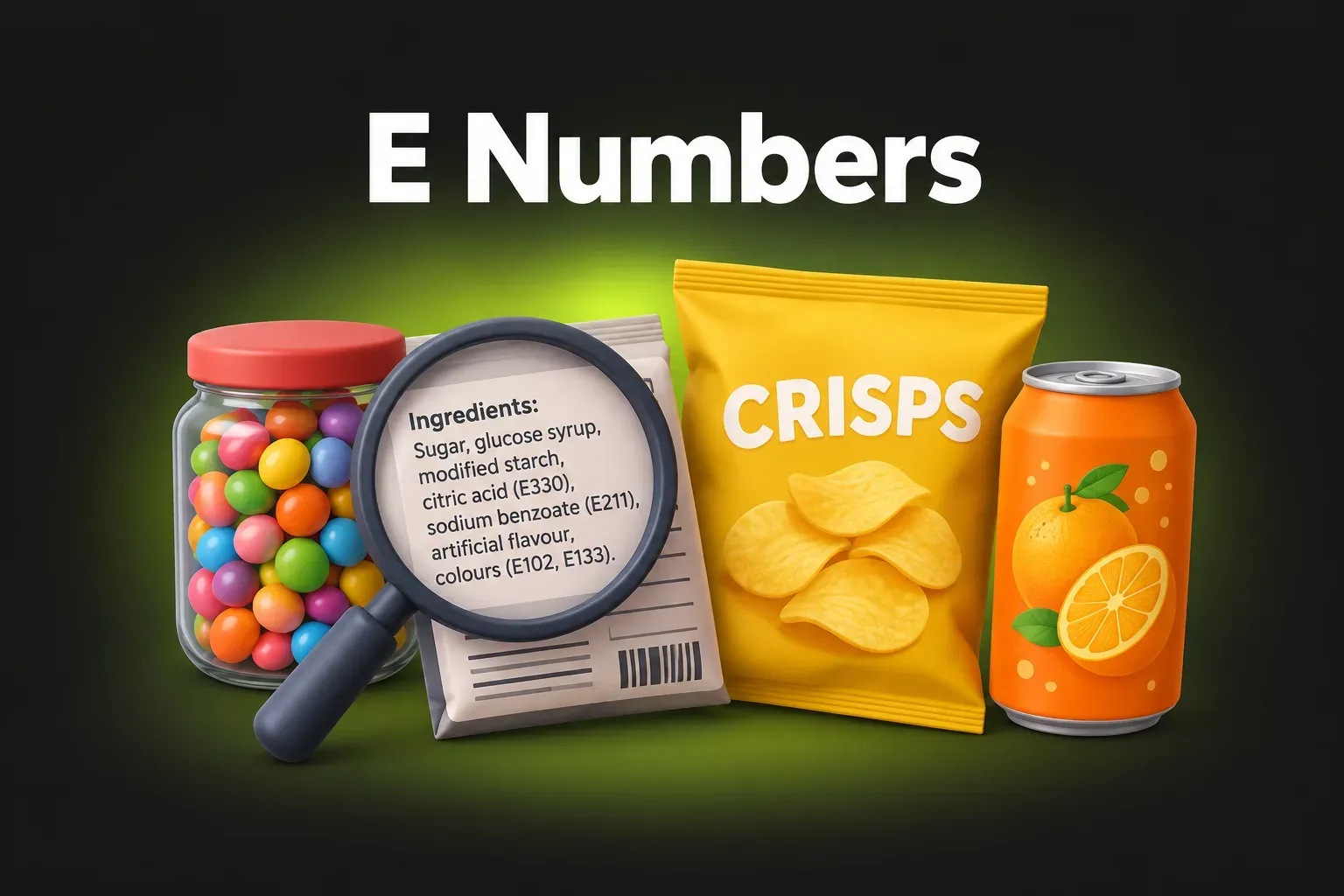
Each additive or ingredient gets a risk level (you can see the rating of every additive in our E numbers list):
- low risk (green)
- moderate risk (orange)
- high risk (red)
How the NutriSmart score is calculated
We start from 100 points and subtract:
- high risk: −15 points for each substance
- moderate risk: −10 points for each substance
- low risk: −2.5 points for each substance
The result can’t go below 0 or above 100. It makes up 65% of the product’s final score.
When nutrition facts are missing: if the label has no nutrition table, the final score is based only on additives and risky ingredients. Important exception: sugar doesn’t lose points here, because it’s already counted in Nutri-Score.
Our sources
Risk levels come only from scientific studies and official reports. For every additive or ingredient, we keep a list of the sources.
If you’d like to see the exact sources for an additive, write to us from the app (Help section) or from the website (Contact section). We’ll send you the studies we rely on.
You can read our guides to many common additives in our article on ultra-processed foods.
Products where the score doesn’t apply
For some products, the score in the app doesn’t tell the whole story:
- Infant formula and foods for babies and young children (for example formula, follow-on formula, special baby foods). These follow special, very strict rules by law, different from those for regular foods. The score doesn’t really show how good they are, and it shouldn’t be used to choose a formula for your baby.
- Medicines and food supplements (for example vitamins, minerals, syrups, powders for treatment). These follow completely different rules from foods and shouldn’t be scored with Nutri-Score or the NutriSmart score.
In these cases, the app shows only the information on the label (ingredients, allergens, nutrition facts, etc.), and the score doesn’t help you choose the product.
FAQ
How does NutriSmart calculate a product's health score?
The score out of 100 has two parts: additives and risky ingredients (65%), and how healthy the nutrients are, measured with Nutri-Score (35%). For additives, we start from 100 points. We subtract 15 points for each high-risk substance, 10 points for each moderate-risk one and 2.5 points for each low-risk one.
Why do additives count more than Nutri-Score?
Because Nutri-Score doesn't consider additives or processing at all. A product can have good nutrition and still contain risky sweeteners, emulsifiers or preservatives. Because additives make up 65% of the score, they really count in the final result.
Where do the additive risk levels come from?
From EFSA and IARC assessments and independent scientific studies, including animal and cell studies. We keep the sources for every additive, and we can send you the exact references on request.
Is sugar counted twice?
No. Sugar is only included in the Nutri-Score part, so it isn't penalized again under additives and risky ingredients.
What if a product has no nutrition facts on the label?
Then the score is calculated only from additives and risky ingredients.
Which products shouldn't be judged by the score?
Infant formula and baby foods, and medicines and food supplements, which follow different rules. For these, the app shows the label information, but don't use the score to choose the product.