Blue 2 (Indigo Carmine): Side Effects, Foods and Bans
What Blue 2 (indigo carmine, E132) is, which foods contain it, what studies show about rats and children's behavior, and why it's being phased out.
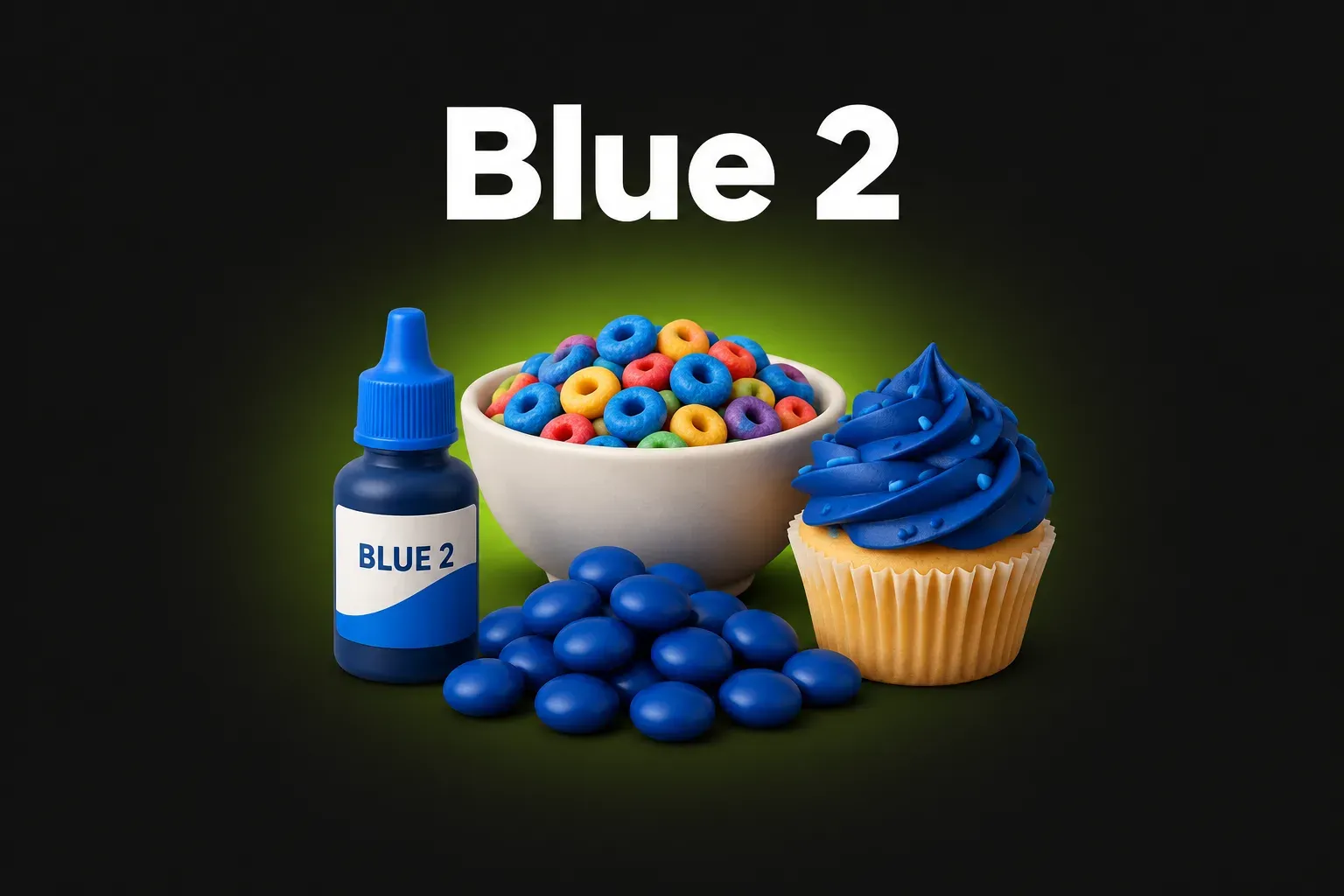
Blue 2 gives candy, cereals, frosting and drinks a deep royal or navy blue color – and mixed with other dyes, it helps make purple, brown and black foods. It’s one of the six petroleum-based dyes the FDA asked companies to remove by the end of 2026.
The short answer: Blue 2 (indigo carmine, indigotine, E132) is a lab-made version of indigo dye, made from petroleum-based chemicals. It’s still allowed in the US and EU. In the long-term rat study used for its approval, male rats on the highest dose had more brain tumors – the FDA judged the increase not significant. Synthetic dyes as a group can worsen behavior in some children. In 2025, the FDA asked companies to phase it out. NutriSmart rates it as moderate risk.
What is Blue 2?
Indigo is one of the oldest dyes in the world – it’s what made blue jeans blue. Indigo carmine is a chemically modified, water-soluble version of it. For food, it’s made synthetically from petroleum-based chemicals.
On labels, you’ll see:
| Name | Where |
|---|---|
| Blue 2 / FD&C Blue No. 2 | US labels |
| Blue 2 Lake | Candy coatings, tablets |
| Indigo carmine / indigotine | UK, EU, medicines |
| E132 | EU, UK and many other countries |
Don’t confuse it with Blue 1 (Brilliant Blue, E133), a brighter turquoise blue.
Which foods contain Blue 2?
- Candy, jelly beans and chocolate candy coatings
- Breakfast cereals, especially colorful kids’ cereals
- Frosting, sprinkles and cake decorations
- Ice cream, popsicles and desserts
- Sports and energy drinks
- Pet foods and treats
- Pills and vitamins; it’s also injected in some medical tests
It’s often combined with Red 40 or Yellow 5 to create purple, brown, gray or black shades.
Is Blue 2 bad for you? What the research says
Brain tumors in rats
In the long-term study used for its approval, rats ate Blue 2 for up to 30 months. Male rats on the highest dose had more gliomas (a type of brain tumor). The researchers and the FDA concluded this was not biologically significant, because the overall tumor rate was within the normal range for old rats (Borzelleca et al., Food and Chemical Toxicology, 1985). The study was done decades ago and hasn’t been repeated with modern methods – which critics see as a reason for caution.
Behavior in children
Blue 2 wasn’t part of the famous Southampton study. But a 2022 review by California’s environmental health agency looked at 27 trials and concluded that synthetic food dyes can cause or worsen behavior problems in some children (Miller et al., Environmental Health, 2022).
Allergies
Rarely, Blue 2 can cause hives or itching. When it’s injected in high doses for medical tests, more serious reactions have occurred, but that’s very different from the small amounts in food.
Why NutriSmart rates it moderate risk
NutriSmart keeps its high risk rating for additives with stronger evidence – like cancer in animals at realistic doses, damage to DNA, or a required warning label, as with the six dyes from the Southampton study. Blue 2 doesn’t meet that bar: the brain tumor finding was judged not significant, and it hasn’t been tested directly for effects on behavior. But it adds nothing nutritional, it’s being phased out in the US, and synthetic dyes as a group affect behavior in sensitive children. That’s why it gets a moderate risk rating, and it’s still worth limiting, especially for children.
What regulators say
- EU: allowed, with a safe daily limit of 5 mg per kg of body weight.
- US: in April 2025, the FDA asked companies to remove petroleum-based dyes, including Blue 2, by the end of 2026 (FDA).
- States: California bans it in public school food from 2027, and West Virginia passed a law to ban it in food sold in the state.
How to avoid Blue 2
- Read labels – look for Blue 2, Blue 2 Lake, FD&C Blue No. 2, indigo carmine, indigotine or E132.
- Be careful with dark blue, purple and black foods – candy, frosting and cereals.
- Choose products colored with spirulina, butterfly pea flower or red cabbage for blue shades.
- Check pet foods and vitamins, which often contain dyes.
Spot Blue 2 on any label in seconds. With NutriSmart, you photograph the ingredient list or scan the barcode, and the app tells you right away if the product has Blue 2. Turn on an alert for it, and the app warns you every time a product you scan contains it. You’ll also see every other additive, the risks of each one and a health score out of 100.Get the app free
You can also read about other food dyes: Blue 1, Red 40, Red 3, Yellow 5 and Yellow 6.
The bottom line
Blue 2 (indigo carmine, E132) is a petroleum-based dark blue dye used in candy, cereals, frosting and drinks. In the rat study used for its approval, male rats had more brain tumors at the highest dose – judged not significant – and synthetic dyes as a group can worsen behavior in some children. The FDA has asked companies to phase it out by the end of 2026. Reading labels and choosing naturally colored foods is the easiest way to avoid it.
FAQ
What is Blue 2?
Blue 2, also called FD&C Blue No. 2, indigo carmine or indigotine (E132 in Europe), is a lab-made dark blue dye. It's a synthetic version of indigo, the plant dye once used for blue jeans, and it's made from petroleum-based chemicals.
Is Blue 2 bad for you?
It's still allowed in the US and EU, but it has some warning signs. In the long-term rat study used for its approval, male rats on the highest dose had more brain tumors – the FDA judged this not significant. Synthetic dyes as a group can worsen behavior in some children. NutriSmart rates it as moderate risk.
What's the difference between Blue 1 and Blue 2?
Blue 1 (Brilliant Blue, E133) is a bright turquoise blue; Blue 2 (indigo carmine, E132) is a darker royal or navy blue. They're different chemicals, and both are on the FDA's 2025 list of dyes to phase out.
Is Blue 2 banned?
Not yet. In 2025, the FDA asked companies to stop using Blue 2 and other petroleum-based dyes by the end of 2026. California bans it in public school food from 2027, and West Virginia passed a law to ban it in food sold in the state.
Which foods contain Blue 2?
Candy, cereals, frosting, ice cream, sports drinks, some snacks and pet foods. It's often mixed with red or yellow dyes to make purple, brown or black colors. It's also used in some pills and in medical tests.