Diabetic Meal Plan: 7 Days of Meals With Carbs Counted
A simple 7-day diabetic meal plan with calories and carbs for every meal, the diabetes plate method, foods to choose and limit, and when to talk to your doctor.
Being told you have diabetes or prediabetes often comes with one big question: what can I eat now? The answer is more relaxed than many people fear. There’s no special “diabetic food” and no single perfect diet. A good diabetic meal plan is mostly normal, healthy food – in the right portions, with the carbs spread out over the day.
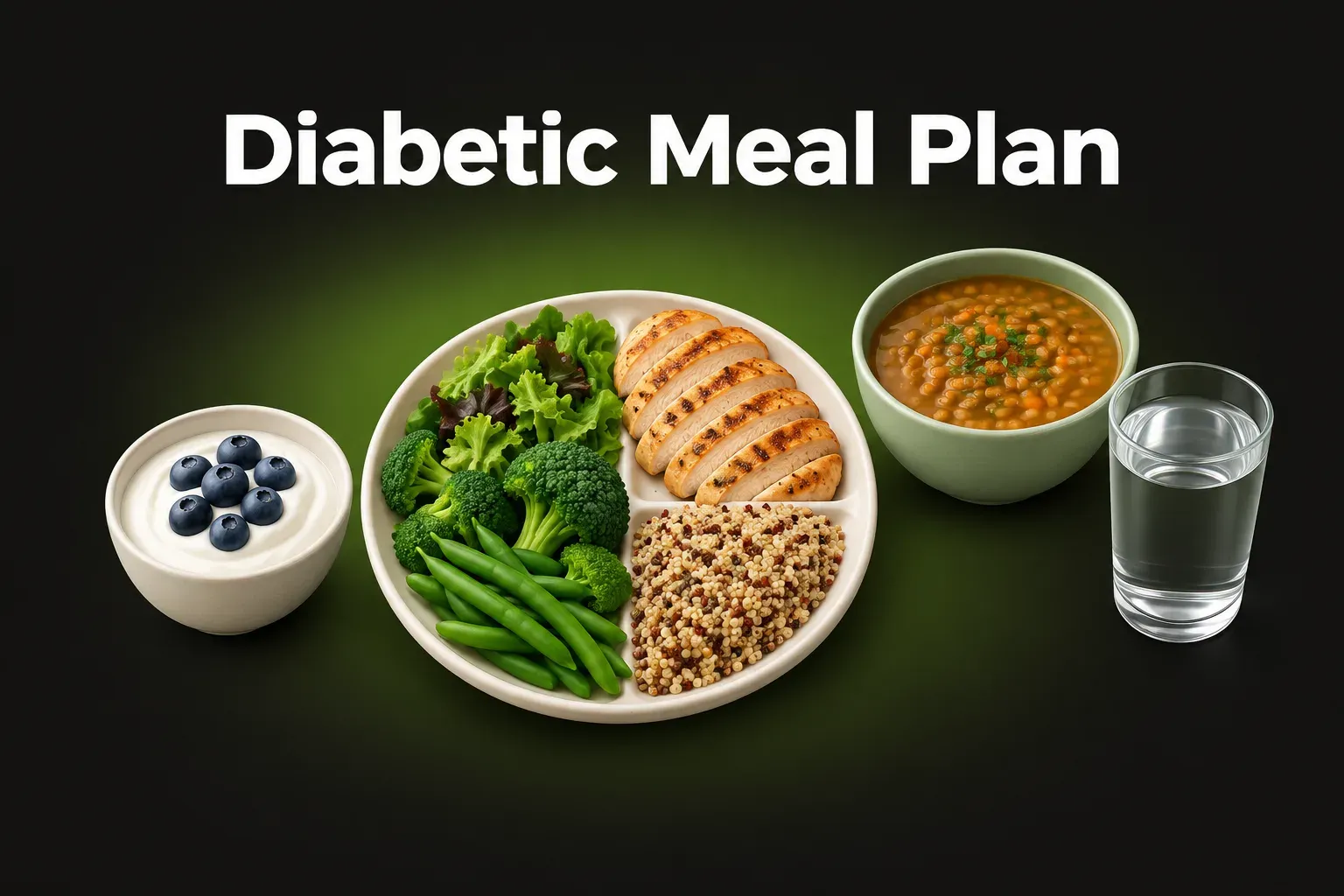
The short answer: build each meal like the diabetes plate – half non-starchy vegetables, a quarter lean protein and a quarter high-fiber carbs (beans, lentils, whole grains, potatoes, fruit). Drink water instead of sugary drinks. How many carbs you need depends on your body and medicine, so set your number with your doctor or a dietitian. Below is a 7-day plan with calories and carbs for every meal.
Important: this article is general information, not medical advice. If you take insulin or medicines that can cause low blood sugar (such as sulfonylureas, a type of diabetes pill), talk to your doctor before changing what you eat. Your doses may need to change.
The diabetes plate method
The easiest way to plan a meal is the plate method, recommended by the CDC and the American Diabetes Association (CDC, ADA). Use a 9-inch (23 cm) dinner plate:
| Part of the plate | What to put there |
|---|---|
| ½ – non‑starchy vegetables | Salad, broccoli, green beans, peppers, zucchini, cauliflower, tomatoes, spinach |
| ¼ – lean protein | Chicken, turkey, fish, eggs, tofu, lean beef, cottage cheese |
| ¼ – carb foods | Brown rice, quinoa, whole-wheat pasta or bread, potatoes, beans, lentils, fruit |
| To drink | Water, sparkling water, unsweetened tea or coffee |
You don’t need to count anything with the plate. It keeps carbs moderate and fills you up with vegetables and protein.
Carbs: how much and which ones
Carbs raise blood sugar the most, so they matter more than anything else on your plate.
- How much: in diabetes meal planning, one “carb serving” is about 15 g of carbs – for example a slice of bread, a small apple or ⅓ cup of rice. There’s no single right number of carbs per day; work it out with your doctor or a registered dietitian (CDC).
- Which ones: choose carbs with fiber – beans, lentils, whole grains, vegetables and whole fruit. A review of studies in people with diabetes found that eating more fiber and whole grains improved blood sugar levels and was linked to a lower risk of dying early (Reynolds et al., PLOS Medicine, 2020).
- When: spread carbs over the day instead of eating most of them in one big meal.
Foods with a low glycemic index raise blood sugar more slowly. See our lists of low glycemic index foods and low glycemic fruits, and our guide to high-fiber foods.
7-day diabetic meal plan
This plan gives about 1,200–1,400 calories and 105–135 g of carbs a day, with 15–45 g of carbs per meal and smaller snacks. That suits many people who also want to lose some weight. If you need more food, add carbs or protein in the amounts your care team suggests – for example an extra slice of whole-grain bread or more chicken.
Calories and carbs are based on USDA FoodData Central values and rounded. Check labels: brands differ.
Day 1
| Meal | What to eat | Calories | Carbs |
|---|---|---|---|
| Breakfast | 170 g plain nonfat Greek yogurt, ½ cup blueberries, 1 tbsp chia seeds, 1 tbsp walnuts | 250 | 23 g |
| Lunch | Salad with 3 oz grilled chicken, greens, tomatoes, cucumber, ½ cup chickpeas, 2 tsp olive oil + lemon | 385 | 30 g |
| Snack | 1 small apple + 1 tbsp peanut butter | 170 | 24 g |
| Dinner | 4 oz baked salmon, ½ cup quinoa, 1 cup broccoli with 1 tsp olive oil | 410 | 26 g |
| Snack | 1 oz almonds | 165 | 6 g |
| Total | 1,380 | 109 g |
Day 2
| Meal | What to eat | Calories | Carbs |
|---|---|---|---|
| Breakfast | Omelet with 2 eggs, spinach, peppers and 1 oz feta, cooked in 1 tsp oil + 1 slice whole-wheat toast | 355 | 17 g |
| Lunch | Whole-wheat wrap with 3 oz roasted turkey, 2 tbsp hummus, lettuce and tomato + 1 cup baby carrots | 385 | 39 g |
| Snack | ½ cup cottage cheese + ½ cup berries | 130 | 12 g |
| Dinner | Chicken stir-fry: 4 oz chicken, 2 cups vegetables, 1 tsp oil, low-sodium soy sauce, ½ cup brown rice | 405 | 35 g |
| Snack | 3 cups air-popped popcorn | 95 | 19 g |
| Total | 1,370 | 122 g |
Day 3
| Meal | What to eat | Calories | Carbs |
|---|---|---|---|
| Breakfast | ⅓ cup oats cooked in 1 cup skim milk, 1 tbsp walnuts, ½ cup berries, cinnamon | 265 | 39 g |
| Lunch | 1½ cups lentil vegetable soup + 1 string cheese | 360 | 41 g |
| Snack | 1 cup baby carrots + 2 tbsp hummus | 115 | 14 g |
| Dinner | Turkey chili: 3 oz lean ground turkey, ½ cup beans, tomatoes, peppers, onion, 2 tbsp Greek yogurt | 355 | 33 g |
| Snack | 1 oz almonds | 165 | 6 g |
| Total | 1,260 | 133 g |
Day 4
| Meal | What to eat | Calories | Carbs |
|---|---|---|---|
| Breakfast | 1 slice whole-grain toast, ¼ avocado, 2 eggs | 285 | 18 g |
| Lunch | Tuna salad (1 can tuna, Greek yogurt, celery, mustard) on greens, ½ cup quinoa, ¼ avocado | 360 | 27 g |
| Snack | 1 small apple + 1 tbsp peanut butter | 170 | 24 g |
| Dinner | 5 oz baked cod, 1 small sweet potato, 1 cup green beans, 1 tsp olive oil | 325 | 29 g |
| Snack | ½ cup cottage cheese + ½ cup berries | 130 | 12 g |
| Total | 1,270 | 110 g |
Day 5
| Meal | What to eat | Calories | Carbs |
|---|---|---|---|
| Breakfast | ½ cup cottage cheese, ½ cup pineapple, 1 slice whole-wheat toast | 215 | 29 g |
| Lunch | Burrito bowl: 3 oz chicken, ½ cup black beans, ¼ cup brown rice, lettuce, salsa, ¼ avocado | 375 | 36 g |
| Snack | 1 oz almonds | 165 | 6 g |
| Dinner | ¾ cup whole-wheat pasta, 4 turkey meatballs, ½ cup marinara, side salad with 1 tsp olive oil | 470 | 45 g |
| Snack | 1 cup baby carrots + 2 tbsp hummus | 115 | 14 g |
| Total | 1,340 | 130 g |
Day 6
| Meal | What to eat | Calories | Carbs |
|---|---|---|---|
| Breakfast | 170 g plain nonfat Greek yogurt, ½ cup blueberries, 1 tbsp chia seeds, 1 tbsp walnuts | 250 | 23 g |
| Lunch | Whole-wheat wrap with 3 oz roasted turkey, 2 tbsp hummus, lettuce and tomato + 1 cup baby carrots | 385 | 39 g |
| Snack | 3 cups air-popped popcorn | 95 | 19 g |
| Dinner | Tofu curry: 150 g firm tofu, 1½ cups vegetables, ¼ cup light coconut milk, spices, ½ cup brown rice | 415 | 37 g |
| Snack | 170 g plain Greek yogurt + ½ cup berries | 135 | 14 g |
| Total | 1,280 | 132 g |
Day 7
| Meal | What to eat | Calories | Carbs |
|---|---|---|---|
| Breakfast | Omelet with 2 eggs, spinach, peppers and 1 oz feta, cooked in 1 tsp oil + 1 slice whole-wheat toast | 355 | 17 g |
| Lunch | Salad with 3 oz grilled chicken, greens, tomatoes, cucumber, ½ cup chickpeas, 2 tsp olive oil + lemon | 385 | 30 g |
| Snack | ½ cup cottage cheese + ½ cup berries | 130 | 12 g |
| Dinner | Shrimp stir-fry: 4 oz shrimp, 2 cups vegetables, 1 tsp oil, low-sodium soy sauce, ½ cup quinoa | 335 | 33 g |
| Snack | 1 small apple + 1 tbsp peanut butter | 170 | 24 g |
| Total | 1,375 | 116 g |
Foods to choose and foods to limit
| Choose more often | Limit |
|---|---|
| Non-starchy vegetables, salad | Soda, sweet tea, energy drinks, fruit juice |
| Beans, lentils, chickpeas | White bread, white rice, pastries |
| Whole grains: oats, brown rice, quinoa, whole-wheat bread | Sweetened breakfast cereals and granola |
| Whole fruit, especially berries, apples, pears, citrus | Sweets, desserts, candy |
| Fish, chicken, eggs, tofu, Greek yogurt | Processed meat: bacon, sausages, deli meat |
| Nuts, seeds, olive oil, avocado | Fried food and ultra-processed snacks |
| Water, unsweetened tea and coffee | Alcohol (it can also cause low blood sugar) |
Watch for hidden sugar on labels: corn syrup, dextrose, maltose, fruit juice concentrate and many other names. Our guide to ultra-processed food explains what to look for.
Losing weight can put type 2 diabetes into remission
If you have type 2 diabetes and overweight, weight loss is one of the most powerful things you can do. In the DiRECT study in the UK, people followed a structured weight-loss program with their family doctor. After a year, 46% were in remission – blood sugar below the diabetes range without diabetes medicine – compared with 4% in the usual-care group. Among those who lost 15 kg (33 lb) or more, 86% were in remission (Lean et al., The Lancet, 2018).
This was done under medical care, because medicine often has to be reduced as blood sugar falls. Don’t stop or change your medicine on your own. To see how many calories you need, use our free calorie calculator, and read how a calorie deficit works.
Other tips
- Eat regularly. Skipping meals and then eating a lot at once can make blood sugar swing.
- Start meals with vegetables and protein, then eat the carbs.
- Check your blood sugar as your doctor advises, especially after you change your meals. It shows you how different foods affect you.
- Move after meals. A 10–15 minute walk after eating helps your muscles use sugar.
- Get support. Ask for a referral to a registered dietitian or a diabetes education program – they can tailor this plan to you.
Plan your meals and see the carbs in each one. With NutriSmart, you answer 3 quick questions and get a week of healthy recipes with the shopping list ready. Not in the mood for a meal? Swap it in one tap. Then snap a photo of what you eat, and the app counts the carbs, calories and protein for you. In the food database you can also see the glycemic index of each food.Get the app free
The bottom line
A diabetic meal plan is mostly ordinary healthy food in the right amounts: half your plate non-starchy vegetables, a quarter lean protein and a quarter high-fiber carbs, with water instead of sugary drinks. Spread your carbs over the day, choose beans, lentils, whole grains and whole fruit, and limit sweets, refined carbs and processed meat. Set your carb target with your doctor or dietitian – especially if you use insulin – and remember that for type 2 diabetes, losing weight can make a big difference.
FAQ
What is the best meal plan for diabetes?
There's no single best diet. Health groups recommend a plan built on non-starchy vegetables, lean protein, high-fiber carbs like beans, lentils and whole grains, and healthy fats, with few sugary drinks, sweets and refined carbs. A simple way to start is the diabetes plate: half vegetables, a quarter protein, a quarter carbs.
How many carbs should a diabetic eat per meal?
There's no one-size-fits-all number. It depends on your body, activity, medicine and blood sugar goals. Work out your target with your doctor or a registered dietitian, especially if you use insulin. The sample plan below uses about 15–45 g of carbs per meal.
What foods should diabetics avoid?
Limit sugary drinks and fruit juice, sweets and desserts, white bread, white rice and pastries, sweetened breakfast cereals, fried food and processed meat. You don't have to ban them completely, but they should be the exception.
Can type 2 diabetes go into remission with diet?
For some people, yes. In the DiRECT study, 46% of people with type 2 diabetes who followed a weight-loss program were in remission after a year. That means their blood sugar was below the diabetes range without diabetes medicine. Among those who lost 15 kg (33 lb) or more, 86% were in remission. Do this only with your doctor, because your medicine may need to change.
Is fruit OK for diabetics?
Yes. Whole fruit has fiber and vitamins. Choose whole fruit over juice, have one portion at a time (a small apple, an orange, a cup of berries) and count its carbs. Berries, apples, pears and citrus raise blood sugar more slowly (they have a lower glycemic index).
Is this meal plan safe if I take insulin?
Talk to your doctor or diabetes educator first. If you use insulin or diabetes pills called sulfonylureas, changing how many carbs or calories you eat can cause low blood sugar. Your doses may need to be adjusted.