Is Pho Healthy? Calories, Sodium and How to Order
Is pho healthy? Calories, protein and sodium in small to large bowls, lean vs fatty cuts, chicken and instant pho, and how to order a lighter bowl.
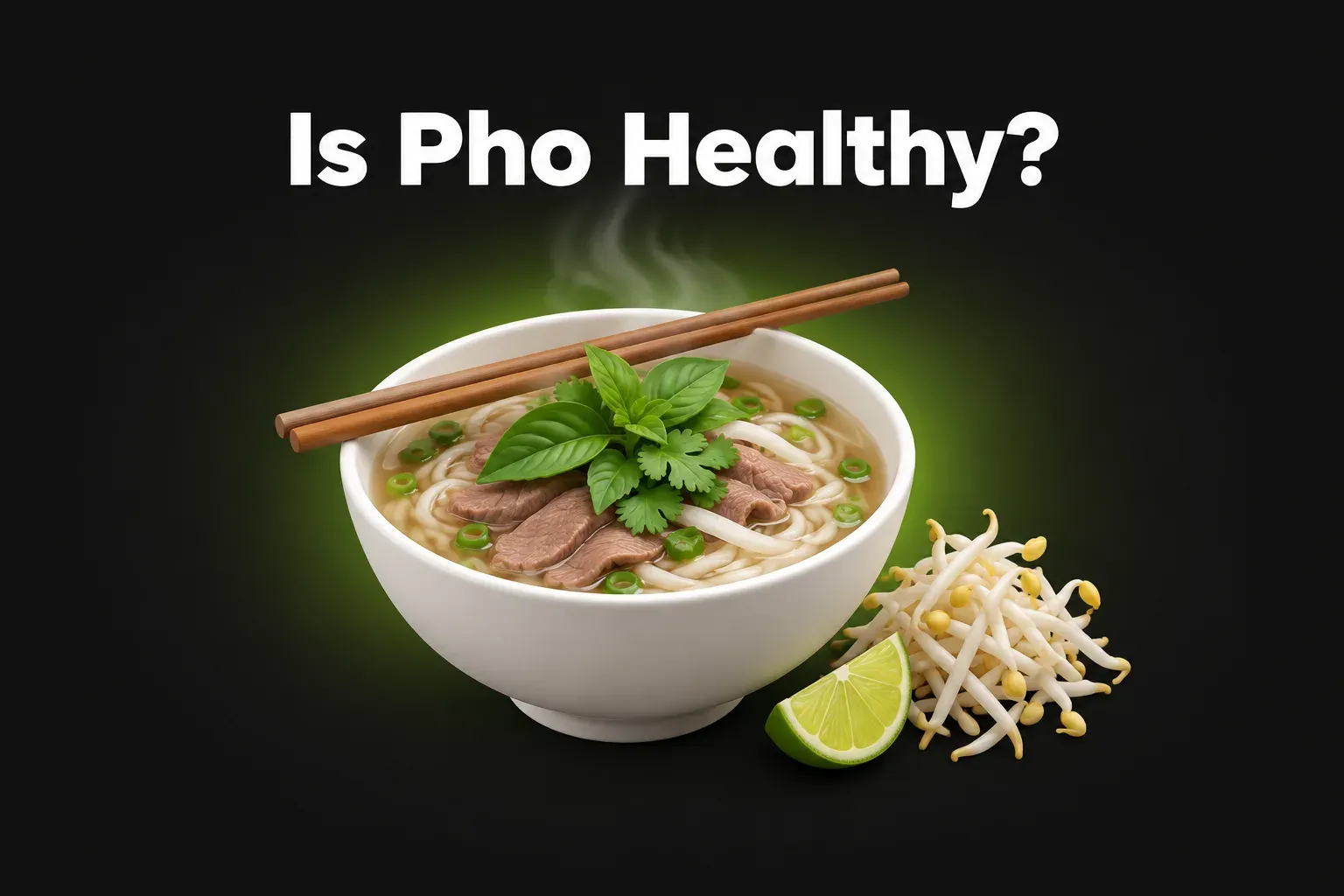
Pho (say “fuh”) is Vietnam’s famous noodle soup. A big bowl of clear, spiced broth with rice noodles, thin beef and fresh herbs looks light. But is pho healthy?
The short answer: mostly, yes. A medium bowl of beef pho has about 570 calories and 43 g of protein, with almost no sugar. It’s built from broth, meat, rice noodles and fresh herbs. The weak spot is sodium. That same bowl has about 2,700 mg – more than the 2,300 mg limit for a whole day. Choose a small bowl with lean meat, add lots of herbs and bean sprouts, and leave part of the broth.
Pho nutrition by bowl size
These numbers are USDA averages for beef pho with meat. Restaurants don’t use standard bowl sizes, so treat them as estimates.
| Bowl | Weight | Calories | Protein | Carbs | Fat | Sodium |
|---|---|---|---|---|---|---|
| 1 cup | 245 g | 189 | 14 g | 14 g | 8 g | 894 mg |
| Small (about 2 cups) | 490 g | 377 | 28 g | 27 g | 16 g | 1,789 mg |
| Medium (about 3 cups) | 735 g | 566 | 43 g | 41 g | 24 g | 2,683 mg |
| Large (about 4 cups) | 980 g | 755 | 57 g | 55 g | 33 g | 3,577 mg |
Source: USDA FoodData Central – soup, pho, with meat. Values per 100 g, multiplied to each bowl size and rounded.
What stands out:
- Protein: a medium bowl has about 43 g. That’s about as much as 5 oz (150 g) of cooked chicken breast.
- Sugar: only about 3 g in a medium bowl, before you add sauces.
- Fiber: only about 3 g. Pho has herbs and sprouts, but not many vegetables.
- Sodium: even a small bowl has about 1,800 mg. A large bowl has more than 1.5 days’ worth.
For more on calories by bowl and add-on, see our guide to calories in pho.
The broth: where the salt hides
Pho broth simmers for hours with beef bones, charred onion, ginger and spices like star anise, cinnamon and clove. That part is fine. The salt comes from what cooks add for flavor: salt, fish sauce and often sugar or MSG.
Here’s a clue that most of the sodium is in the broth. USDA also lists pho without meat. It has 357 mg of sodium per 100 g. Pho with meat has 365 mg (USDA). So the meat adds very little salt. The soup itself does.
How much is too much? The American Heart Association says to stay under 2,300 mg a day. Its ideal goal is 1,500 mg for most adults (AHA). One small bowl of pho uses most of that.
Why does it matter? Too much salt raises blood pressure. And high blood pressure raises the risk of heart attacks and strokes.
- Less salt, lower blood pressure. A review pooled 34 trials with 3,230 people. They cut their salt by about 4.4 g a day. That’s about 1,700 mg of sodium – about one small bowl of pho. After four weeks or more, their top blood pressure number fell by about 4 points. The drop was bigger in people with high blood pressure (He et al., BMJ, 2013).
- Less sodium, fewer strokes. A large trial took place in 600 villages in rural China. It included 20,995 older people with high blood pressure or a past stroke. Half the villages swapped regular salt for a salt with less sodium. Over about five years, they had 14% fewer strokes and fewer deaths (Neal et al., New England Journal of Medicine, 2021).
The easy fix: you don’t have to drink all the broth. Eat the noodles, meat and herbs first. Then sip only as much broth as you want. Each cup of pho has about 900 mg of sodium, and most of it is in the broth. So every cup you leave behind cuts a lot of salt.
What about MSG?
Some pho shops add MSG (monosodium glutamate). So do some instant bowls – Annie Chun’s lists it on the label. It gives a rich, savory taste. The FDA allows it, and most people have no symptoms from normal amounts with food.
- In people: a trial tested 130 people who thought they reacted to MSG. A large dose (5 g) on an empty stomach caused more symptoms than a dummy pill in some of them. But the symptoms weren’t serious. They also often didn’t come back when people were tested again (Geha et al., Journal of Allergy and Clinical Immunology, 2000).
- In animals: a review looked at studies in mice given MSG. Most studies used about 4 g per kg (2.2 lb) of body weight, by mouth or by shot. That’s far more than a person gets from food. The mice had damaged nerve cells and worse short-term memory. High doses also lowered serotonin, a chemical messenger in the brain (Ankul et al., Frontiers in Pharmacology, 2023).
Why do animal studies matter? Mice share most of our genes and body processes. And testing a possible harm on people would put their health at risk. The doses in these studies were high, and proof in humans is missing. Still, several labs have seen similar signs. So it makes sense to limit very salty, MSG-rich foods like instant soups as a precaution.
Rice noodles: the main source of carbs
Pho noodles (banh pho) are flat noodles made from white rice flour and water. They’re usually gluten-free, but they have little fiber or protein.
One cup of cooked rice noodles (176 g) has about 190 calories, 42 g of carbs, 3 g of protein and under 2 g of fiber (USDA). A big restaurant bowl can hold a lot of noodles. If you’re watching carbs or blood sugar, ask for fewer noodles and more sprouts. Read more in is white rice healthy? To compare rice noodles with other kinds, see the healthiest noodles.
Lean vs fatty cuts
The meat you pick makes the biggest difference in calories and fat. Here is 2 oz (57 g) of each cooked meat. That’s about what a small bowl holds.
| Meat (2 oz / 57 g) | Calories | Protein | Fat | Sodium |
|---|---|---|---|---|
| Rare steak (eye of round) – pho tai | 95 | 17 g | 2.5 g | 38 mg |
| Chicken breast – pho ga | 86 | 17 g | 1.7 g | 36 mg |
| Chicken thigh | 111 | 14 g | 5.6 g | 43 mg |
| Tripe | 54 | 7 g | 2.3 g | 39 mg |
| Brisket – pho chin | 166 | 15 g | 11 g | 37 mg |
| Beef and tendon meatballs (3 balls) | 100 | 12 g | 4 g | 673 mg |
Sources: USDA FoodData Central – eye of round, roasted, chicken breast, stewed, chicken thigh, stewed, tripe, simmered, brisket, braised. Meatballs: Wef Chuan Beef & Beef Tendon Balls label on Open Food Facts, checked November 2026.
What to notice:
- Rare steak and chicken breast are the leanest picks. They give the most protein for the fewest calories.
- Brisket has more than four times the fat of rare steak.
- Tripe (cow stomach) is low in calories and fat. But it also has less protein.
- Meatballs are the salt trap. Three balls have about 670 mg of sodium – before the broth. The label also lists MSG and sodium phosphate, an additive that keeps processed meat juicy.
- Tendon is mostly collagen, the chewy protein in connective tissue. USDA doesn’t list cooked beef tendon, so it’s not in the table.
The “special” combo bowl (pho dac biet) has brisket, tendon, tripe and meatballs together. It’s the richest and saltiest choice on most menus.
Hoisin, sriracha and other add-ons
The plate of extras on the side changes your bowl too.
| Add-on | Calories | Sugar | Sodium |
|---|---|---|---|
| Hoisin sauce, 1 tbsp (16 g) | 35 | 4.4 g | 259 mg |
| Sriracha, 1 tsp (6.5 g) | 6 | 1.0 g | 138 mg |
| Bean sprouts, 1 cup (104 g) | 31 | 4.3 g | 6 mg |
| Extra rice noodles, 1 cup (176 g) | 190 | 0 g | 33 mg |
Source: USDA FoodData Central – hoisin sauce, sriracha, mung bean sprouts, rice noodles.
Hoisin is a sweet, thick sauce. Many people squeeze in two or three tablespoons. Three tablespoons add about 13 g of sugar and almost 800 mg of sodium. Sriracha is lighter, but it’s salty for its size.
Bean sprouts, Thai basil, cilantro, lime and jalapeño are the healthy part of the plate. They add crunch, flavor and a little fiber for almost no calories. Use all of them.
Tip: taste the broth before you add sauce. Or put the sauces in the small side dish and dip your meat into them. You’ll use much less.
Chicken pho and vegetarian pho
Pho ga uses chicken broth and chicken meat. With breast meat, it’s as lean as pho tai. With dark meat or skin, it has more fat. The broth is seasoned the same way, so the sodium is about the same as beef pho.
Vegetarian pho is lighter but not low in salt. USDA’s meatless pho has about 272 calories in a medium bowl (735 g). But it has only about 10 g of protein and still about 2,600 mg of sodium (USDA). Ask for tofu to add protein. Mushrooms and bok choy add flavor and fiber.
Instant pho and ready-made bowls
Store-bought pho is quick, but it’s a different food. Instant bowls are mostly noodles and a seasoning packet. Here are six products sold in the US. Bowls are shown per container, and the broth per cup.
| Product | Size | Calories | Protein | Carbs | Sodium |
|---|---|---|---|---|---|
| Snapdragon Beef Pho bowl | 2.1 oz (60 g) | 220 | 3 g | 44 g | 1,020 mg |
| Snapdragon Chicken Pho bowl | 2.1 oz (60 g) | 230 | 3 g | 43 g | 1,110 mg |
| Snapdragon Mushroom Pho bowl | 2.1 oz (60 g) | 220 | 4 g | 43 g | 1,200 mg |
| Annie Chun’s Pho Soup Bowl | 5.4 oz (153 g) | 260 | 10 g | 54 g | 1,180 mg |
| Ocean’s Halo Organic Pho Rice Big Noodle Bowl | 2 servings (116 g) | 380 | 6 g | 90 g | 1,060 mg |
| Ocean’s Halo Pho Broth (broth only) | 1 cup (236 ml) | 30 | 0 g | 5 g | 850 mg |
Sources: nutrition panels on the Snapdragon product pages for Beef, Chicken and Mushroom Pho; label on the Annie Chun’s product page; nutrition panels on the Ocean’s Halo pages for the Big Noodle Bowl and Pho Broth; checked November 2026. Recipes change – always check the package.
What to notice:
- Every bowl has over 1,000 mg of sodium. That’s about half a day’s limit in one small bowl.
- Protein is very low in instant bowls – 3 to 10 g. A small restaurant bowl has about 28 g. So instant pho is more of a snack than a meal.
- Ocean’s Halo counts its big bowl as 2 servings. The table shows the whole bowl.
- Annie Chun’s uses wheat (Hokkien) noodles, not rice noodles. So it’s not gluten-free.
- Ocean’s Halo Pho Broth is broth only, with no noodles or meat. It has 0 g of protein, but a cup still has 850 mg of sodium. You add your own noodles and toppings. For a broth that does have protein, read is bone broth healthy?
How to make instant pho better: use half the seasoning packet and top it with bean sprouts, herbs and leftover chicken or tofu. For more on instant noodles, see is ramen bad for you?
How to order a lighter, healthier bowl
- Get a small bowl. It still has about 28 g of protein.
- Pick lean meat: pho tai (rare steak) or pho ga with breast meat. Skip the combo bowl.
- Load up on bean sprouts, basil, lime and jalapeño.
- Eat the noodles and meat first, then leave part of the broth.
- Go easy on hoisin. Taste first, then dip instead of squeezing it in.
- Ask for extra vegetables if the menu has them.
Pho can be a great dinner if you want lots of protein. See more ideas in our high protein dinner guide. To see how a bowl fits your day, find your number with our calorie calculator.
Track your pho without guessing. With NutriSmart, you just photograph what you eat. The app counts the calories, protein, carbs and fat in your bowl. Then it shows how much is left of your daily target, so you know if that large bowl still fits.Get the app free
The bottom line
Pho is one of the healthier restaurant meals you can order. A medium bowl of beef pho has about 570 calories and 43 g of protein, with very little sugar. The big problem is sodium – about 2,700 mg in a medium bowl, more than a full day’s limit. Pick a small bowl with rare steak or chicken breast, add lots of herbs and sprouts, and go easy on hoisin. Leave part of the broth in the bowl. Instant pho is much lower in protein and still very salty, so treat it as a snack.
FAQ
Is pho healthy?
Mostly, yes. A medium bowl of beef pho has about 570 calories and 43 g of protein, with very little sugar. The weak spot is sodium: the same bowl has about 2,700 mg, more than the daily limit of 2,300 mg.
How much sodium is in a bowl of pho?
A small bowl (about 2 cups) has about 1,800 mg of sodium, and a medium bowl (about 3 cups) about 2,700 mg. Most of it is in the broth, so leaving part of the broth cuts a lot of salt.
Is pho good for weight loss?
It can be. Broth fills you up for few calories, and lean meat gives you protein. Order a small bowl with rare steak or chicken, add lots of herbs and bean sprouts, and go easy on hoisin.
What is the healthiest pho to order?
Pho tai (thin slices of rare steak) or pho ga with chicken breast in a small bowl. Both are lean and high in protein. The combo bowl with brisket, tripe, tendon and meatballs has the most fat and salt.
Is chicken pho healthier than beef pho?
Chicken breast and lean rare steak are about equally lean. Both are much leaner than brisket. The broth is salty in both, so the sodium is similar.
Is instant pho healthy?
Not very. The instant pho bowls we checked have 220–380 calories, only 3–10 g of protein and over 1,000 mg of sodium. Add vegetables and some chicken or tofu, and use only part of the seasoning packet.