Is Sourdough Bread Healthy? Real vs Store Loaves Compared
Is sourdough bread healthy? What studies say on blood sugar, gut and gluten, 8 US store loaves compared, and how to spot real sourdough on the label.
Sourdough has a health halo. People say it’s easier to digest and gentler on blood sugar. But is the loaf in your grocery cart really sourdough?
The short answer: real sourdough – made from flour, water, salt and a starter – is a good bread choice. It usually has no additives, and the long rise may make it a bit easier on the gut for some people. But the blood sugar benefits are not proven, and white sourdough is still white bread, with about 1 g of fiber per slice. It is not safe for celiac disease. Many store “sourdough” loaves are also made with baker’s yeast, vinegar and preservatives. Pick whole-grain sourdough with no yeast on the label.
What makes bread real sourdough
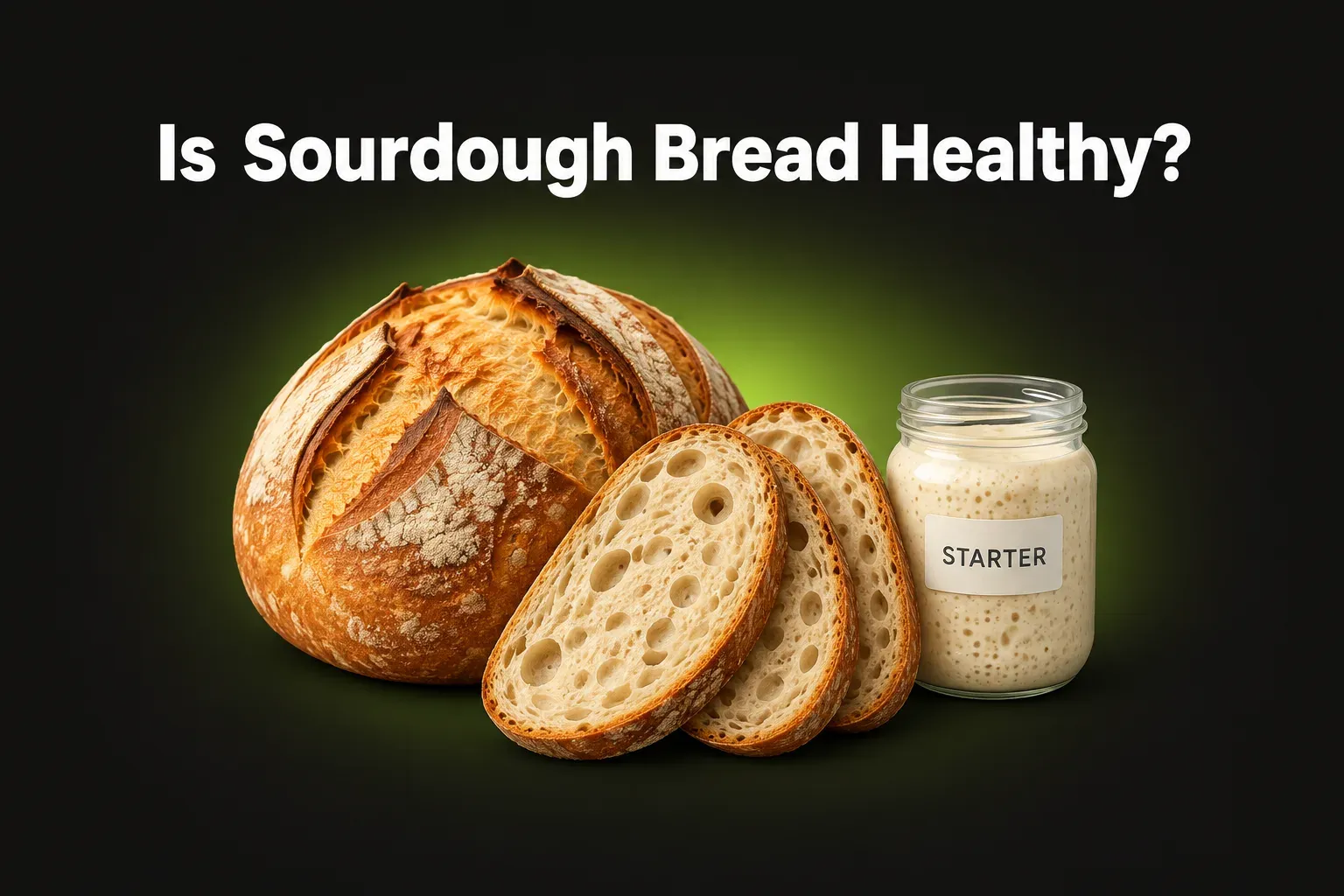
Real sourdough rises without baker’s yeast. It uses a starter – a mix of flour and water full of wild yeast and lactic acid bacteria (the same kind of bacteria that make yogurt). The dough rises slowly, often for many hours. The bacteria make acids, which give the bread its sour taste.
Factory bread is faster. It uses baker’s yeast and can be done in a few hours. To get the sour taste, some brands add vinegar, “natural flavor” or dried sourdough. UK bread campaigners call these loaves “sourfaux” (Real Bread Campaign).
In the US, this is allowed. There is no official standard for what sourdough bread must contain (Colorado State University Extension). So any loaf can say “sourdough” on the bag.
Watch out for two terms. “Fermented wheat flour” can be dried sourdough. “Cultured wheat flour” is something else. It’s flour fermented with special bacteria that make natural propionate, a mold blocker. Bakers use it in place of the preservative calcium propionate. It’s mainly there to keep bread fresh, not a sign of real sourdough (BAKERpedia).
8 store sourdough breads compared
Here are 8 sourdough breads sold in US stores. Slice sizes differ a lot, from 39 g to 56 g. So we converted each label to the same amount: 2 oz (57 g), about one thick slice.
| Bread | How it rises | Other additions | Calories | Fiber | Sodium |
|---|---|---|---|---|---|
| Bread Alone Organic Whole Wheat Sourdough | Starter (not listed) | None – whole wheat, white and whole rye flour, water, salt | 130 | 3 g | 310 mg |
| Izzio San Francisco Style Sourdough | Starter only | Enzymes | 140 | 1 g | 300 mg |
| Trader Joe’s San Francisco Style Sourdough | Starter only | None | 120 | 0.5 g | 320 mg |
| La Brea Bakery Country White Sourdough | Starter only (“sour culture”) | Wheat germ, semolina | 160 | 1 g | 380 mg |
| Great Value Sourdough | Yeast + fermented wheat flour | Wheat gluten | 130 | 1 g | 290 mg |
| Nature’s Own Perfectly Crafted Sourdough | Yeast + fermented and cultured flour | Vinegar, soybean oil, sugar, enzymes, soy lecithin, wheat gluten, monocalcium phosphate, ascorbic acid | 150 | 1.5 g | 270 mg |
| Arnold Country Style Sourdough | Yeast + cultured wheat flour | Natural flavor, grain vinegar, soybean oil, sugar, soy lecithin | 145 | about 1 g | 240 mg |
| Pepperidge Farm Farmhouse Sourdough | Yeast + fermented wheat flour | Calcium propionate, sorbic acid, sodium stearoyl lactylate, monoglycerides, lactic acid, sugar | 150 | 1 g | 310 mg |
Sources: brand and retailer labels for Izzio, Pepperidge Farm (Target) and Arnold (SmartLabel); Open Food Facts for Bread Alone, Trader Joe’s, La Brea Bakery, Great Value and Nature’s Own, checked November 2026. Values converted from each label’s serving to 2 oz (57 g) and rounded. Labels round fiber, so small gaps mean little. Bread Alone lists no yeast and doesn’t list its starter. That’s common, since a starter is just flour and water. Recipes change – always check the bag.
What stands out:
- Half of these loaves use baker’s yeast. The four big supermarket brands all do. Three of them also add vinegar, “natural flavor” or lactic acid, which can add a sour taste.
- Pepperidge Farm has the longest list. It has two preservatives, two dough softeners and 4 g of added sugar per 49 g slice.
- Only Bread Alone is whole grain. It has about three times the fiber of most white loaves.
- Sodium is similar across the board. All have about 240–380 mg per 2 oz. Bread and rolls are the top source of sodium in the US diet (CDC, MMWR, 2012).
- Great Value has a short list, but it still uses yeast. It’s simpler than the other yeast loaves, but it’s not real sourdough.
Does sourdough help blood sugar?
This is the most famous claim. The evidence is mixed.
Some small studies look good. In one, 10 overweight adults ate sourdough, white, whole wheat and whole wheat barley bread on different days. Their blood sugar rose less after the sourdough than after the whole wheat breads (Najjar et al., British Journal of Nutrition, 2009).
The same lab then tested store breads in overweight and obese men. When the men ate the same weight of each bread, sourdough raised blood sugar and insulin more than three whole-grain breads. Sprouted-grain bread did best (Mofidi et al., Journal of Nutrition and Metabolism, 2012).
An Israeli team ran a longer test. People ate traditional whole-grain sourdough for one week and factory white bread for another week. On average, there was no difference in blood tests. But each person reacted in their own way. Some had a smaller blood sugar rise after the white bread (Korem et al., Cell Metabolism, 2017).
In 2026, a group of scientists looked at all 27 human studies. They found that the proof for sourdough beating yeast bread on blood sugar is “neither sufficient nor convincing” (Starowicz et al., Frontiers in Nutrition, 2026). An earlier review of 25 trials found the same thing. Benefits showed up mainly in studies that used special strains and methods (Ribet et al., Advances in Nutrition, 2023).
So the flour matters more than the rise. For steadier blood sugar, choose whole-grain bread and pair it with protein, fat or fiber. Our guide to low glycemic index foods has more ideas.
Is sourdough easier to digest?
Many people say sourdough sits better in their stomach. There is some science behind this, but it’s not settled.
Wheat has fructans. These are a type of FODMAP – carbs that can cause gas and bloating in people with IBS (irritable bowel syndrome). During a long rise, the bacteria in a starter can eat some of them. In a lab study, sourdough bacteria cut short-chain fructans in wheat flour by 76–90% (Pitsch et al., Foods, 2021). Monash University created the low FODMAP diet. In its tests, spelt bread made the traditional sourdough way had the lowest FODMAP levels (Monash FODMAP).
Results in people are smaller. In a Norwegian trial, 20 healthy adults ate whole-wheat sourdough or yeast bread for one week each. Overall gut symptoms did not differ in a clear way. Diarrhea scores were a bit lower with sourdough, and some helpful gut bacteria rose (Watters et al., Nutrients, 2026). A bakery worked with the researchers, and the study was small and short.
Keep in mind: a fast yeast loaf doesn’t get this long rise. So “sourfaux” may not help your gut at all. Also, baking kills the bacteria. Sourdough bread is not a probiotic like yogurt or kefir.
Gluten and celiac disease: not safe
Sourdough is not gluten-free. The starter breaks down some gluten, but not enough. Bread made from wheat, rye or barley still has a lot of it.
A small Italian study showed this. People with celiac disease ate 200 g (7 oz) of baked goods every day for 60 days. Regular flour goods had about 80,000 ppm of gluten (parts per million). Some patients got sick, and their gut lining got worse. Even goods with most of the gluten broken down (2,480 ppm left) damaged the gut. Only goods made with a special lab method, with just 8 ppm left, caused no harm (Greco et al., Clinical Gastroenterology and Hepatology, 2011). In the US, a “gluten-free” label means less than 20 ppm. No regular store sourdough comes close. If you have celiac disease, buy bread labeled gluten-free.
Minerals: a real plus for whole-grain sourdough
Whole grains have phytates. These natural compounds hold on to minerals like iron and zinc, so your body absorbs less. A long sourdough rise breaks down more of them.
In a French rat study, sourdough bread had 71% less phytate than plain whole wheat flour. Yeast bread had 52% less. The rats on sourdough absorbed the most magnesium, iron and zinc (Lopez et al., Nutrition, 2003).
Why do rat studies matter? Rats share most of our genes and body processes. Researchers can control exactly what they eat. Testing for years on people would be hard and could put their health at risk. Human proof is still missing. And this benefit matters most for whole-grain bread. White flour has few phytates to begin with.
White vs whole-grain sourdough
Most store sourdough is made with white flour. Here is how it compares with regular breads, per 2 oz (57 g):
| Bread (2 oz) | Calories | Fiber | Protein | Magnesium |
|---|---|---|---|---|
| French or sourdough bread | 155 | 1.3 g | 6.2 g | 18 mg |
| White bread | 152 | 1.5 g | 5.0 g | 13 mg |
| Whole wheat bread | 144 | 3.4 g | 7.1 g | 43 mg |
Source: USDA FoodData Central – French or Vienna bread (includes sourdough), white bread, whole wheat bread. Values per 100 g, converted to 2 oz and rounded.
White sourdough is close to white bread. Whole wheat has more than twice the fiber and twice the magnesium of white or sourdough bread. That matters. A large review of 45 studies found that eating 90 g of whole grains a day was linked to a 19% lower risk of heart disease. That’s about two slices of whole-grain bread and a bowl of whole-grain cereal (Aune et al., BMJ, 2016). See our list of high-fiber foods for more ways to get there.
The preservatives in some store loaves
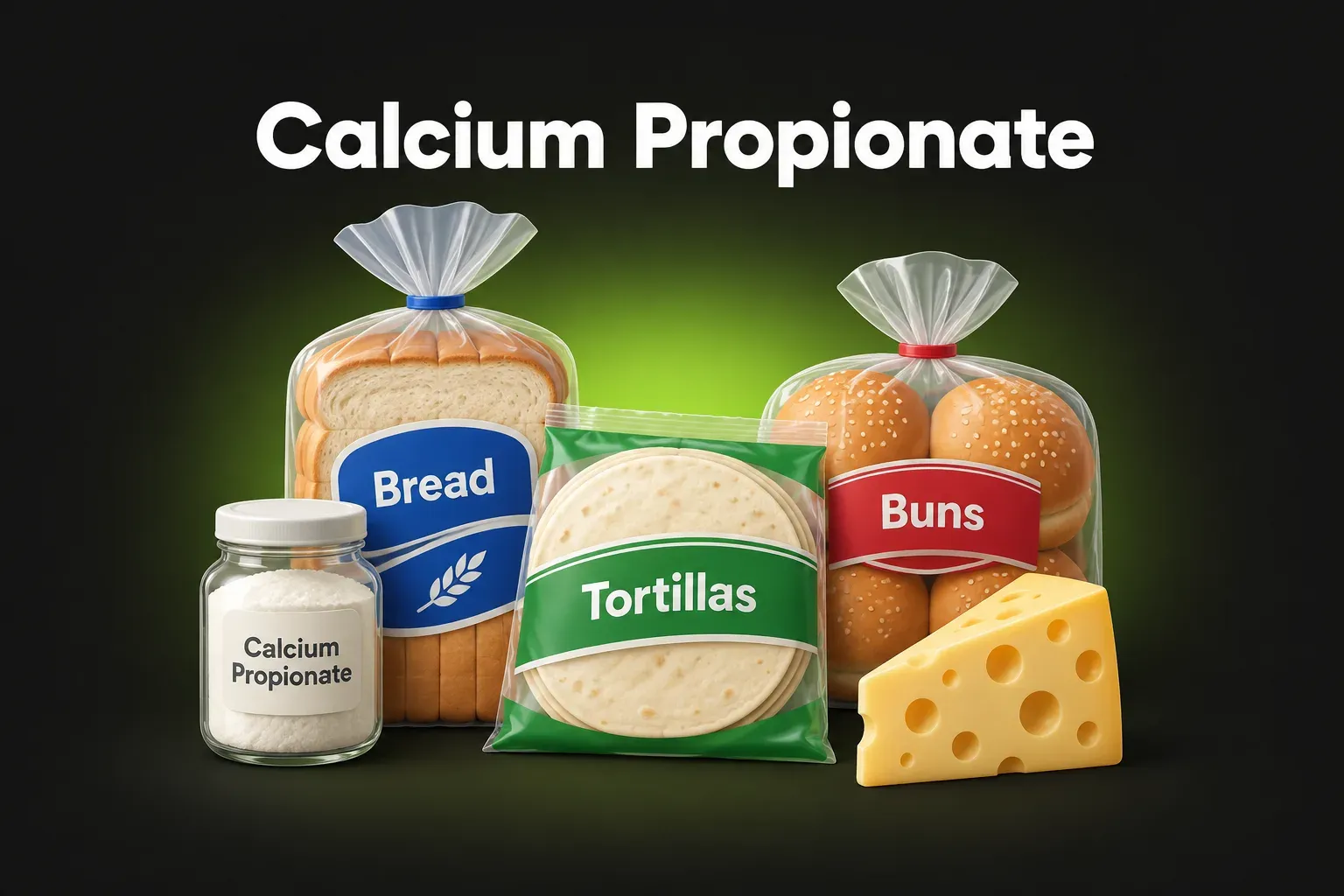
Real sourdough stays fresh longer thanks to its acids. Factory loaves often add preservatives instead. Pepperidge Farm Farmhouse Sourdough lists calcium propionate and sorbic acid.
Calcium propionate is “generally recognized as safe” by the FDA. But independent research has raised questions. In a Harvard-led study, mice got propionate for a long time, at a dose like the one used in food. They slowly gained weight. Then 14 healthy adults ate one meal with 1 g of calcium propionate and one meal without it. After the propionate meal, hormones that raise blood sugar went up, and insulin worked less well (Tirosh et al., Science Translational Medicine, 2019).
This was one small, short study. Proof of long-term harm in people is missing. But the mouse and human results point the same way. As a precaution, it’s easy to choose loaves without calcium propionate. Real sourdough doesn’t need it. Breads with many additives also tend to be ultra-processed.
How to spot real sourdough on the label
- Read the ingredients, not the front. Words like “San Francisco style”, “artisan” or “farmhouse” don’t prove anything.
- Look for a short list: flour, water, salt and a starter, culture or levain. Some brands leave the starter off the list, since it’s just flour and water.
- Skip “yeast”. If baker’s yeast is listed, it’s a shortcut loaf.
- Watch for sour helpers: vinegar, “natural flavor”, lactic acid or “sourdough flavor”.
- Check for preservatives like calcium propionate or sorbic acid.
- Pick whole grain. Whole wheat or whole rye flour should be the first flour on the list. Aim for at least 3 g of fiber per serving.
- Try a bakery. Ask how long the dough rises. Real sourdough takes many hours.
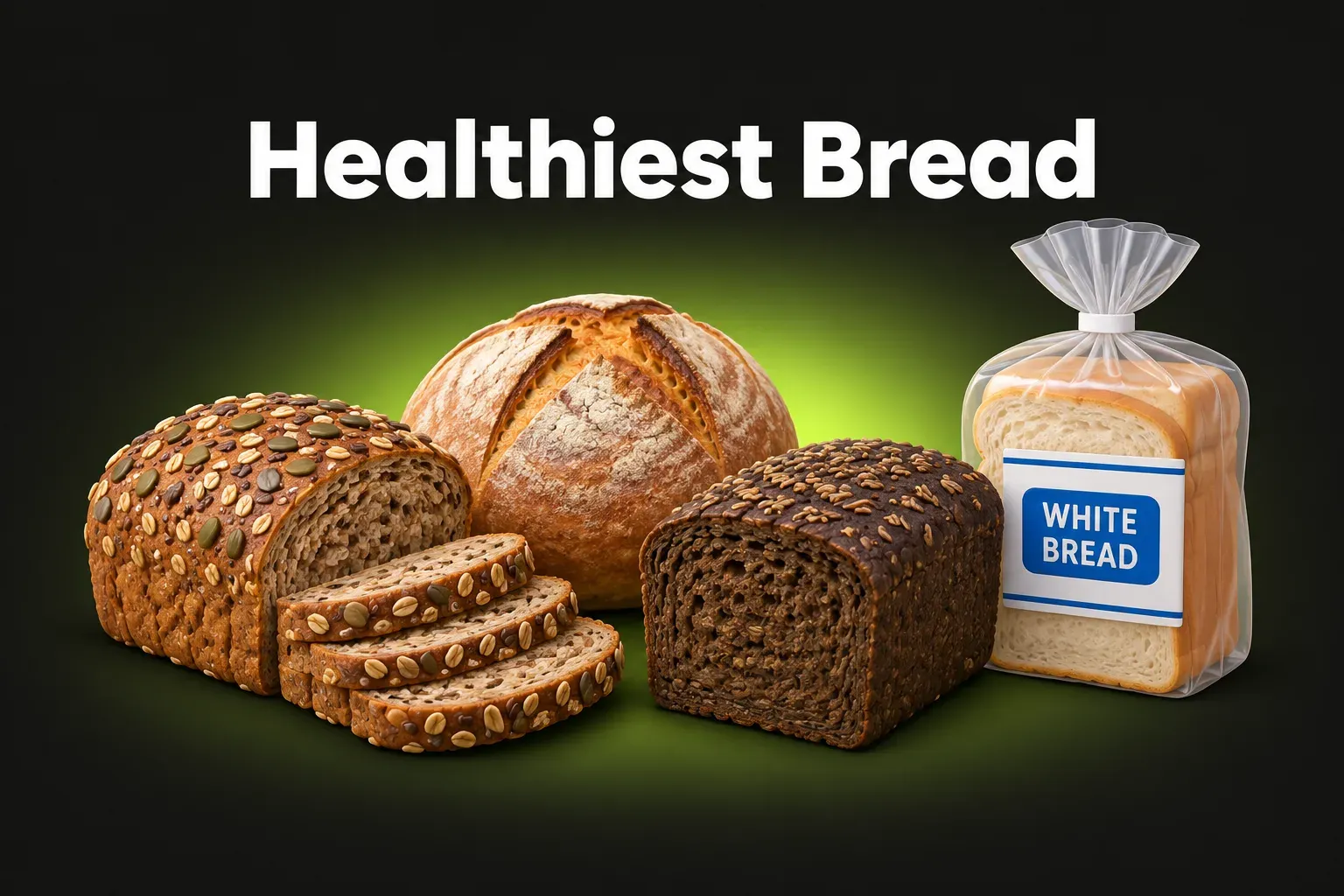
Compare sourdough with other loaves in our guide to the healthiest bread.
See what’s really in your sourdough. With NutriSmart, you photograph the label or scan the barcode. The app lists the sweeteners, preservatives and colors, explains the risks of each one and gives the product a health score out of 100. It also tells you right away if a bread is ultra-processed and which ingredients make it so. Set an alert for calcium propionate, and the app warns you whenever a loaf you scan contains it.Get the app free
The bottom line
Real sourdough – flour, water, salt and a starter – is a good bread with a short, clean ingredient list. The long rise may make it a little easier to digest. It may also help your body absorb minerals from whole grains. But it isn’t proven to be better for blood sugar, and it’s not safe for celiac disease. White sourdough is still white bread. Many store loaves are “sourfaux” made with yeast, vinegar and preservatives. For the healthiest choice, pick whole-grain sourdough with no yeast on the label.
FAQ
Is sourdough bread healthier than white bread?
Real sourdough usually has fewer additives than regular white bread. But white sourdough is still made from white flour, with about 1 g of fiber per slice. Whole-grain sourdough is the healthier pick.
Is sourdough bread good for blood sugar?
Some small studies found a lower blood sugar rise after sourdough. But a 2026 review of 27 human studies found no convincing proof that it beats regular yeast bread. The type of flour matters more.
Is sourdough bread safe for celiac disease?
No. Regular sourdough is made from wheat, rye or spelt, so it still has plenty of gluten. Only bread labeled gluten-free is safe for people with celiac disease.
Is sourdough easier to digest?
For some people, maybe. The long rise breaks down part of the fructans, a type of FODMAP that can upset sensitive guts. But results in people are mixed, and store loaves made with yeast may not get this benefit.
How can I tell if sourdough is real?
Read the ingredients. Real sourdough has flour, water, salt and a starter or culture – and no yeast. Yeast, vinegar, "natural flavor" or preservatives mean it's a shortcut loaf.
Is sourdough bread good for weight loss?
It's not special for weight loss. A 2 oz (57 g) slice has about 120–160 calories, like other breads. Whole-grain sourdough has more fiber, which helps you feel full.