Is Sparkling Water Healthy? Teeth, Bloating, PFAS, Brands
Is sparkling water healthy? What studies say about teeth, bones, bloating and PFAS, plus 8 popular brands compared for sodium and sweeteners.
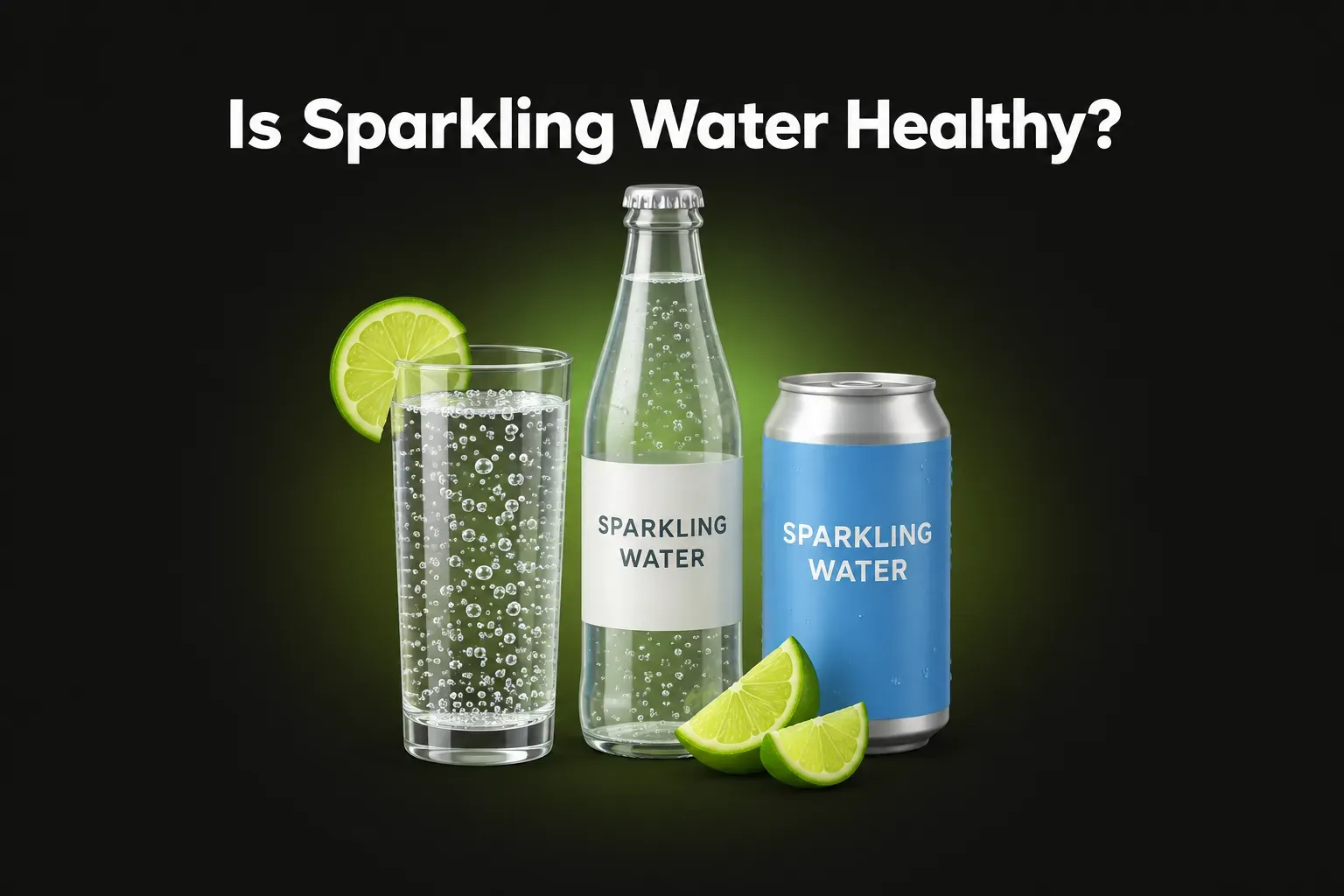
Many people drink sparkling water to quit soda. But is it really as good as plain water?
The short answer: yes, plain sparkling water is healthy. It has 0 calories and 0 sugar, and it hydrates you just like still water. The bubbles add a mild acid, but it’s far gentler on teeth than soda. It doesn’t hurt your bones. Some people feel bloated. A few things are worth checking: sweeteners in some flavored brands, sodium in some mineral waters, and PFAS (“forever chemicals”) found in tests of several brands.
Does sparkling water hydrate you?
Yes. Bubbles don’t change how your body uses water.
A UK study tested this in 72 men. Each man drank about 1 quart (1 liter) of one drink. The researchers then measured how much urine the men made over 4 hours. Sparkling water kept them just as hydrated as still water (Maughan et al., American Journal of Clinical Nutrition, 2016).
Seltzer, club soda, mineral water and tonic
- Seltzer is plain water with carbon dioxide (the gas that makes bubbles). LaCroix, Bubly and Waterloo are seltzers with flavor.
- Sparkling mineral water comes from a spring. It has natural minerals like calcium and sodium. Topo Chico, Perrier and San Pellegrino are mineral waters.
- Club soda has added minerals for a salty taste. It has about 75 mg of sodium per 12 oz (355 ml).
- Tonic water is a soft drink. It has about 125 calories and 32 g of sugar per 12 oz.
Club soda and tonic: USDA FoodData Central (tonic), per 100 g values scaled to a 12 oz can.
If you want the healthy kind, pick seltzer or mineral water, not tonic.
Is sparkling water bad for your teeth?
When carbon dioxide mixes with water, it forms a weak acid. Acid can slowly wear away enamel, the hard outer layer of your teeth. But for plain sparkling water, the effect is small.
- Plain sparkling water. A UK lab study put mineral waters on real teeth. Sparkling waters wore away a bit more enamel than still waters. But the damage was about 100 times less than with soft drinks (Parry et al., Journal of Oral Rehabilitation, 2001).
- Flavored sparkling water. The same team tested flavored sparkling waters sold in the UK. These were much more acidic. In the lab, they wore away enamel as much as orange juice, or more (Brown et al., International Journal of Paediatric Dentistry, 2007).
The American Dental Association says sparkling water is generally fine for teeth. Citrus flavors are more acidic, so drink them in one sitting or with meals. The ADA still calls plain water the best choice, and fluoride helps fight cavities (ADA MouthHealthy).
Watch for citric acid on the label. It adds more acid.
Does carbonation hurt your bones?
No. This myth comes from studies on cola.
- A large US study followed 1,413 women and 1,125 men. Women who drank cola every day had 3.7% lower bone density at the hip. Men showed no link. Other fizzy drinks showed no link at all (Tucker et al., American Journal of Clinical Nutrition, 2006).
- Another study tested women aged 20 to 40. Only fizzy drinks with caffeine made them lose a bit more calcium in urine. Bubbles and acid alone did not (Heaney and Rafferty, American Journal of Clinical Nutrition, 2001).
Colas contain phosphoric acid and caffeine. Plain sparkling water has neither.
Bloating, indigestion and hunger
Bloating. When you drink something fizzy, you swallow more air. More air can mean more gas and burping (NIDDK). If you have IBS (irritable bowel syndrome) or acid reflux, bubbles may make it worse.
Indigestion. For some people, bubbles help. A small Italian study looked at 21 people with indigestion and constipation. Ten drank sparkling water for about 15 days. Eleven drank tap water. The sparkling water group had less indigestion and less constipation (Cuomo et al., European Journal of Gastroenterology & Hepatology, 2002). But this study was very small.
Hunger. One lab studied fizz and appetite. Male rats drank fizzy soft drinks, the same drinks gone flat, or tap water for about a year. The rats on fizzy drinks ate more and gained weight faster. They had more ghrelin, the “hunger hormone.” The same lab gave fizzy drinks to 20 healthy young men. Their ghrelin went up too (Eweis et al., Obesity Research & Clinical Practice, 2017).
Why do rat studies matter? Rats share most of our genes and body processes. And making people drink something for a year to see if they gain weight wouldn’t be fair to them. But this is one lab, and the rats drank soft drinks, not plain seltzer. There is no proof that sparkling water makes people gain weight. If you notice you snack more after fizzy drinks, try still water with meals.
Sodium in sparkling mineral water
Most sparkling waters have little or no sodium. Seltzers like LaCroix and Bubly list 0 mg. Mineral waters have a little, because the minerals come from the rocks the water flows through.
- Topo Chico: 15 mg per 12 oz bottle (Coca‑Cola).
- San Pellegrino: 15 mg per 16.9 oz (500 ml) bottle (Open Food Facts).
- Perrier: about 3 mg per 12 oz (355 ml) (Open Food Facts).
That’s tiny next to the FDA’s Daily Value of 2,300 mg a day (FDA).
But some mineral waters are much saltier. Vichy Catalan, from Spain, has about 1,100 mg of sodium per liter (about 34 oz) (FineWaters). One 12 oz glass gives you almost 400 mg. If you have high blood pressure, check the mineral list on the bottle.
PFAS in sparkling water
PFAS are “forever chemicals.” They’re used in things like nonstick pans and stain-proof fabric. They break down very slowly and build up in water and in our bodies.
In 2020, Consumer Reports tested 47 bottled waters, 12 of them sparkling. It suggested a limit of 1 part per trillion (ppt) for total PFAS. Here’s what it found:
| Sparkling water | Total PFAS (2020) |
|---|---|
| Topo Chico | 9.76 ppt |
| Polar Natural Seltzer | 6.41 ppt |
| Bubly Blackberry | 2.24 ppt |
| Poland Spring Zesty Lime | 1.66 ppt |
| Canada Dry Lemon Lime | 1.24 ppt |
| LaCroix Natural | 1.16 ppt |
| Perrier Natural | 1.10 ppt |
| Sparkling Ice Black Raspberry, Spindrift Raspberry Lime, San Pellegrino, Dasani Black Cherry, Schweppes Lemon Lime | Under 1 ppt |
Results from Consumer Reports, September 2020, as reported by CBS News. Waterloo was not tested.
What happened next:
- Topo Chico improved its filters. In February 2021, Consumer Reports tested three new samples. The average had dropped to 3.9 ppt – less than half, but still above 1 ppt (Consumer Reports, 2021). We found no newer public test.
- Nestlé said its own newer tests found “undetectable levels” of PFAS in Perrier (CBS News).
- For tap water, the EPA limit is 4 ppt each for the two best-studied PFAS, PFOA and PFOS. Water systems have until 2029 to meet it, or 2031 under a 2026 proposal (EPA). The Consumer Reports numbers add up many PFAS, so they’re not a direct match.
PFAS build up over time, so less is better. If this worries you, rotate between brands that tested low. Or use filtered tap water in a home soda maker.
Flavored sparkling water: sweeteners and “natural flavors”
Natural flavors. Most seltzers list “natural flavor” or “natural essence.” In the US, this means the flavor comes from a plant or animal source. The label doesn’t have to say what’s in it. There’s no sign these tiny amounts are harmful. Read more in our guide to natural flavors.
Sweeteners. Some “sparkling waters” are closer to diet soda. Sparkling Ice is one example. It lists sucralose as a sweetener and potassium benzoate as a preservative (Sparkling Ice).
Regulators allow sucralose. The FDA’s safe daily limit is 5 mg per kg of body weight (FDA). For a 150-pound (68 kg) adult, that’s about 340 mg a day. But independent studies raise questions:
- In mice: an Italian lab fed mice sucralose from before birth until death. More males got blood cancers. This started at 2,000 ppm in their feed (0.2% of the food) (Soffritti et al., International Journal of Occupational and Environmental Health, 2016).
- In lab tests on human cells: a US team studied sucralose-6-acetate. It’s an impurity in sucralose. Rat studies suggest the gut can also make it. It damaged DNA in lab tests. Both it and sucralose made gut lining cells leakier (Schiffman et al., Journal of Toxicology and Environmental Health Part B, 2023).
- In people: a trial in Israel included 120 healthy adults. Some took sucralose for 2 weeks, below the daily limit. It changed their gut bacteria and worsened their blood sugar response (Suez et al., Cell, 2022). A French study followed over 100,000 adults. Those who had more sucralose had a higher risk of heart disease (Debras et al., BMJ, 2022).
Why do animal and cell studies matter? Mice share most of our genes and body processes. And testing a possible cancer risk on people would put their health at risk. Still, proof of harm in humans is missing. The French study shows a link, not cause. But several labs see warning signs. So it makes sense to limit sweetened sparkling waters as a precaution. Plain or fruit-flavored seltzer is a better daily habit. See our guide to artificial sweeteners.
8 popular sparkling waters compared
| Drink | Size | Calories | Sugar | Sodium | Sweetener | Ingredients |
|---|---|---|---|---|---|---|
| LaCroix Lime | 12 oz | 0 | 0 g | 0 mg | None | Carbonated water, natural essence |
| Bubly Lime | 12 oz | 0 | 0 g | 0 mg | None | Carbonated water, natural flavor |
| Waterloo Lemon‑Lime | 12 oz | 0 | 0 g | 0 mg | None | Purified carbonated water, natural flavors |
| Spindrift Pineapple | 12 oz | 15 | 3 g | 0 mg | None | Carbonated water, pineapple juice, citric acid, pineapple extract |
| Topo Chico | 12 oz | 0 | 0 g | 15 mg | None | Mineral water, carbon dioxide |
| Perrier Lime | 8.45 oz | 0 | 0 g | about 2 mg | None | Carbonated mineral water, natural flavors |
| San Pellegrino | 16.9 oz | 0 | 0 g | 15 mg | None | Carbonated mineral water |
| Sparkling Ice Black Raspberry | 17 oz | 5 | 0 g | Not listed | Sucralose | Carbonated water, fruit juice, natural flavors, green tea extract, B vitamins, vitamin E, sucralose, citric and tartaric acid, gum arabic, potassium benzoate |
Labels from Open Food Facts (LaCroix, Bubly, Waterloo, Spindrift, Perrier, San Pellegrino) and brand sites (Topo Chico, Sparkling Ice). Waterloo calories from Waterloo. Sparkling Ice’s site lists no sodium value. Bubly sodium from a Food Lion listing. Recipes change – check the label.
What stands out:
- LaCroix, Bubly and Waterloo are nearly the same drink: fizzy water plus natural flavor. No sugar, no sweetener.
- Spindrift uses real fruit juice. That adds a few calories, a little natural sugar and some citric acid.
- Sparkling Ice has the longest list. It’s sweetened with sucralose and has a preservative.
For a deeper look at one brand, read is LaCroix bad for you. If you want something sweeter, see our ranking of the healthiest soda. Or add a splash of 100% juice to plain seltzer – see is orange juice healthy? Thinking about pricey bottled water? Read is alkaline water good for you?
Who should be careful
- People with IBS, reflux or a lot of gas – bubbles may make symptoms worse.
- People with worn enamel or sensitive teeth – drink flavored kinds with meals, not all day.
- People on a low-sodium diet – check the mineral list on imported mineral waters.
- Kids – plain water and milk come first. If they like fizz, choose unsweetened seltzer.
Easy habits: drink it with food, don’t sip one can for hours, and mix in plain tap water.
Check what’s in your sparkling water. With NutriSmart, you photograph the label or scan the barcode. The app lists the sweeteners, preservatives and colors, explains the risks of each one and gives the product a health score out of 100. It also tells you right away if a drink is ultra-processed and which ingredients make it so. Set an alert for sucralose, and the app warns you whenever a product you scan contains it.Get the app free
The bottom line
Plain sparkling water is healthy. It has no calories and no sugar, and it hydrates you like still water. It’s far easier on your teeth than soda, and it doesn’t hurt your bones. Some people get bloated, and citrus flavors add more acid. Most brands have little sodium, but a few imported mineral waters have a lot. PFAS showed up in several brands in 2020, mostly at low levels. The best picks are plain or naturally flavored seltzers. Treat sweetened ones like Sparkling Ice as a diet soda, not as water.
FAQ
Is sparkling water healthy?
Yes. Plain sparkling water has no calories, no sugar and hydrates you just like still water. It's one of the best swaps for soda. Flavored kinds with sweeteners or added acids are a step down.
Is sparkling water bad for your teeth?
Plain sparkling water is only a little more acidic than still water. In a lab study, it wore away about 100 times less enamel than soft drinks. Citrus-flavored kinds are more acidic, so drink them with meals.
Does sparkling water hurt your bones?
No. A large study linked cola to lower bone density in women, but not other fizzy drinks. Plain sparkling water has no phosphoric acid and no caffeine.
Can sparkling water make you bloated?
It can. Bubbles make you swallow more air, which can cause burping, gas or bloating. If you have IBS or reflux, still water may feel better.
Does sparkling water have PFAS?
Some brands had small amounts in 2020 Consumer Reports tests. Topo Chico had the most at 9.76 parts per trillion, then cut it to 3.9 in a 2021 retest. Several brands were under 1 part per trillion.
How much sparkling water can I drink a day?
There's no set limit for plain sparkling water. Many people drink a few cans a day with no problem. Mix in some still tap water, which often has fluoride for your teeth.