Healthiest Soda: Best and Worst Fizzy Drinks Ranked
What is the healthiest soda? Regular, diet, stevia, prebiotic and sparkling water drinks ranked by sugar and sweeteners, plus what to check on the can.
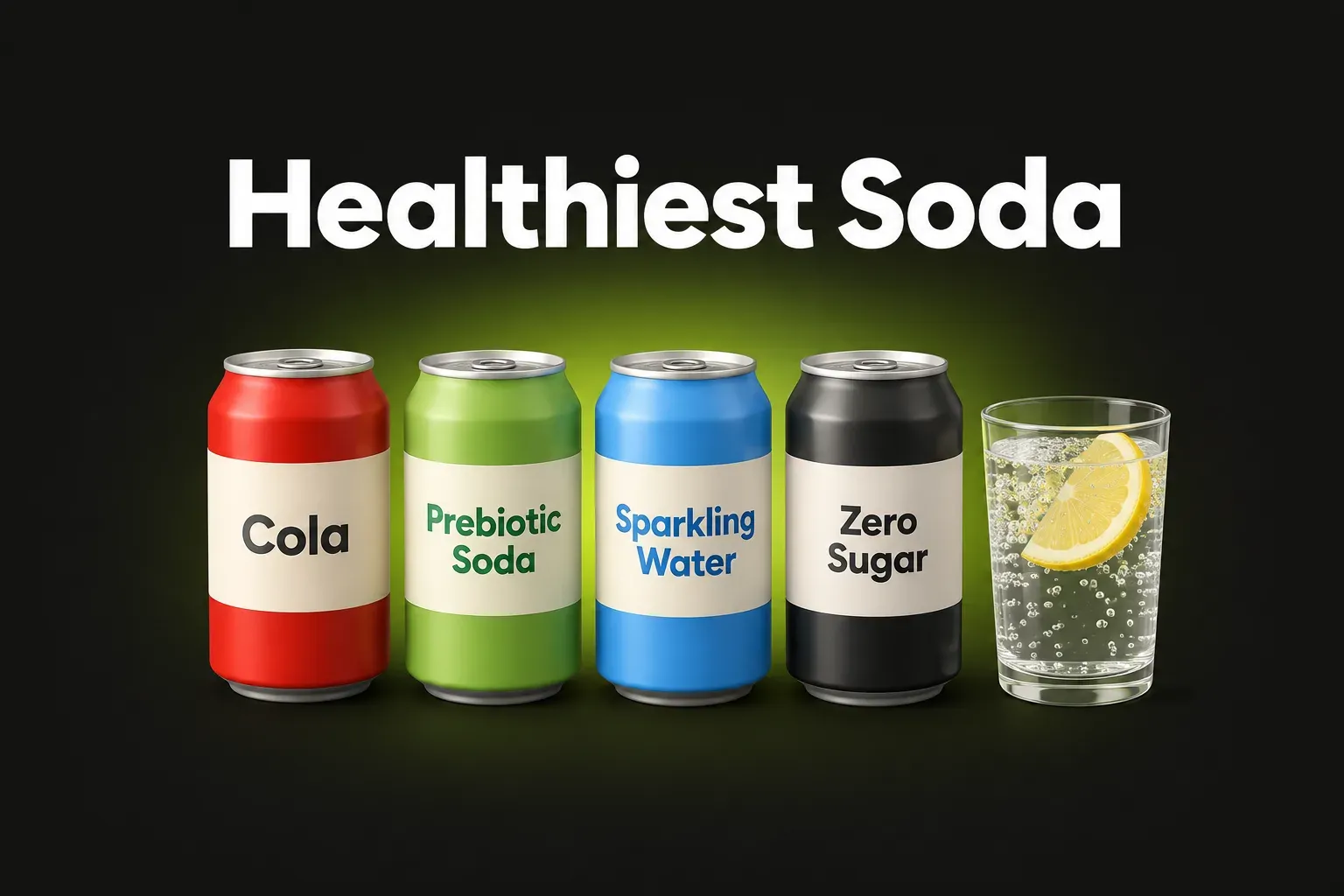
Soda is one of the biggest sources of added sugar in the US diet. But the soda aisle has changed: next to classic cola you’ll now find diet sodas, stevia sodas, “prebiotic” sodas and dozens of sparkling waters. So which is the healthiest soda? Here’s a simple ranking – from best to worst.
The short answer: the healthiest fizzy drink is sparkling water – plain or with natural flavor, no sugar, no sweeteners. Among sodas, stevia-sweetened sodas (0 g sugar) and prebiotic sodas (about 2–5 g sugar per can) are the best picks. Diet sodas cut the sugar but use artificial sweeteners. Regular soda, with 35–45 g of sugar per can, is the worst.
Sodas ranked: from best to worst
| Rank | Type | Example | Calories | Sugar | Sweetener |
|---|---|---|---|---|---|
| 1 | Sparkling water | Plain or naturally flavored | 0 | 0 g | None |
| 2 | Sparkling water with real fruit | Spindrift | 3–20 | 0–3 g | Fruit juice |
| 3 | Stevia soda | Zevia | 0 | 0 g | Stevia |
| 4 | Prebiotic soda | Olipop, Poppi | 5–50 | 2–5 g | Stevia, fruit juice, cane sugar |
| 5 | Diet soda | Diet Coke, Coke Zero | 0 | 0 g | Aspartame, acesulfame K, sucralose |
| 6 | Regular soda | Coca‑Cola, Sprite, Dr Pepper | 140–150 | 38–40 g | High-fructose corn syrup |
Per 12 oz can. Labels from Open Food Facts (US products). Recipes change – check the can.
Why regular soda is the worst
A 12 oz can of regular soda has about 39 g of sugar – almost 10 teaspoons. That’s more than the American Heart Association’s daily limit for women (25 g) and about the limit for men (36 g) (Johnson et al., Circulation, 2009).
- People who drink 1–2 sugary drinks a day have a 26% higher risk of type 2 diabetes than people who rarely drink them (Malik et al., Diabetes Care, 2010).
- Soda drinkers tend to eat more calories overall and weigh more, because liquid sugar doesn’t fill you up (Vartanian et al., American Journal of Public Health, 2007).
- Most US sodas use high-fructose corn syrup. “Cane sugar” or “Mexican” versions are no healthier – the amount of sugar is about the same.
Colas also contain phosphoric acid and caramel color, and many lemon-lime and orange sodas use sodium benzoate or dyes like Yellow 6.
Diet soda: better, but not health food
Diet sodas have 0 sugar and 0 calories, so they’re clearly better than regular soda for weight and blood sugar. But:
- They use aspartame, acesulfame K or sucralose. In the large French NutriNet-Santé study, people who consumed more of these had a higher risk of heart disease and stroke (Debras et al., BMJ, 2022).
- The WHO advises not to use sweeteners for weight control (WHO, 2023).
- Colas – diet or not – are acidic and have been linked to lower bone density in older women (Tucker et al., 2006).
Read more: is Diet Coke bad for you and is Coke Zero bad for you.
Stevia sodas: the best “real soda” choice
Zevia and similar sodas are sweetened only with stevia, a plant-based sweetener. A Zevia Cola has just carbonated water, stevia leaf extract, natural flavors, citric acid and tartaric acid (Open Food Facts) – no sugar, no caramel color, no phosphoric acid. Stevia has fewer health questions than the artificial sweeteners in most diet sodas – the NutriSmart app gives it a low risk rating. Some people don’t like its slightly bitter aftertaste.
Prebiotic sodas: a good swap, not a cure
Olipop and Poppi are sold as “gut-friendly” sodas.
- Olipop has about 35–50 calories, 2–5 g of sugar and 6–9 g of fiber per can, mostly from inulin and other plant fibers like chicory root and cassava. It’s sweetened with stevia, fruit juice and cassava syrup.
- Poppi uses apple cider vinegar and has about 5–30 calories and a few grams of sugar per can.
The good: much less sugar than regular soda, and the fiber in Olipop counts toward your daily fiber. The caveats: there’s little proof that one can a day changes your gut health, and inulin can cause gas and bloating, especially if you’re not used to it or have irritable bowel syndrome (IBS). Think of them as a better soda, not as medicine.
Sparkling water: the healthiest fizz
If what you love is the fizz, sparkling water gives you the same bubbles with nothing added. Choose:
- Plain or naturally flavored (LaCroix-style) – 0 calories, 0 sugar.
- Sparkling water with real fruit juice (like Spindrift) – a few calories and 0–3 g of sugar from fruit.
- DIY: sparkling water + a squeeze of lemon, lime or orange, or a few crushed berries and mint.
Sparkling water is a bit more acidic than still water, but much less acidic than soda, and it hydrates you just as well.
How to pick a healthier soda: 4 checks
| Check | Aim for |
|---|---|
| Added sugar | 0–5 g per can |
| Sweetener | None, stevia or monk fruit |
| Colors | No caramel color or synthetic dyes |
| Preservatives | No sodium or potassium benzoate |
Compare sodas in the store. With NutriSmart, you photograph the label or scan the barcode. The app shows the sugar per can, lists the sweeteners, colors and preservatives, explains the risks of each one and gives every drink a health score out of 100 – so you can see which can is really the better choice.Get the app free
You can also read about high-fructose corn syrup and our guide to artificial sweeteners.
The bottom line
The healthiest fizzy drink is sparkling water, plain or with a bit of real fruit. If you want something that tastes like soda, stevia sodas and prebiotic sodas with 2–5 g of sugar are the best choices. Diet sodas are better than regular soda but rely on artificial sweeteners, and regular soda – with about 39 g of sugar per can – is the one to cut first.
FAQ
What is the healthiest soda?
Plain or naturally flavored sparkling water is the healthiest fizzy drink: no sugar, no sweeteners, no calories. Among sodas, the best picks are stevia-sweetened sodas with no sugar and prebiotic sodas with only a few grams of sugar. Regular soda with 35–45 g of sugar per can is the worst choice.
Is diet soda healthier than regular soda?
For sugar and calories, yes – diet soda has none. But it's sweetened with aspartame, sucralose or acesulfame K, which large studies link to a higher risk of heart disease. Diet soda is better than regular soda, but sparkling water is better than both.
Are prebiotic sodas like Olipop and Poppi healthy?
They're much better than regular soda: a can has about 2–5 g of sugar instead of 39 g. Olipop adds 6–9 g of fiber from plants like chicory root. They're not a gut-health cure, and the fiber can cause gas in some people, but they're a good swap for regular soda.
Which soda has the least sugar?
Zero-sugar sodas (diet sodas and stevia sodas like Zevia) and sparkling waters have 0 g of sugar. Prebiotic sodas usually have 2–5 g per can. Regular colas and lemon-lime sodas have 38–40 g per 12 oz can.
Is Mexican Coke healthier because it has cane sugar?
No. Mexican Coke is made with cane sugar instead of high-fructose corn syrup, but it has about the same amount of sugar and calories. To your body, both are added sugar.
How much soda is OK per day?
For regular soda, as little as possible – one 12 oz can has more sugar than the American Heart Association's daily limit for women. Zero-sugar sodas are fine now and then. Water, sparkling water and unsweetened tea should be your everyday drinks.