Is Diet Coke Bad for You? Aspartame, Your Teeth, Bones and Weight
Is Diet Coke bad for you? What aspartame and the other ingredients do, what studies say about weight, heart, teeth and bones, and how much is too much.
Diet Coke is the most popular diet soda in the US. It has zero calories and zero sugar, so many people drink it instead of regular soda – sometimes several cans a day. But is Diet Coke bad for you? The worries usually come down to aspartame, acid and what daily drinking does over many years.
The short answer: a Diet Coke now and then is not a problem for most people, and it’s better than regular Coke. But it has no nutrients, it’s sweetened with aspartame, and big studies link drinking diet sodas every day to a higher risk of heart disease and stroke. The acid can also hurt your teeth. Treat it as an occasional drink, not your main one.
What’s in Diet Coke
Ingredients (12 oz can): carbonated water, caramel color, aspartame, phosphoric acid, potassium benzoate (to protect taste), natural flavors, citric acid, caffeine – according to Open Food Facts.
| Per can (12 oz) | Diet Coke | Coca-Cola | Coke Zero |
|---|---|---|---|
| Calories | 0 | 140 | 0 |
| Sugar | 0 g | 39 g | 0 g |
| Caffeine | 46 mg | 34 mg | 34 mg |
| Sweetener | Aspartame | High-fructose corn syrup | Aspartame + acesulfame K |
| Sodium | 40 mg | 45 mg | 40 mg |
There is also a Diet Coke sweetened with Splenda, which uses sucralose and acesulfame K instead of aspartame.
Is the aspartame in Diet Coke safe?
Aspartame is about 200 times sweeter than sugar. Here’s where the science stands:
- Regulators: the FDA’s safe daily limit is 50 mg per kg of body weight; the EU and WHO use 40 mg per kg. A diet soda has about 200–300 mg per can, so a 70 kg adult would need more than 9–14 cans a day to go over the WHO limit (WHO, 2023).
- Cancer: in 2023 the WHO cancer agency (IARC) classed aspartame as “possibly carcinogenic to humans” (group 2B) – meaning it might cause cancer, but the proof is weak. It was based on limited evidence for liver cancer (Riboli et al., Lancet Oncology, 2023). In the French NutriNet-Santé study, people who consumed the most aspartame had a 15% higher cancer risk (Debras et al., PLOS Medicine, 2022).
- Heart and stroke: in the same study, more aspartame was linked to a 17% higher risk of stroke (Debras et al., BMJ, 2022). In the Framingham study, people who drank one diet soda a day had about three times the risk of stroke and of Alzheimer’s disease over 10 years (Pase et al., Stroke, 2017).
- PKU: people with phenylketonuria must avoid aspartame completely – that’s why the can says “Phenylketonurics: contains phenylalanine”.
Important: most of these studies only watched what people drank. They show a link, not proof, and people who drink many diet sodas often have other health risks. Still, the signals are why we suggest not drinking it every day. More details in our article on aspartame.
Diet Coke and weight
Diet Coke has 0 calories, so swapping a regular Coke for a Diet Coke saves 140 calories and 39 g of sugar. In short trials, that kind of swap helps people lose a little weight. But:
- The World Health Organization advises not to use sweeteners for weight control, because long-term studies don’t show lasting benefits (WHO, 2023).
- Some people find sweet drinks keep their sweet cravings going.
If you’re trying to lose weight, Diet Coke is better than regular soda, and water is better than both. Read more about the calorie deficit.
Teeth, bones and caffeine
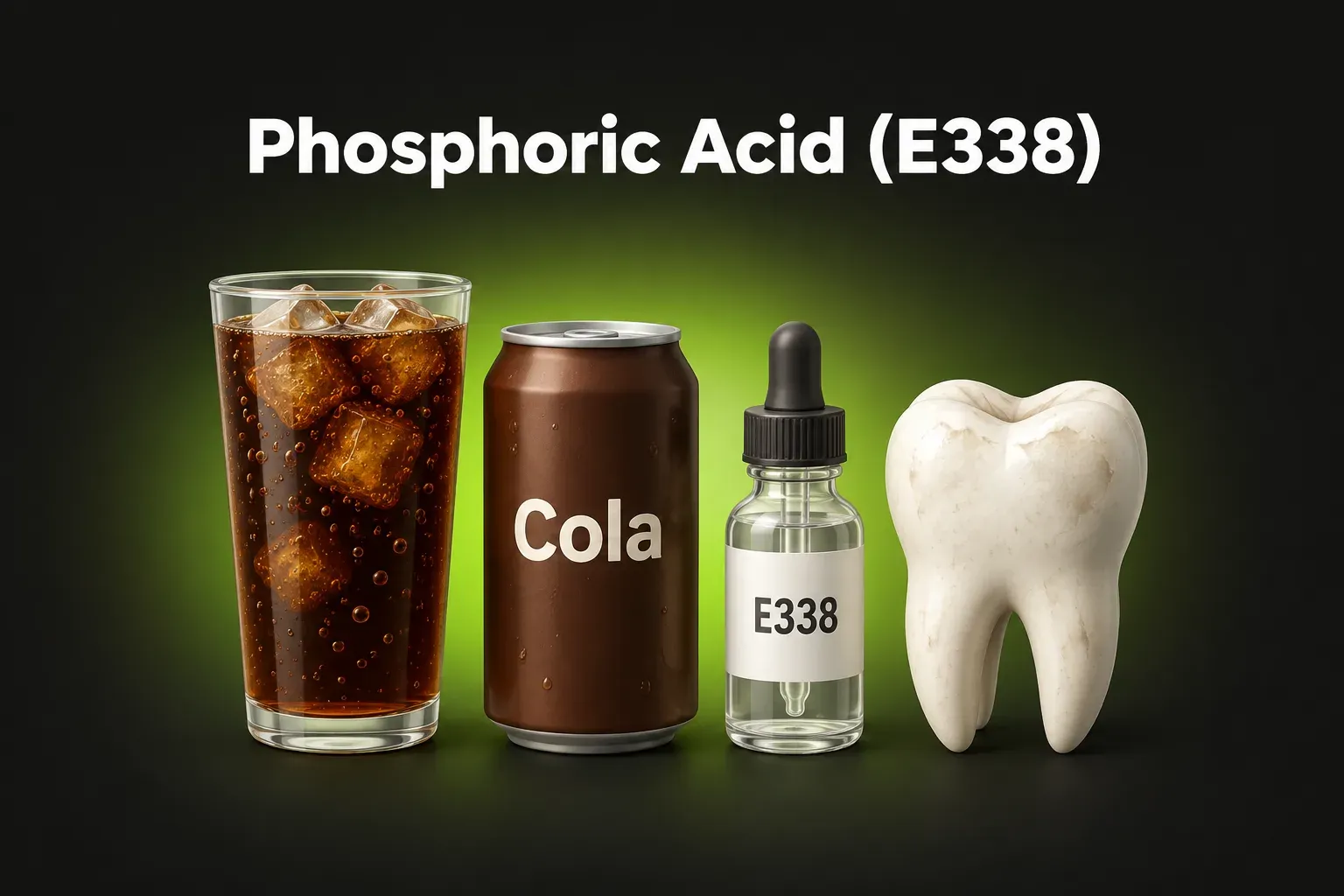
Teeth. Diet Coke has no sugar, so it doesn’t cause cavities the way regular soda does. But it’s acidic (phosphoric and citric acid), and acid softens tooth enamel. Sipping it slowly all day is the worst habit.
Bones. In the Framingham Osteoporosis Study, older women who drank cola every day – including diet cola – had 3.7–5.4% lower bone density at the hip. They were compared with women who drank less than one cola a month. Other sodas didn’t show this (Tucker et al., American Journal of Clinical Nutrition, 2006). The likely reason is phosphoric acid together with less milk in the diet.
Caffeine. A can has 46 mg – more than regular Coke but about half a cup of coffee. Four or five cans a day add up to as much as two coffees.
Caramel color. Diet Coke uses caramel color, which can contain traces of 4-MEI, a byproduct that the WHO cancer agency says might possibly cause cancer. Levels in US colas dropped after California set a warning limit. More in our article on caramel color.
How much Diet Coke is too much?
There is no official limit, but a sensible approach:
| How much | What we think |
|---|---|
| A few cans a week | Fine for most adults |
| 1 can a day | OK, but try to swap some for water |
| 2 or more cans a day | Worth cutting down – teeth, bones, sweetener and caffeine add up |
Better swaps: sparkling water with lemon or lime, unsweetened iced tea, or a zero-sugar soda sweetened with stevia. See our guide to the healthiest soda.
Check every soda in seconds. With NutriSmart, you photograph the label or scan the barcode. The app shows the sweeteners, acids and colors in the drink, explains the risks of each one and gives it a health score out of 100. Set an alert for aspartame, and the app warns you every time a product you scan contains it.Get the app free
You can also read whether Coke Zero is bad for you and our guide to artificial sweeteners.
The bottom line
Diet Coke isn’t poison, and it’s better than regular Coke because it has no sugar. But it has no nutrients, it’s sweetened with aspartame, and its acid can harm teeth and – in older women – may affect bones. Large studies link daily diet soda drinking to heart disease and stroke, though they can’t prove cause. Enjoy it now and then, and make water or sparkling water your everyday drink.
FAQ
Is Diet Coke bad for you?
One can now and then isn't a problem for most people, and it's better than regular Coke because it has no sugar. But Diet Coke has no nutrients, it contains the sweetener aspartame and phosphoric acid, and large studies link daily diet sodas to a higher risk of heart disease and stroke. Water, sparkling water or unsweetened tea are better daily drinks.
Is the aspartame in Diet Coke safe?
Regulators say aspartame is safe up to 40–50 mg per kg of body weight a day – about 9–14 cans for a 70 kg adult. But in 2023 the WHO cancer agency (IARC) classed aspartame as possibly causing cancer, based on limited evidence. People with the rare disease PKU must avoid it completely.
Does Diet Coke make you gain weight?
Diet Coke has 0 calories, so it doesn't add weight by itself. Some observational studies link diet sodas to weight gain, but that may be because people who already struggle with weight drink more of them. The WHO advises not to rely on sweeteners for weight control.
How much caffeine is in Diet Coke?
A 12 oz can of Diet Coke has 46 mg of caffeine – more than regular Coca-Cola (34 mg) and Coke Zero (34 mg), but about half a cup of coffee. Caffeine-free Diet Coke has none.
Is Diet Coke bad for your teeth?
It can be. Diet Coke has no sugar, so it doesn't feed the bacteria that cause cavities, but it's acidic because of phosphoric and citric acid. Sipping it all day can wear away tooth enamel. Drink it with a meal, use a straw and rinse with water.
Is Diet Coke better than regular Coke?
For sugar and calories, yes: a can of regular Coke has 140 calories and 39 g of sugar, Diet Coke has none. For everything else they're similar – both have caramel color, phosphoric acid and caffeine, and neither has any nutrients.