Is Coke Zero Bad for You? Sweeteners, Caffeine and Diet Coke Compared
Is Coke Zero bad for you? Its two sweeteners, caffeine and acids, what studies say, how it compares to Diet Coke and regular Coke, and better swaps.
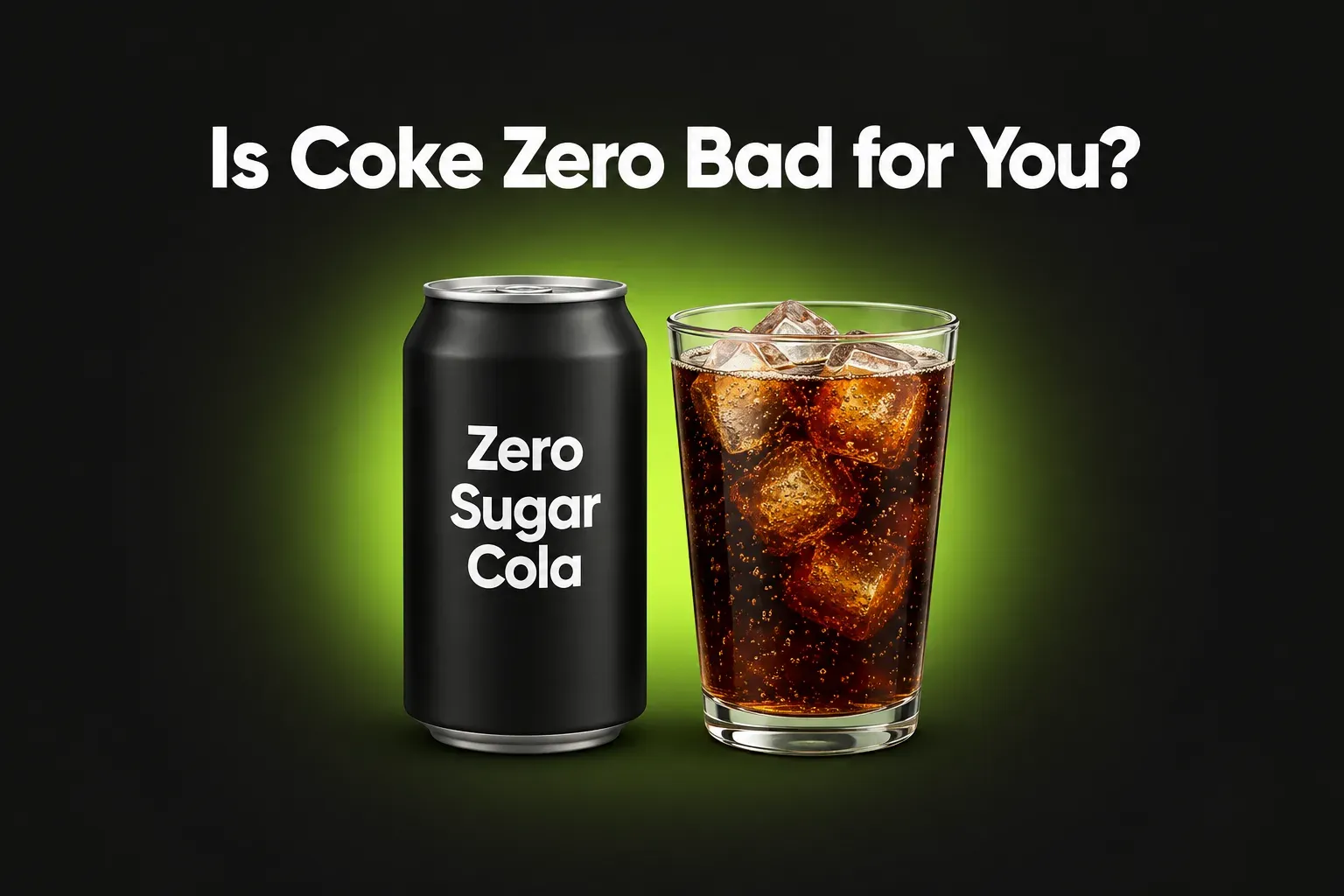
Coca-Cola Zero Sugar – still called Coke Zero by most people – is made to taste as close as possible to regular Coke, but with zero calories. That makes it a favorite for people who are cutting sugar or counting calories. But is Coke Zero bad for you? Most questions are about its two sweeteners, acid and whether “zero” really means harmless.
The short answer: an occasional Coke Zero is fine for most people, and it’s far better than regular Coke, which has 39 g of sugar per can. But Coke Zero has no nutrients, uses aspartame and acesulfame K, and large studies link these sweeteners to a slightly higher risk of heart disease and cancer. It’s also acidic, which can wear down tooth enamel. Enjoy it now and then – water is still the best everyday drink.
What’s in Coke Zero
Ingredients (12 oz can): carbonated water, caramel color, phosphoric acid, aspartame, potassium benzoate (to protect taste), natural flavors, potassium citrate, acesulfame potassium, caffeine – according to Open Food Facts.
| Per can (12 oz) | Coke Zero | Diet Coke | Coca-Cola |
|---|---|---|---|
| Calories | 0 | 0 | 140 |
| Sugar | 0 g | 0 g | 39 g |
| Sweeteners | Aspartame + acesulfame K | Aspartame | High-fructose corn syrup |
| Caffeine | 34 mg | 46 mg | 34 mg |
| Acid | Phosphoric | Phosphoric + citric | Phosphoric |
So Coke Zero and Diet Coke are close cousins: Coke Zero has one more sweetener and less caffeine. For a closer look at its sister drink, read is Diet Coke bad for you.
The two sweeteners: what the research says
Coke Zero mixes two sweeteners because together they taste more like sugar.
Aspartame
- Approved in the US, EU and by the WHO. The WHO says a 70 kg adult would need more than 9–14 cans of diet soda a day to go over the safe limit (WHO, 2023).
- In 2023 the WHO cancer agency (IARC) classed it as “possibly carcinogenic” (group 2B) – meaning it might cause cancer, but the proof is weak. It was based on limited evidence (Riboli et al., Lancet Oncology, 2023).
- Not safe for people with PKU.
Acesulfame K
- In 2025 the European Food Safety Authority found no new proof of harm at normal intakes and even raised its safe limit to 15 mg per kg of body weight (EFSA, 2025).
- But in the French NutriNet-Santé study of over 100,000 adults, people with the highest acesulfame K intake had a 13% higher risk of cancer (Debras et al., PLOS Medicine, 2022) and, together with sucralose, a 40% higher risk of coronary heart disease (Debras et al., BMJ, 2022).
These studies only watched what people ate, so they show links, not proof. Still, they’re a good reason not to drink several cans a day. More in our guide to artificial sweeteners.
Does Coke Zero affect blood sugar or weight?
Coke Zero has no sugar, so it doesn’t raise blood sugar like regular Coke. That’s a real win if you have diabetes or are cutting calories – swapping one regular Coke a day for Coke Zero saves about 140 calories and 39 g of sugar.
But sweeteners aren’t completely “neutral”:
- In a 2022 trial, sucralose and saccharin changed gut bacteria and made blood sugar rise more after sugar in some people. Aspartame and stevia had smaller effects, and results differed a lot between people (Suez et al., Cell, 2022).
- The WHO advises not to use sweeteners for weight control, because long-term studies don’t show lasting weight loss (WHO, 2023).
If you’re losing weight, Coke Zero is a better choice than regular soda – but it doesn’t burn fat or cut cravings. What works is a steady calorie deficit.
Teeth, bones and caramel color
- Teeth: Coke Zero won’t cause cavities like sugar does, but phosphoric acid makes it acidic, and sipping it all day softens enamel.
- Bones: in the Framingham study, older women who drank cola daily – including diet cola – had lower hip bone density. Other sodas didn’t show this (Tucker et al., American Journal of Clinical Nutrition, 2006).
- Kidneys: in a US study, people who drank 2 or more colas a day had about twice the risk of chronic kidney disease. For diet cola the link was about the same size but less certain; other sodas showed no link (Saldana et al., Epidemiology, 2007). It’s one study and can’t prove cause, but if you have kidney disease, ask your doctor about phosphorus.
- Caramel color: the dark color can contain traces of 4-MEI, which the WHO cancer agency says might possibly cause cancer. Learn more about caramel color.
How to drink Coke Zero smarter
| Tip | Why |
|---|---|
| Keep it to a few cans a week | Less sweetener, acid and caffeine |
| Drink it with a meal | Saliva and food protect your teeth |
| Don’t sip it all day | Constant acid is hardest on enamel |
| Swap some for sparkling water | Same fizz, nothing added |
| Pick caffeine‑free in the evening | Better sleep |
Looking for a fizzy drink with fewer additives? See our guide to the healthiest soda.
Scan any soda before you buy it. With NutriSmart, you photograph the label or scan the barcode. The app lists the sweeteners, acids and colors, explains the risks of each one and gives the drink a health score out of 100. Set an alert for aspartame or acesulfame K, and the app warns you every time a product you scan contains it.Get the app free
You can also read about aspartame and acesulfame K.
The bottom line
Coke Zero is a much better choice than regular Coke because it has no sugar and no calories. But it’s not a health drink: it has no nutrients, two sweeteners that large studies link to a slightly higher risk of heart disease and cancer, and acid that can harm your teeth. An occasional can is fine – make water, sparkling water or unsweetened tea your everyday drinks.
FAQ
Is Coke Zero bad for you?
An occasional can is fine for most people, and it's much better than regular Coke because it has no sugar. But Coke Zero has no nutrients and uses two sweeteners, aspartame and acesulfame K, which large studies link to a slightly higher risk of heart disease and cancer. It's also acidic, which can harm teeth. Don't make it your main drink.
What sweeteners are in Coke Zero?
Coca-Cola Zero Sugar in the US is sweetened with aspartame and acesulfame potassium (acesulfame K). Mixing two sweeteners makes it taste closer to regular Coke.
Is Coke Zero healthier than Diet Coke?
They're very similar. Both have 0 calories, caramel color and phosphoric acid. Coke Zero uses aspartame plus acesulfame K and has 34 mg of caffeine per can; Diet Coke uses only aspartame and has 46 mg. Neither is clearly healthier.
Does Coke Zero spike insulin?
Coke Zero has no sugar, so it doesn't raise blood sugar like regular Coke. Most studies find aspartame and acesulfame K have little direct effect on insulin. A 2022 study found some sweeteners changed gut bacteria and blood sugar responses in some people, but the effects differed a lot from person to person.
Is Coke Zero bad for your kidneys?
One US study linked drinking two or more colas a day with about twice the risk of chronic kidney disease, possibly because of phosphoric acid. The link was less certain for diet cola. If you have kidney disease, ask your doctor; your phosphorus intake may need to be limited.
How much caffeine is in Coke Zero?
A 12 oz can of Coca-Cola Zero Sugar has 34 mg of caffeine – the same as regular Coke and about a third of a cup of coffee. There is also a caffeine-free version.