Healthiest Frozen Pizza: 8 Brands Compared by the Label
What is the healthiest frozen pizza? 8 brands compared per serving and per whole pizza: calories, protein, sodium, saturated fat and additives.
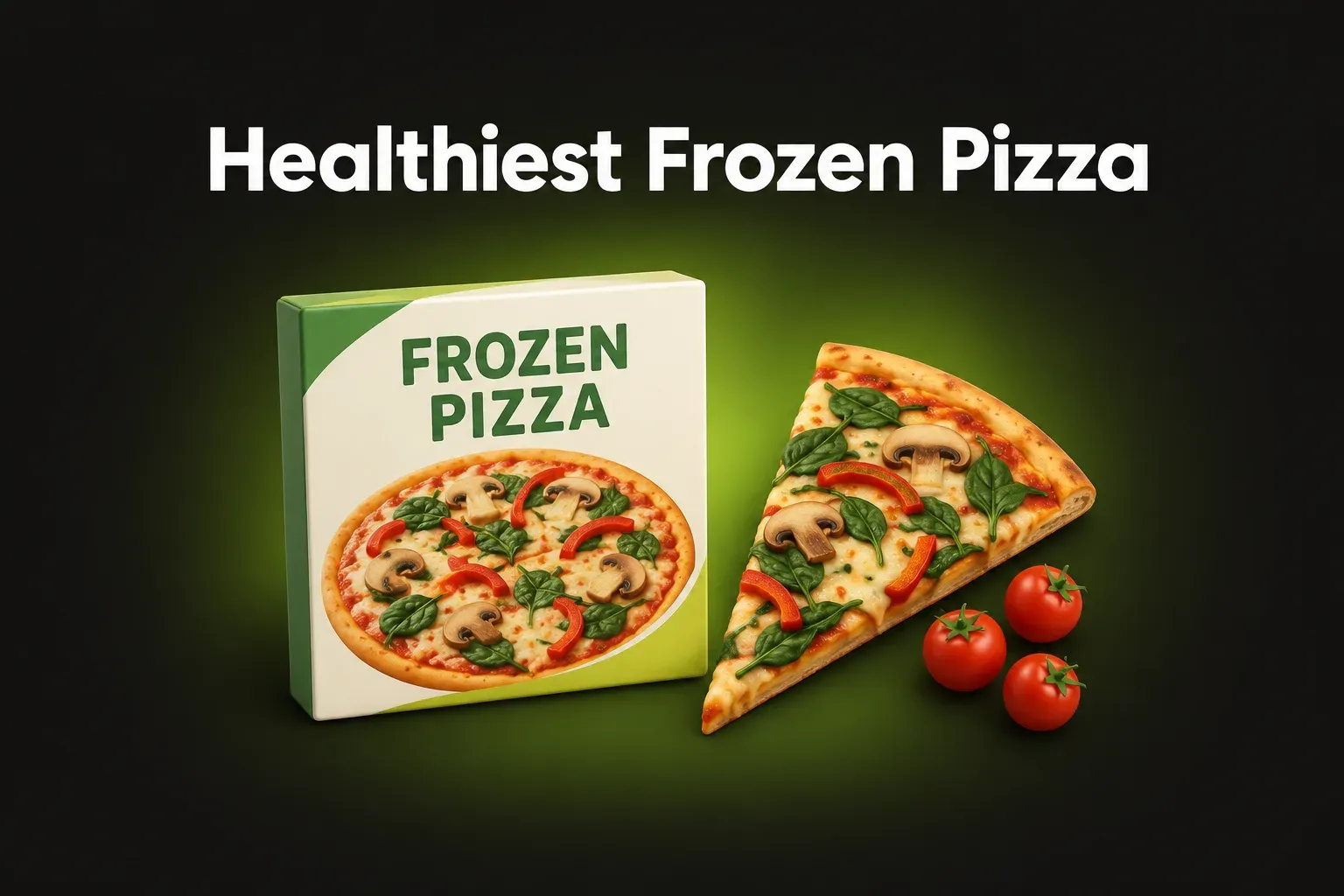
Frozen pizza is the easiest dinner in the freezer. But the boxes are very different inside – in salt, protein and additives.
The short answer: the healthiest frozen pizza is a cheese or veggie pizza. Look for about 700 mg of sodium or less per serving and a short ingredient list. Among popular brands, Caulipower Margherita and Amy’s Margherita come out best. Banza has the most fiber. Big pepperoni pizzas like DiGiorno, Red Baron and Screamin’ Sicilian have the most salt per pizza. Their pepperoni, like Totino’s, also contains BHA, BHT and sodium nitrite.
8 frozen pizzas compared per serving
Each box decides what “one serving” is. It can be 1/6 of the pizza or 1/2 of it. So check the serving size first.
| Pizza | Serving | Calories | Protein | Sodium | Sat. fat |
|---|---|---|---|---|---|
| Caulipower Margherita | 1/2 pizza | 370 | 13 g | 590 mg | 5 g |
| Amy’s Margherita | 1/3 pizza | 280 | 11 g | 530 mg | 4.5 g |
| Banza Four Cheese (chickpea crust) | 1/2 pizza | 420 | 17 g | 680 mg | 10 g |
| Newman’s Own Thin & Crispy Uncured Pepperoni | 1/3 pizza | 340 | 15 g | 870 mg | 7 g |
| Screamin’ Sicilian Holy Pepperoni | 1/5 pizza | 330 | 14 g | 660 mg | 8 g |
| DiGiorno Rising Crust Pepperoni | 1/6 pizza | 300 | 15 g | 750 mg | 5 g |
| Red Baron Classic Crust Pepperoni | 1/4 pizza | 380 | 15 g | 800 mg | 9 g |
| Totino’s Party Pizza Pepperoni | 1/2 pizza | 360 | 9 g | 740 mg | 8 g |
Labels from the brands’ websites (Caulipower, Amy’s, Banza, Screamin’ Sicilian, Red Baron, Totino’s) and Open Food Facts for DiGiorno and Newman’s Own, checked November 2026. Recipes change – check the box.
Per serving, the pizzas look close. But a 1/6 serving is much smaller than a 1/2 serving. Most people eat more than one serving, too.
The same pizzas per whole pizza
| Pizza | Servings per box | Calories | Protein | Sodium | Sat. fat |
|---|---|---|---|---|---|
| Caulipower Margherita | 2 | 740 | 26 g | 1,180 mg | 11 g |
| Amy’s Margherita | 3 | 840 | 32 g | 1,590 mg | 13 g |
| Banza Four Cheese | 2 | 840 | 34 g | 1,360 mg | 20 g |
| Totino’s Party Pizza Pepperoni | 2 | 720 | 17 g | 1,480 mg | 16 g |
| Newman’s Own Uncured Pepperoni | 3 | about 1,020 | about 45 g | about 2,610 mg | about 21 g |
| Red Baron Classic Crust Pepperoni | 4 | about 1,520 | about 60 g | about 3,200 mg | about 36 g |
| Screamin’ Sicilian Holy Pepperoni | 5 | about 1,650 | about 70 g | about 3,300 mg | about 40 g |
| DiGiorno Rising Crust Pepperoni | 6 | about 1,800 | about 90 g | about 4,500 mg | about 30 g |
Caulipower, Amy’s, Banza and Totino’s print whole-pizza values on the label. For the others, we multiplied one serving by the number of servings, so the totals are “about”.
Salt is the big problem. Adults should eat less than 2,300 mg of sodium a day. A whole DiGiorno has about twice that. In a study of what Americans eat, pizza was the number one source of sodium (Ahmed et al., Nutrients, 2023).
Less salt really helps. In one trial, 412 adults ate diets with high, medium and low salt for a month each. Blood pressure went down as salt went down. This worked in people with and without high blood pressure (Sacks et al., New England Journal of Medicine, 2001).
Protein differs too. Totino’s has only 17 g of protein in 720 calories. Its “cheese” is mostly an imitation cheese made from water, vegetable oil and starches. The others give you about 3.5–5 g of protein per 100 calories.
The best picks, one by one
Caulipower Margherita – least sodium
The crust is made from cauliflower, rice flour, starches and egg. There are no preservatives. A whole pizza has 740 calories and 1,180 mg of sodium – the lowest in our list. The downside: only 6 g of fiber and 26 g of protein in the whole pizza. And “cauliflower crust” doesn’t mean low calorie. Half a pizza still has 370 calories.
Amy’s Margherita – shortest ingredient list
Amy’s uses organic wheat flour, organic tomatoes, whole milk mozzarella, olive oil, parmesan and basil. There are no preservatives or dough conditioners. One third of the pizza has 280 calories and 530 mg of sodium. It’s a regular white-flour crust, so fiber is low (5 g in the whole pizza).
Banza Four Cheese – most fiber
Banza’s crust is made mostly from chickpeas. Half a pizza has 10 g of fiber and 17 g of protein. That’s more fiber than any other pizza here, and the most protein of the cheese pizzas. The catch: 10 g of saturated fat per half. That’s half a day’s limit. It comes from four cheeses and cocoa butter in the crust.
Newman’s Own Uncured Pepperoni – the pepperoni pick
If you want pepperoni, this one has no BHA or BHT. The pepperoni is cured with celery powder and sea salt, not sodium nitrite. But “uncured” doesn’t mean nitrite-free. Celery powder is rich in nitrate, which turns into nitrite – the same compound. Read more in our guide to nitrates in food. It’s also salty: 870 mg of sodium per serving, the most per serving in our list.
The classic pepperoni pizzas
DiGiorno, Red Baron, Screamin’ Sicilian and Totino’s all use pepperoni with sodium nitrite, BHA and BHT. Some add more:
- Totino’s: imitation mozzarella, titanium dioxide (a white color), TBHQ (a preservative) and L-cysteine (a dough conditioner).
- Red Baron: palm oil and dough conditioners that may include ammonium sulfate and L-cysteine.
- DiGiorno: DATEM, an emulsifier (it helps fat and water mix) that makes dough stronger.
Trader Joe’s and Real Good Foods were on our list too. We couldn’t check current Trader Joe’s labels online, so they aren’t in the table. Real Good Foods no longer shows pizza on its website.
The additives in frozen pizza
BHA and BHT in pepperoni
BHA and BHT are preservatives. They stop the fat in pepperoni from going rancid (stale and bad-smelling).
BHA has a warning sign from animal studies. Rats ate BHA as 0.5% or 2% of their food for two years. The higher dose caused tumors and cancer in the forestomach (Ito et al., Journal of the National Cancer Institute, 1983). In another study, hamsters ate food with 1–2% BHA for 24 weeks. They all grew small tumors in the forestomach (Ito et al., Gann, 1983).
Humans don’t have a forestomach. And these doses are far higher than what’s in a pizza. Still, animal studies matter. Rodents share most of our genes and body processes. Testing a possible cancer cause on people would put their health at risk.
The WHO’s cancer agency calls BHA “possibly carcinogenic to humans”. The US National Toxicology Program says it is “reasonably anticipated” to cause cancer. In February 2026, the FDA started a new safety review of BHA. Proof of harm in people is missing. But tumors showed up in more than one animal species. So it makes sense to limit BHA as a precaution.
Sodium nitrite and processed meat
Pepperoni is a processed meat. Experts reviewed over 800 studies for the WHO. Each 50 g of processed meat a day (about two slices of ham) raised the risk of colorectal cancer by about 18%. That’s cancer of the colon or rectum (Bouvard et al., Lancet Oncology, 2015).
Nitrite from additives is one suspected reason. A French study followed 101,056 adults. Those who got the most nitrite from food additives had more prostate cancer (Chazelas et al., International Journal of Epidemiology, 2022). In 104,168 adults from the same study, more additive nitrite was linked to more type 2 diabetes (Srour et al., PLOS Medicine, 2023). These studies show links, not proof. But they point the same way.
Dough conditioners
Dough conditioners make dough stronger and easier to shape by machine. The ones in these pizzas include ascorbic acid (vitamin C), enzymes, DATEM, L-cysteine and ammonium sulfate. Vitamin C and enzymes are of little concern. None of the 8 pizzas lists the more debated potassium bromate or azodicarbonamide.
Titanium dioxide in imitation cheese
Totino’s uses titanium dioxide to make its imitation cheese white. In 2021, European food safety experts said it could no longer be considered safe. They couldn’t rule out damage to DNA (the genes inside our cells). The EU banned it in food in 2022. It is still allowed in the US.
How to choose a healthier frozen pizza: 6 checks
| Check | Aim for | Why |
|---|---|---|
| Sodium | About 700 mg or less per serving | Whole pizzas range from 1,180 to 4,500 mg |
| Serving size | Compare the same share | Boxes split a pizza 2 to 6 ways |
| Protein | 10 g or more per serving | Keeps you full longer – add a side of chicken or beans if it’s low |
| Saturated fat | 5 g or less per serving | Cheese and pepperoni pizzas reach 8–10 g |
| Toppings | Cheese or vegetables | Pepperoni adds salt, nitrite, BHA and BHT |
| Ingredient list | Short, with real foods | Fewer conditioners, preservatives and imitation cheese |
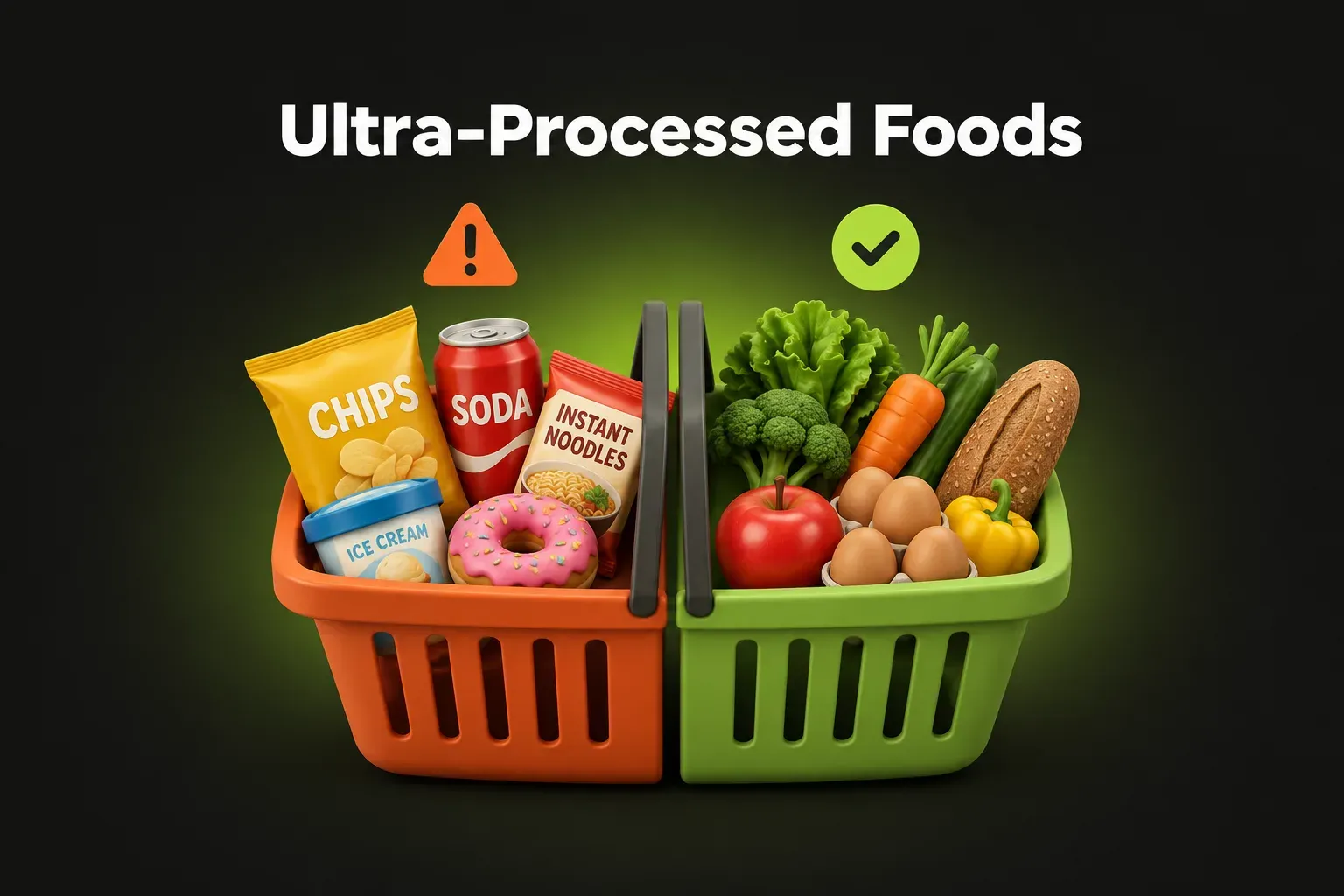
Most frozen pizzas are ultra-processed foods. In a strict hospital study, 20 adults could eat as much as they wanted. On an ultra-processed diet, they ate about 500 more calories a day than on simple foods (Hall et al., Cell Metabolism, 2019). That’s why the shortest ingredient list usually wins.
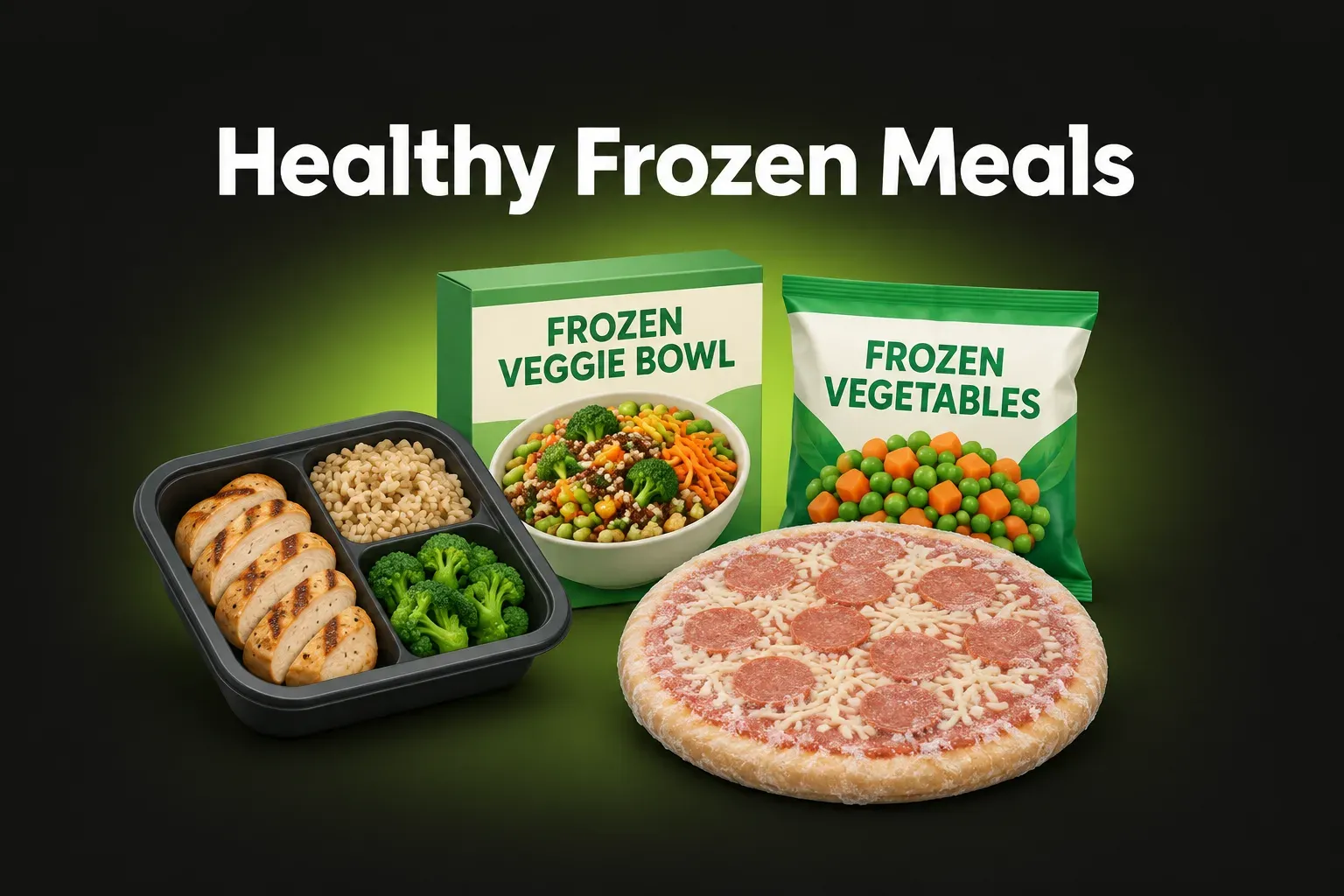
For other freezer foods, like bowls, burritos and plain vegetables, see our guide to healthy frozen meals.
Make any frozen pizza better: add vegetables
- Top it before baking. Add a handful of spinach, sliced mushrooms or peppers. Per 3.5 oz (100 g), raw spinach has 23 calories, mushrooms 22 and red peppers 26 (USDA). Frozen vegetables work too – thaw and pat them dry first.
- Eat a salad first. In one study, 42 women ate a big, light salad before a pasta lunch. They ate 12% fewer calories at that meal (Rolls et al., Journal of the American Dietetic Association, 2004).
- Plate one or two servings. Put the rest away before you sit down.
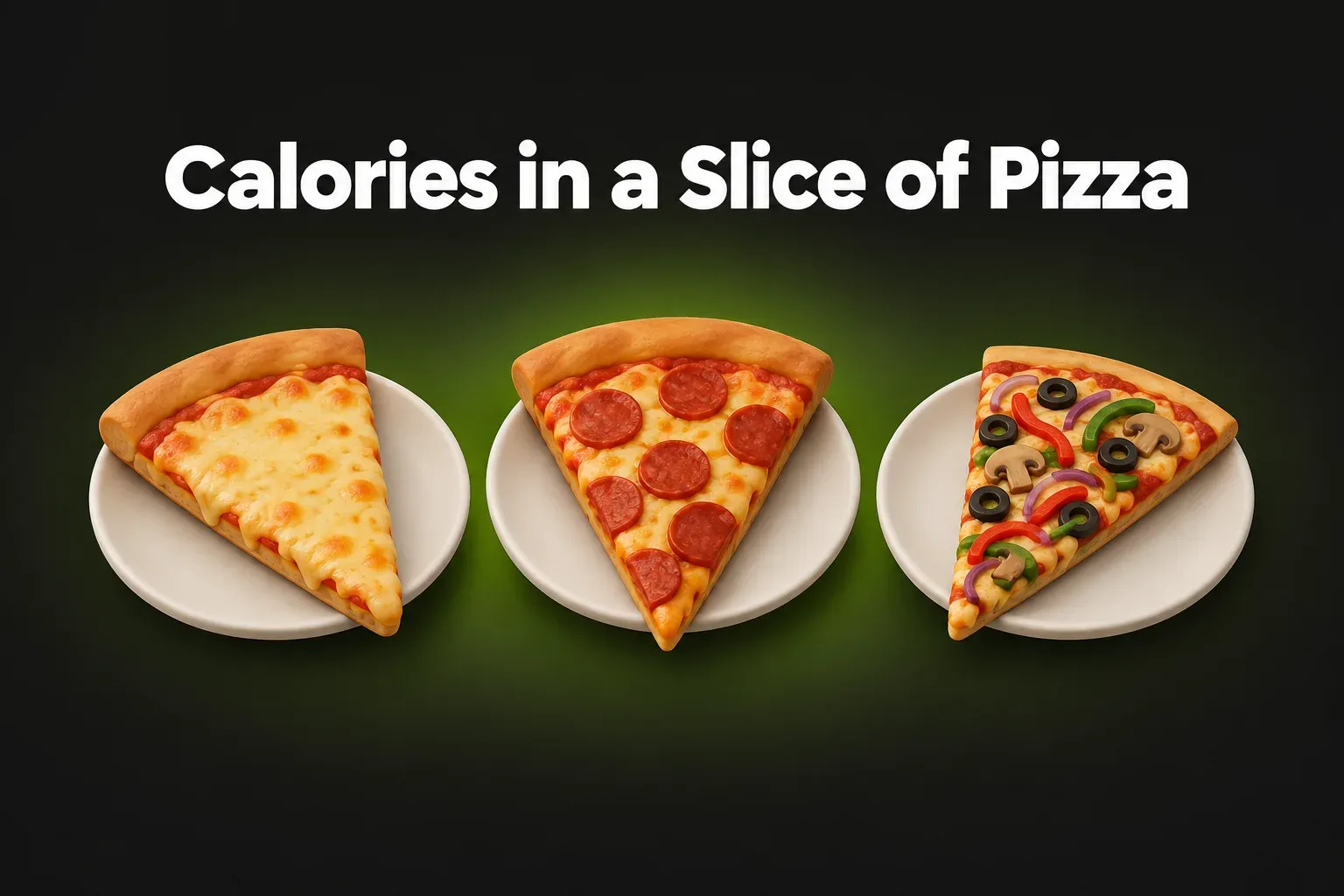
- Count it. See how many calories are in a slice of pizza. Then use our calorie calculator to see how pizza fits your day.
Compare frozen pizzas in the store. With NutriSmart, you photograph the label or scan the barcode. The app lists the preservatives, colors and other additives, explains the risks of each one and gives the pizza a health score out of 100. It also tells you right away if a pizza is ultra-processed and which ingredients make it so. You can even set an alert for BHA or sodium nitrite – the app warns you whenever a scanned product contains it.Get the app free
The bottom line
The healthiest frozen pizza is a cheese or veggie pizza. Look for about 700 mg of sodium or less per serving and a short ingredient list. Among popular brands, Caulipower Margherita and Amy’s Margherita come out best. Banza has the most fiber. Big pepperoni pizzas from DiGiorno, Red Baron and Screamin’ Sicilian have the most salt per pizza. Their pepperoni, like Totino’s, also has BHA, BHT and sodium nitrite. Whatever you buy, eat one or two servings, add vegetables and have a salad on the side.
FAQ
What is the healthiest frozen pizza?
Among popular brands, Caulipower Margherita and Amy's Margherita come out best. A whole pizza has about 740–840 calories and 1,180–1,590 mg of sodium. Both have a short ingredient list and no pepperoni preservatives. Banza Four Cheese has the most fiber, but more saturated fat.
Is frozen pizza bad for you?
Not as an occasional meal. The problem is salt and portion size. A whole pepperoni pizza can have up to 4,500 mg of sodium. That's about twice the daily limit of 2,300 mg. Eat one or two servings and add vegetables.
Which frozen pizza has the least sodium?
In our comparison, Caulipower Margherita had the least per whole pizza: 1,180 mg, or 590 mg per half. Cheese and veggie pizzas usually have less salt than pepperoni or meat pizzas.
Is cauliflower crust pizza healthier?
Not always. Per whole pizza, Caulipower's Margherita has the least sodium and saturated fat in our list. But the whole pizza still has 740 calories. It also has less fiber and protein than a chickpea crust like Banza.
Why is there BHA in frozen pepperoni pizza?
BHA and BHT are preservatives that keep the fat in pepperoni from going rancid. At high doses, BHA caused tumors in part of the stomach in rats and hamsters. In 2026, the FDA started a new safety review. Cheese and veggie pizzas usually don't contain it.
How can I make frozen pizza healthier?
Add spinach, peppers or mushrooms before baking. Eat one or two servings, not the whole pizza, and have a salad first. Pick a cheese or veggie pizza with about 700 mg of sodium or less per serving.