Is Beef Tallow Healthy? Fat Facts, Heart Risks & Frying
Is beef tallow healthy? Its fat per tablespoon, what studies say about saturated fat and LDL, frying, and how it compares to olive oil, butter and canola.
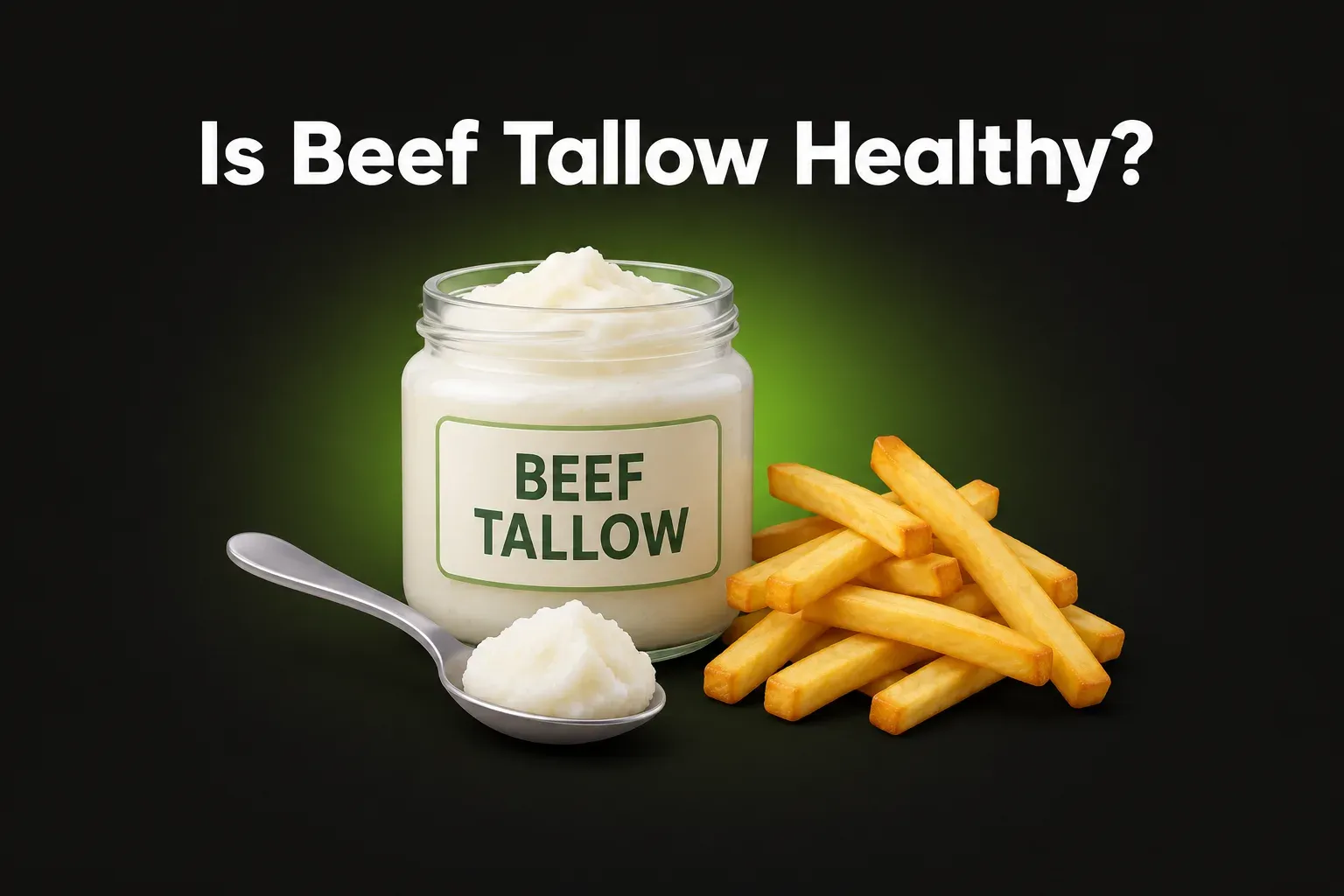
Beef tallow is back. Restaurants fry in it again, chips brag about it, and influencers spread it on toast. But is beef tallow healthy, or is it just the newest food trend?
The short answer: beef tallow is fine in small amounts now and then, but it’s not a health food. About half of its fat is saturated fat, which raises LDL (“bad”) cholesterol in most people. It does hold up well at high heat. In a deep fryer, it breaks down less than many seed oils. But for everyday cooking, olive oil and canola oil have much stronger proof for heart health. If you have high cholesterol or heart disease, keep tallow low.
What is beef tallow?
Beef tallow is fat from cows that has been melted down and strained. This process is called rendering. The best tallow comes from suet, the hard fat around the kidneys. When it cools, it turns into a creamy white solid, a bit like shortening.
Tallow was a common frying fat in America for decades. McDonald’s fried its fries in a blend made mostly of beef tallow until 1990. Then it switched – but not to a healthy oil. It moved to a partly hydrogenated shortening. That shortening was full of trans fat, which we now know is even worse for the heart (CSPI). You can read what’s in the fries today in our article on McDonald’s fries ingredients.
Beef tallow nutrition: what’s in a tablespoon
Here is what 1 tablespoon (12.8 g) of beef tallow contains, according to the USDA food database:
| Per 1 tbsp (12.8 g) | Amount |
|---|---|
| Calories | 115 |
| Total fat | 12.8 g |
| Saturated fat | 6.4 g |
| Monounsaturated fat | 5.4 g |
| Polyunsaturated fat | 0.5 g |
| Cholesterol | 14 mg |
| Protein, carbs, sugar | 0 g |
Source: USDA FoodData Central, beef tallow. Store jars list a 14 g tablespoon, so their labels show 120–130 calories.
So about 50% of tallow’s fat is saturated – the main health worry. About 42% is monounsaturated, the main fat in olive oil. Only about 4% is polyunsaturated, the kind that breaks down easily with heat. That’s why tallow is so stable in a fryer.
Tallow’s saturated fat is a mix of two main types. Palmitic acid (about 25% of the fat) raises LDL cholesterol. Stearic acid (about 19%) seems to have less effect on LDL. A 2022 review looked at 44 trials. LDL dropped when people swapped palmitic acid for unsaturated fats. Swapping stearic acid showed no clear benefit, but only 4 trials tested it (Sellem et al., Advances in Nutrition, 2022).
Some people say grass-fed tallow is rich in vitamins A, D, E and K. The labels don’t back this up. The Fatworks grass-fed tallow label lists 0% of the Daily Value for vitamins A, D, E and B12 (Fatworks).
Tallow also has a little natural trans fat, up to 1 g per tablespoon on some store labels. Bacteria in a cow’s stomach make it. It’s not the banned factory-made kind. Studies haven’t linked the small amounts people eat to heart disease (Bendsen et al., European Journal of Clinical Nutrition, 2011). But in feeding trials with larger amounts, it raised LDL compared with HDL (“good”) cholesterol, much like factory trans fat (Brouwer et al., PLoS One, 2010).
Beef tallow vs butter, olive oil and canola oil
Here is how tallow compares with other common cooking fats. All numbers are for 1 tablespoon.
| Fat (1 tbsp) | Calories | Saturated fat | Mono fat | Poly fat | Cholesterol |
|---|---|---|---|---|---|
| Beef tallow | 115 | 6.4 g | 5.4 g | 0.5 g | 14 mg |
| Butter | 102 | 7.3 g | 3.0 g | 0.4 g | 31 mg |
| Lard (pork fat) | 115 | 5.0 g | 5.8 g | 1.4 g | 12 mg |
| Coconut oil | 121 | 11.2 g | 0.9 g | 0.2 g | 0 mg |
| Olive oil | 119 | 1.9 g | 9.9 g | 1.4 g | 0 mg |
| Canola oil | 124 | 1.0 g | 8.9 g | 3.9 g | 0 mg |
| Soybean oil | 120 | 2.1 g | 3.1 g | 7.8 g | 0 mg |
Source: USDA FoodData Central: beef tallow, butter, lard, coconut oil, olive oil, canola oil, soybean oil. Mono = monounsaturated, poly = polyunsaturated.
A few things stand out:
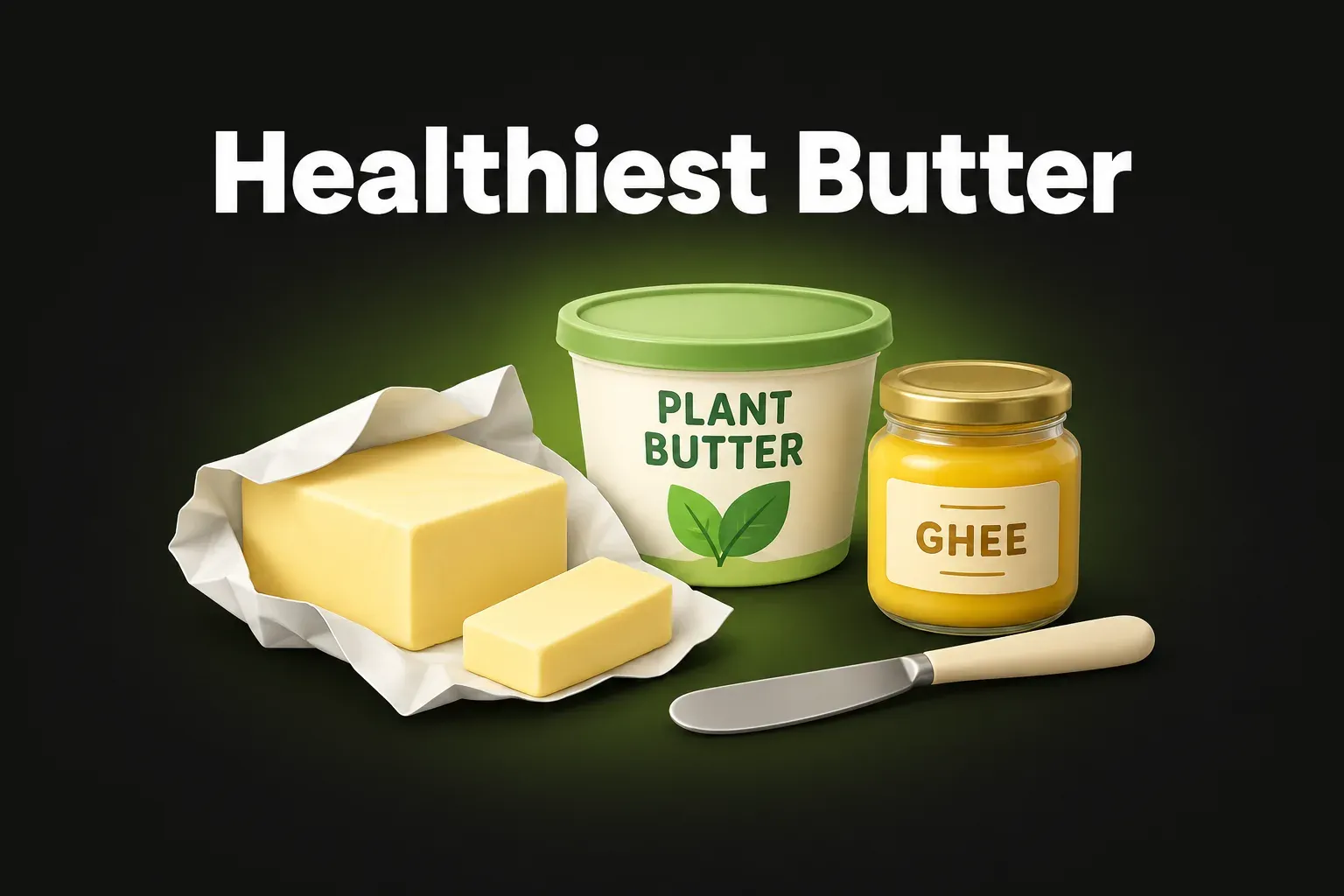
- Tallow vs butter: they are close. Tallow has a bit less saturated fat and half the cholesterol. Butter has more vitamin A. See our guide to the healthiest butter.
- Tallow vs olive oil: olive oil has only about a third as much saturated fat and much more monounsaturated fat. It also has strong research behind it. More in is olive oil healthy?
- Tallow vs canola oil: canola has the least saturated fat of all. It also gives you some omega-3. Read more about canola oil.
All fats have about the same calories, about 100–125 per tablespoon. Tallow won’t help or hurt your weight more than oil does.
Saturated fat and your heart: what studies say
Here is the main problem with tallow. Saturated fat raises LDL cholesterol in most people. LDL builds up in blood vessels over time and can lead to heart attacks and strokes.
What the research shows:
- Cutting saturated fat lowers heart problems. A Cochrane review pooled 15 trials with about 57,000 adults. Cutting saturated fat for at least 2 years lowered the risk of heart and blood vessel problems, such as heart attacks and strokes, by 17%. It did not clearly change the risk of death (Hooper et al., Cochrane Database of Systematic Reviews, 2020).
- What you eat instead matters. A Harvard study followed about 126,000 adults for up to 32 years. Swapping 5% of calories from saturated fat for polyunsaturated fat was linked to a 27% lower risk of death. Swapping it for monounsaturated fat was linked to a 13% lower risk (Wang et al., JAMA Internal Medicine, 2016).
- Butter vs plant oils. Another Harvard study followed over 221,000 adults for up to 33 years. Swapping 10 g of butter a day for plant oils was linked to 17% fewer deaths (Zhang et al., JAMA Internal Medicine, 2025).
These were observational studies. They show a link, not proof of cause. Also, very few studies look at tallow on its own. Most group it with other saturated fats like butter.
What health groups advise:
- The American Heart Association advises getting less than 6% of calories from saturated fat. On a 2,000-calorie diet, that’s about 13 g a day (AHA). One tablespoon of tallow uses up about half.
- The Dietary Guidelines for Americans 2025–2030 came out in January 2026. They keep the limit at 10% of calories, about 22 g. They say to pick oils such as olive oil first. They add that “other options can include butter or beef tallow” (Dietary Guidelines).
Is tallow better for frying?
Yes, in one way. Fats with lots of polyunsaturated fat break down faster at high heat. They form more harmful compounds, such as aldehydes. Tallow has very little of this fat, so it stays more stable.
- In a 2025 lab study, tallow broke down less during frying than two plant oils: a high-oleic rapeseed oil and rice bran oil. Levels of benzo[a]pyrene, a compound linked to cancer, rose in the plant oils. They stayed low in tallow (Lei et al., Food Chemistry, 2025).
- In another study, scientists mixed tallow into soybean oil and fried with it 20 times. The blends formed 17–27% fewer “polar compounds.” These are a common sign of worn-out oil (Zhang et al., Journal of Food Science, 2026).
There’s a catch. Tallow contains cholesterol, and heat can damage it. Scientists tested tallow from real deep fryers. About 25% of its cholesterol had broken down. Part of it had turned into “oxysterols,” or oxidized cholesterol (Bascoul et al., Lipids, 1986). Plant oils don’t have this issue, since they have no cholesterol.
Still, a stable frying fat doesn’t make fried food healthy. Tallow fries are still fries.
The seed oil debate, explained fairly
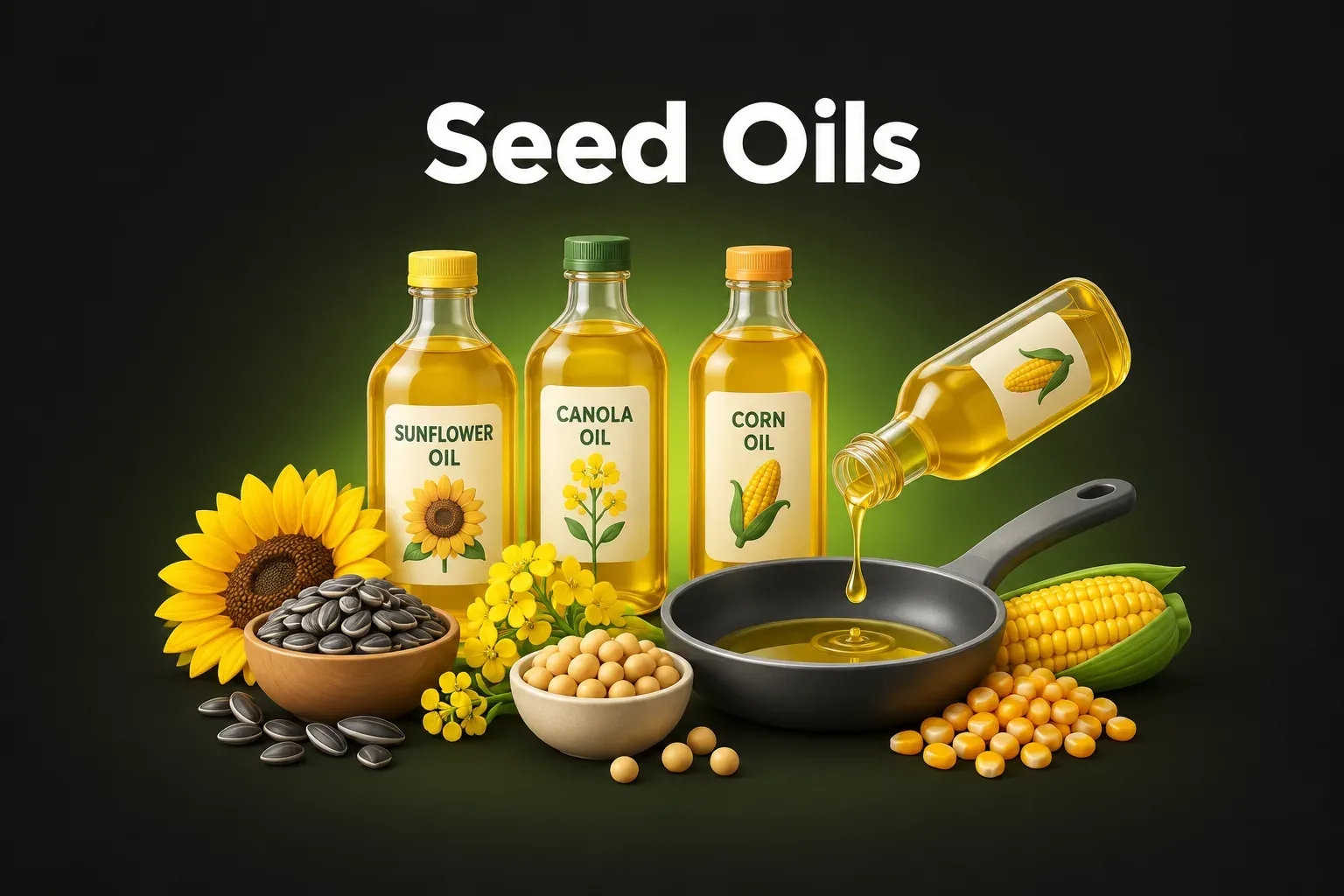
The tallow comeback is tied to the fight over seed oils, like canola, soybean and corn oil. Robert F. Kennedy Jr., now the US health secretary, has long blamed seed oils for health problems. He has urged restaurants to go back to frying in tallow. His “Make America Healthy Again” (MAHA) movement helped make tallow popular.
Some chains listened. On January 16, 2025, Steak ’n Shake said it would fry its fries in 100% beef tallow. Before, it used vegetable oil. All of its 400+ locations were set to switch by the end of February 2025 (Tasting Table).
What the seed oil critics get right:
- Seed oils break down more in a fryer, as shown above.
- Some results from an old trial stayed hidden for years. In that trial, people swapped animal fat for corn oil. Their cholesterol dropped, but they didn’t live longer (Ramsden et al., BMJ, 2016). But the “animal fat” diet in that trial also included margarine and shortening.
What the evidence doesn’t support:
- “Seed oils cause inflammation.” A review looked at 15 trials in healthy people. Eating more linoleic acid, the main fat in seed oils, did not raise signs of inflammation in the blood (Johnson and Fritsche, Journal of the Academy of Nutrition and Dietetics, 2012).
- “Seed oils hurt your heart.” A large analysis pooled 30 studies with 68,659 people. It measured linoleic acid in their blood or body fat. People with the most had a lower risk of heart disease and death from it (Marklund et al., Circulation, 2019).
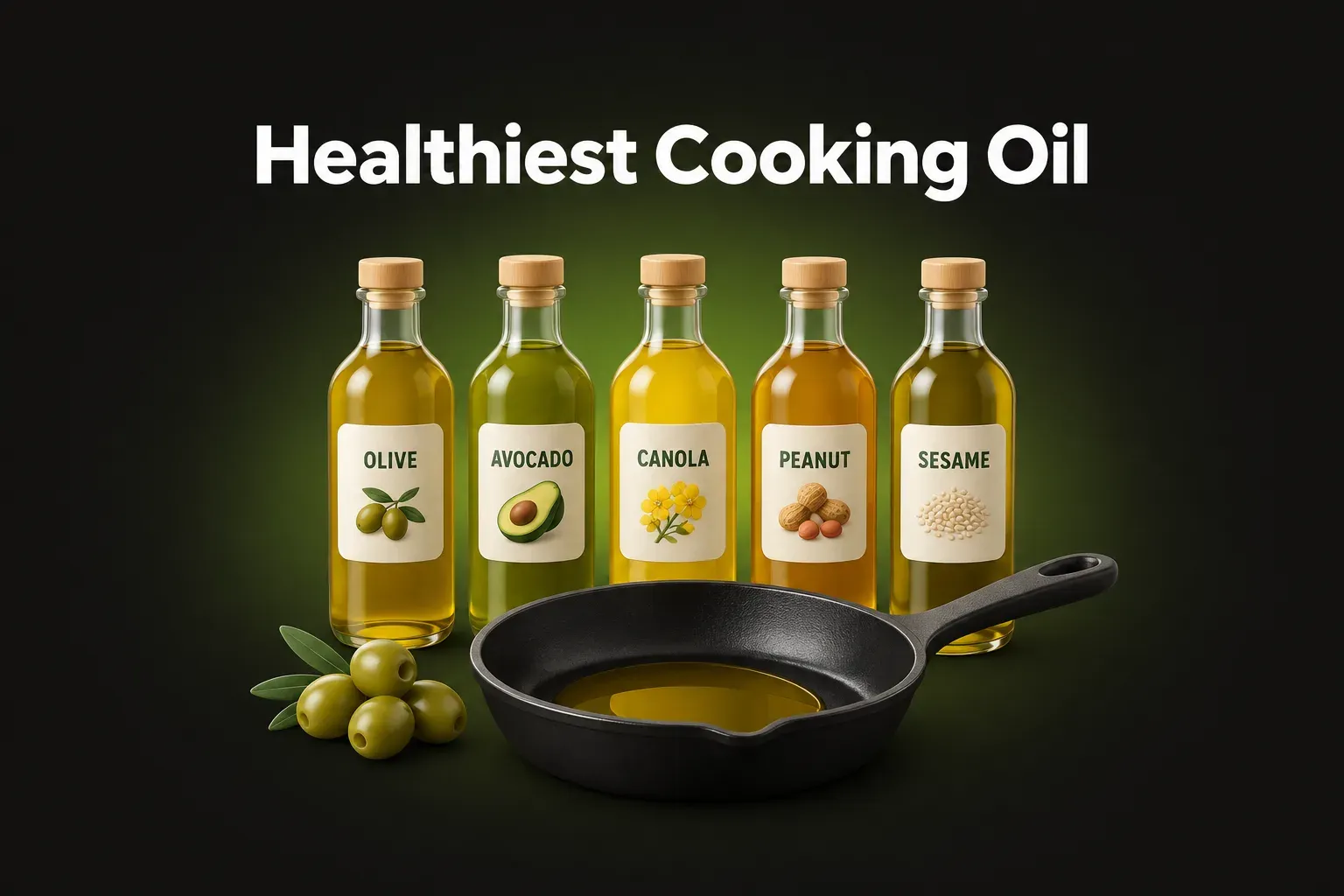
A fair take: the real problem is often the foods seed oils come in, not the oil itself. Swapping fries in seed oil for fries in tallow doesn’t fix that. For a full ranking of oils, see our guide to the healthiest cooking oil.
Store-bought tallow: brands compared
These tallow jars are easy to find in US stores and online. All have only one ingredient: beef fat.
| Tallow (1 tbsp) | Calories | Saturated fat | Trans fat | Cholesterol | Price |
|---|---|---|---|---|---|
| Epic Grass Fed Beef Tallow (11 oz) | 130 | 7 g | 1 g | 15 mg | $13.89 |
| Fatworks Grass Fed Beef Tallow (14 oz) | 130 | 6 g | 0.5 g | 10 mg | $18.25 |
| South Chicago Packing Wagyu Beef Tallow (11.5 oz) | 120 | 4.5 g | under 0.5 g | 10 mg | $16.99 |
Sources: Epic – Target (label and price); Fatworks – Fatworks (label and price); South Chicago Packing – South Chicago Packing (label and price; 13 g tablespoon, “not a significant source of trans fat”). Prices as of November 2026 and may vary by store.
The Wagyu tallow has a bit less saturated fat, since Wagyu cattle store more monounsaturated fat. Its label lists 7 g of monounsaturated fat per tablespoon. Still, the gap in saturated fat is only 1.5–2.5 g per tablespoon.
Tallow-fried chips vs regular chips
Many new chips are fried in beef tallow. Here is how they compare with classic Lay’s, which uses vegetable oil.
| Chips (1 oz / 28 g) | Calories | Fat | Saturated fat | Sodium |
|---|---|---|---|---|
| Masa Original tortilla chips | 150 | 8 g | 3.5 g | 100 mg |
| Teddy’s Sea Salt tortilla chips | 140 | 8 g | 3.5 g | 220 mg |
| Vandy Crisps Original potato chips | 140 | 6 g | 3 g | 130 mg |
| Teddy’s Himalayan Salt potato chips | 150 | 11 g | 5 g | 200 mg |
| Boulder Canyon Beef Tallow Classic Sea Salt | 150 | 8 g | 4 g | 120 mg |
| Lay’s Classic (vegetable oil) | 160 | 10 g | 1.5 g | 140–170 mg |
Sources: labels on Masa, Vandy Crisps, Teddy’s (potato chips) and Boulder Canyon; Lay’s – Open Food Facts (bag sizes list 140 or 170 mg sodium).
The good part: most tallow chips have just three ingredients – corn or potatoes, tallow and salt. Several also have less sodium than Lay’s. The downside: they have about 2–3 times more saturated fat than Lay’s. Calories are about the same. They are still chips, so a handful is a treat, not a health snack. See our list of the healthiest chips for better picks.
Who should limit beef tallow
Most healthy adults can use a little tallow now and then. These groups should be more careful:
- People with high LDL cholesterol. Saturated fat can push it higher. Some people’s LDL rises a lot more than others’.
- People with heart disease, a past stroke, diabetes or very high LDL that runs in the family. Doctors usually advise less saturated fat.
- Anyone counting calories. A tablespoon has 115–130 calories, the same as oil. It adds up fast when you fry.
- Vegetarians and vegans. Tallow is beef fat. Restaurant fries cooked in tallow are not vegetarian.
How to use beef tallow wisely
If you like the taste, here’s how to enjoy tallow with less risk:
- Use it for flavor, not every day. Save it for a steak sear or a batch of roast potatoes.
- Measure it. Use a spoon, not a big scoop. One tablespoon is about half the AHA’s daily saturated fat limit.
- Keep olive oil or canola oil as your main fat. They have the strongest research for heart health.
- Don’t overheat it. Fatworks lists a smoke point of 375°F (190°C). If it smokes, it’s breaking down.
- Check snack labels. “Fried in tallow” doesn’t mean healthy. Look at saturated fat, sodium and serving size.
Spot beef tallow and other fats on snack labels. With NutriSmart, you photograph the label or scan the barcode. The app lists the sweeteners, preservatives and colors, explains the risks of each one and gives the product a health score out of 100. It also tells you right away if a snack is ultra-processed, and which ingredients make it so. Set an alert for beef tallow or any oil you want to avoid. The app then warns you whenever a product you scan contains it.Get the app free
The bottom line
Beef tallow is not poison, and it’s not a superfood. About half of it is saturated fat, which raises LDL cholesterol in most people. It’s very stable in a fryer, so it breaks down less than many seed oils at high heat. Swapping saturated fat for olive oil or plant oils is linked to fewer heart problems and a longer life. Use tallow now and then for flavor, measure it, and keep olive oil or canola oil as your everyday fat. If you have high cholesterol or heart disease, keep it low.
FAQ
Is beef tallow healthy?
It's fine in small amounts now and then, but it's not a health food. A tablespoon has about 6 g of saturated fat, which raises LDL cholesterol in most people. For daily cooking, olive oil and canola oil have stronger proof for heart health.
Is beef tallow better than seed oils?
For frying, tallow holds up better at high heat and breaks down less. For your heart, studies favor seed oils and olive oil. People who swap saturated fat for these oils have lower LDL cholesterol and fewer heart problems.
How much saturated fat is in beef tallow?
About half of beef tallow is saturated fat. A tablespoon has about 6–7 g, or roughly a third of the 20 g Daily Value. The American Heart Association advises about 13 g or less a day on a 2,000-calorie diet.
Is beef tallow healthier than butter?
They are close. Per tablespoon, tallow has a bit less saturated fat (6.4 g vs 7.3 g) and half the cholesterol. Butter has more vitamin A. Neither is a great everyday fat for your heart.
Are chips fried in beef tallow healthier?
Not really. Tallow chips often have only three ingredients, which is a plus. But they have 3–5 g of saturated fat per ounce, versus 1.5 g in Lay's Classic. Calories are about the same.
Who should avoid beef tallow?
People with high LDL cholesterol, heart disease or a family history of early heart disease should keep it low. Vegetarians should skip it, since it's made from beef fat. Anyone watching calories should measure it, as a tablespoon has about 115–130 calories.