Healthiest Cooking Oil: 12 Oils and Fats Compared
What is the healthiest cooking oil? Olive, avocado, canola, seed oils, coconut, butter and tallow compared by fat type, smoke point and heat stability.
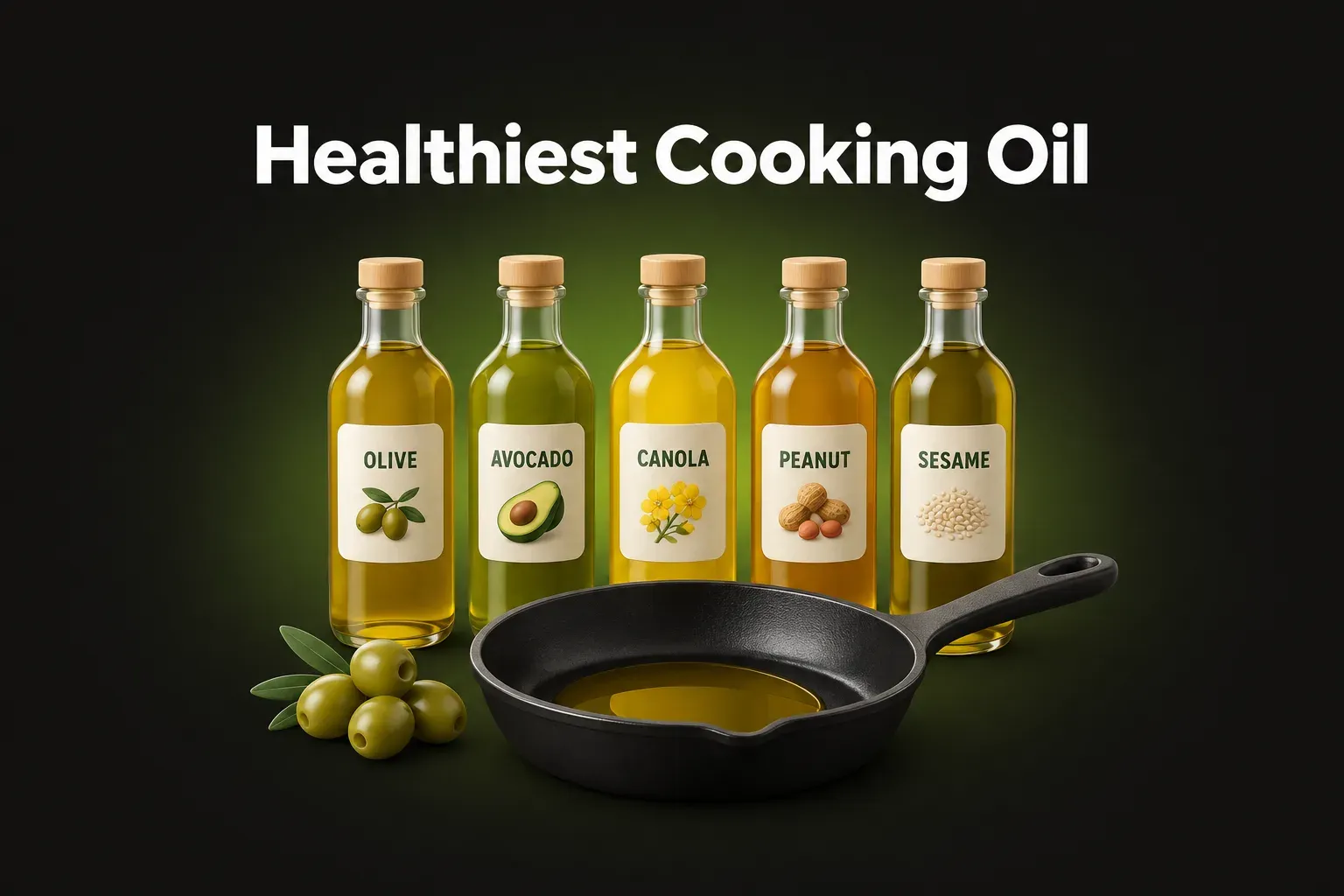
Olive, avocado, canola, peanut, coconut, ghee, tallow – the oil aisle is full of choices. So which is the healthiest cooking oil, and which one should you fry with?
The short answer: for most cooking, extra virgin olive oil is the healthiest pick. It has the strongest proof from studies in people, and it holds up well to heat. Avocado oil, canola oil, peanut oil and high-oleic sunflower oil are good choices too. Use coconut oil, butter, ghee and beef tallow only now and then, because they are high in saturated fat. And whatever you use, don’t reuse frying oil over and over.
12 cooking fats compared per tablespoon
All oils have about 120 calories per tablespoon. What differs is the type of fat. Here are the numbers from the USDA food database.
| Fat (1 tbsp) | Calories | Saturated | Mono | Poly | Omega‑6 |
|---|---|---|---|---|---|
| Olive oil | 119 | 1.9 g | 9.9 g | 1.4 g | 1.3 g |
| Avocado oil | 124 | 1.6 g | 9.9 g | 1.9 g | 1.8 g |
| Canola oil | 124 | 1.0 g | 8.9 g | 3.9 g | 2.7 g |
| Peanut oil | 119 | 2.3 g | 6.2 g | 4.3 g | 4.3 g |
| Sesame oil | 120 | 1.9 g | 5.4 g | 5.7 g | 5.6 g |
| Grapeseed oil | 120 | 1.3 g | 2.2 g | 9.5 g | 9.5 g |
| Sunflower, high‑oleic | 124 | 1.4 g | 11.7 g | 0.5 g | 0.5 g |
| Sunflower, regular | 120 | 1.4 g | 2.7 g | 8.9 g | 8.9 g |
| Corn oil | 122 | 1.8 g | 3.8 g | 7.4 g | 7.3 g |
| Soybean oil | 120 | 2.1 g | 3.1 g | 7.8 g | 6.9 g |
| Coconut oil | 121 | 11.2 g | 0.9 g | 0.2 g | 0.2 g |
| Butter | 102 | 7.2 g | 3.3 g | 0.4 g | 0.3 g |
| Ghee | 112 | 7.9 g | 3.7 g | 0.5 g | 0.3 g |
| Beef tallow | 115 | 6.4 g | 5.4 g | 0.5 g | 0.4 g |
Source: USDA FoodData Central – olive, avocado, canola, peanut, sesame, grapeseed, high-oleic sunflower, regular sunflower, corn, soybean, coconut, unsalted butter, ghee (butter oil), beef tallow. Values use each food’s USDA tablespoon weight (12.8–14.2 g) and are rounded. Mono = monounsaturated fat, Poly = polyunsaturated fat. USDA lists olive oil in general, not extra virgin only.
What stands out:
- Saturated fat is the fat that is solid at room temperature. Too much raises LDL (“bad”) cholesterol. Canola has the least (1.0 g). Coconut oil has the most – 11.2 g, even more than butter.
- Monounsaturated fat is the main fat in olive, avocado and high-oleic sunflower oil. It’s good for the heart, and it stays stable when heated.
- Polyunsaturated fat includes omega-6 and omega-3 fats. It’s also good for the heart. But it breaks down faster with heat. Grapeseed, regular sunflower, corn and soybean oil have the most.
- Omega-3: canola oil has about 1.3 g of ALA per tablespoon, and soybean oil about 0.9 g. ALA is the plant form of omega-3.
- High-oleic vs regular sunflower: they look the same in the bottle but behave very differently. Check the label for “high oleic.” More in is sunflower oil healthy?
What studies say about oils and your heart
Swapping saturated fat for plant oils helps. The American Heart Association reviewed the research in 2017. In trials, people who swapped saturated fat for oils rich in polyunsaturated fat had about 30% less heart disease. That’s close to what statin drugs do (Sacks et al., Circulation, 2017).
Extra virgin olive oil has the best proof. The PREDIMED trial in Spain followed about 7,400 adults aged 55 to 80. All had a high risk of heart disease. One group ate a Mediterranean diet with free extra virgin olive oil. Another group was told to eat less fat. Over about 5 years, the olive oil group had about 30% fewer heart attacks, strokes and heart deaths (Estruch et al., New England Journal of Medicine, 2018). More in is olive oil healthy?
Butter vs plant oils. A Harvard study followed 221,054 US adults for up to 33 years. People who ate the most butter were 15% more likely to die during the study than those who ate the least. People who ate the most plant oils were 16% less likely to die. Swapping 10 g of butter a day (less than 1 tablespoon) for plant oils was linked to a 17% lower risk of death (Zhang et al., JAMA Internal Medicine, 2025). This kind of study shows a link, not proof. See also healthiest butter.
Coconut oil raises “bad” cholesterol. A review pooled 16 trials. Compared with other plant oils, coconut oil raised LDL cholesterol by about 10 mg/dL. It also raised HDL (“good”) cholesterol a little. It didn’t help weight, blood sugar or inflammation (Neelakantan et al., Circulation, 2020). Read more in is coconut oil healthy?
Beef tallow and ghee are about half saturated fat or more. Tallow is popular again, but there are no good studies showing it’s better for you than plant oils. Read more in is beef tallow healthy?
The seed oil debate
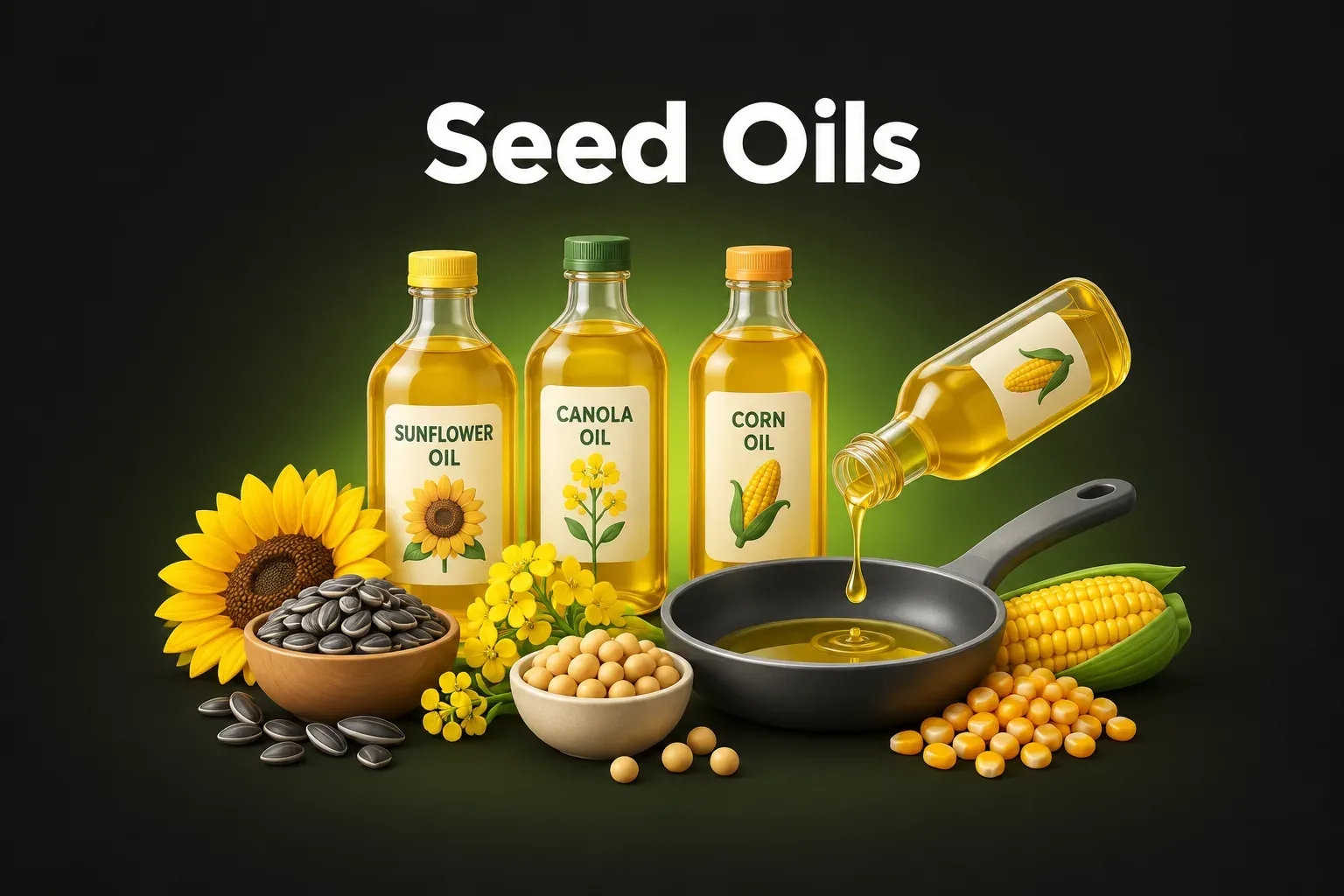
“Seed oils” are oils pressed from seeds, like canola, soybean, corn, sunflower and grapeseed oil. Some people say they are toxic. Here are their main points, and what research shows.
What critics say:
- Many are pulled from the seeds with a solvent (hexane), then cleaned and heated.
- They are high in omega-6 fat. Critics say this fuels inflammation (the body’s alarm response).
What studies in people show:
- A review looked at 15 trials in healthy people. Eating more linoleic acid, the main omega-6 fat, did not raise signs of inflammation in the blood (Johnson & Fritsche, Journal of the Academy of Nutrition and Dietetics, 2012).
- One analysis pooled 30 studies with 68,659 people. People with the most linoleic acid in their blood or body fat were 22% less likely to die from heart disease (Marklund et al., Circulation, 2019).
- One old trial points the other way. In the 1960s–70s, a Minnesota study swapped saturated fat for corn oil. Cholesterol went down, but deaths did not. The data was only looked at again in 2016 (Ramsden et al., BMJ, 2016). Many people dropped out of that study, so it’s hard to judge.
Where critics have a point: oils high in polyunsaturated fat do break down faster when heated for a long time. And a lot of the seed oil people eat comes from fried food and ultra-processed snacks. Those foods are a problem with any oil. Read the full story in are seed oils bad for you? and is canola oil healthy?
Smoke point vs stability: which oil handles heat best?
The smoke point is the heat at which an oil starts to smoke. Many people pick oils by this number. But it doesn’t tell you how much the oil breaks down while you cook.
When oil breaks down, it forms polar compounds. These are bits of damaged fat. Some of them may harm health. Many countries set a legal limit of 24–27% for frying oil.
In a 2018 study, a lab in Australia tested 10 store-bought oils. It heated each one to 464°F (240°C) in about 20 minutes. In a second test, it kept each oil at 356°F (180°C) for 6 hours (De Alzaa et al., Acta Scientific Nutritional Health, 2018).
| Oil (2018 test) | Smoke point | Stability | Polar compounds |
|---|---|---|---|
| Extra virgin olive | 404°F (207°C) | 32.7 h | 8.5% |
| Coconut | 376°F (191°C) | 50.3 h | 9.3% |
| Peanut, high‑oleic | 439°F (226°C) | 35.4 h | 10.7% |
| Avocado | 386°F (197°C) | 10.2 h | 11.6% |
| Regular olive oil | 406°F (208°C) | 16.0 h | 11.7% |
| Sunflower | 490°F (255°C) | 6.1 h | 15.6% |
| Grapeseed | 514°F (268°C) | 6.6 h | 19.8% |
| Canola | 492°F (256°C) | 10.8 h | 22.4% |
Source: De Alzaa, Guillaume and Ravetti, Acta Scientific Nutritional Health, 2018, tables 1 and 5. Stability = how many hours the fresh oil resisted damage in a standard lab test (longer is better). Polar compounds = average at the end of both heating tests (lower is better). Regular olive oil is a blend of refined and virgin olive oil. The study does not say if the sunflower oil was high-oleic, but its fat profile is close to regular sunflower oil.
What this means: the oils with the highest smoke points – grapeseed, canola and sunflower – made the most broken-down fat. The authors say stability and polyunsaturated fat predict this better than smoke point.
This study has limits. The lab tests olive oil for a living. It tested only one product of each oil, and it cooked no food in the oil. And the paper is not in PubMed. But other labs found something similar. Researchers in Portugal deep-fried with olive oils until they hit the legal limit. The olive oils lasted 24–27 hours. A common vegetable oil blend lasted 15 hours (Casal et al., Food and Chemical Toxicology, 2010).
Smoke points on real bottles
Brands often print a smoke point or a top cooking heat on the label or their website. Here’s what 10 oils sold in the US say.
| Product | Oil type | Brand’s heat claim |
|---|---|---|
| California Olive Ranch 100% California | Extra virgin olive | “well over 425°F” |
| Chosen Foods 100% Pure Avocado Oil | Refined avocado | 500°F |
| Mazola Canola Oil | Canola | about 425–450°F |
| Mazola Corn Oil | Corn | about 450–460°F |
| Spectrum Organic Peanut Oil, Refined | Refined peanut | up to 460°F |
| Spectrum Toasted Sesame Oil | Toasted sesame | up to 350°F |
| Spectrum Grapeseed Oil, Refined | Refined grapeseed | up to 425°F |
| Nutiva Organic Virgin Coconut Oil | Virgin coconut | 350°F |
| Nutiva Organic Refined Coconut Oil | Refined coconut | 400°F |
| 4th & Heart Original Ghee | Ghee | 485°F |
Sources: brand sites for California Olive Ranch, Chosen Foods, Mazola, Spectrum (peanut, toasted sesame, grapeseed), Nutiva (virgin, refined) and 4th & Heart, checked November 2026. Spectrum lists the highest heat it advises, not a measured smoke point. These are the companies’ own claims; we did not test the oils.
The numbers differ a lot. Chosen Foods’ own smoke point chart lists extra virgin olive oil at 320°F. California Olive Ranch says well over 425°F. Spectrum advises up to 425°F for its grapeseed oil, while the 2018 lab measured a smoke point of 514°F. Smoke point depends on the batch, freshness and processing, so use it as a rough guide only.
The best oil for each job
Frying and high heat
Pick an oil that is low in polyunsaturated fat. Good choices are extra virgin or regular olive oil, refined avocado oil, peanut oil and high-oleic sunflower oil. Keep the oil at about 350°F (175°C). The 2018 paper calls 356°F (180°C) the highest advised heat for deep frying. Read more in is peanut oil healthy? and is avocado oil healthy?
Sautéing and roasting
Extra virgin olive oil is the best all-round pick. Avocado oil and canola oil work well too, and they taste neutral.
Dressings and drizzling
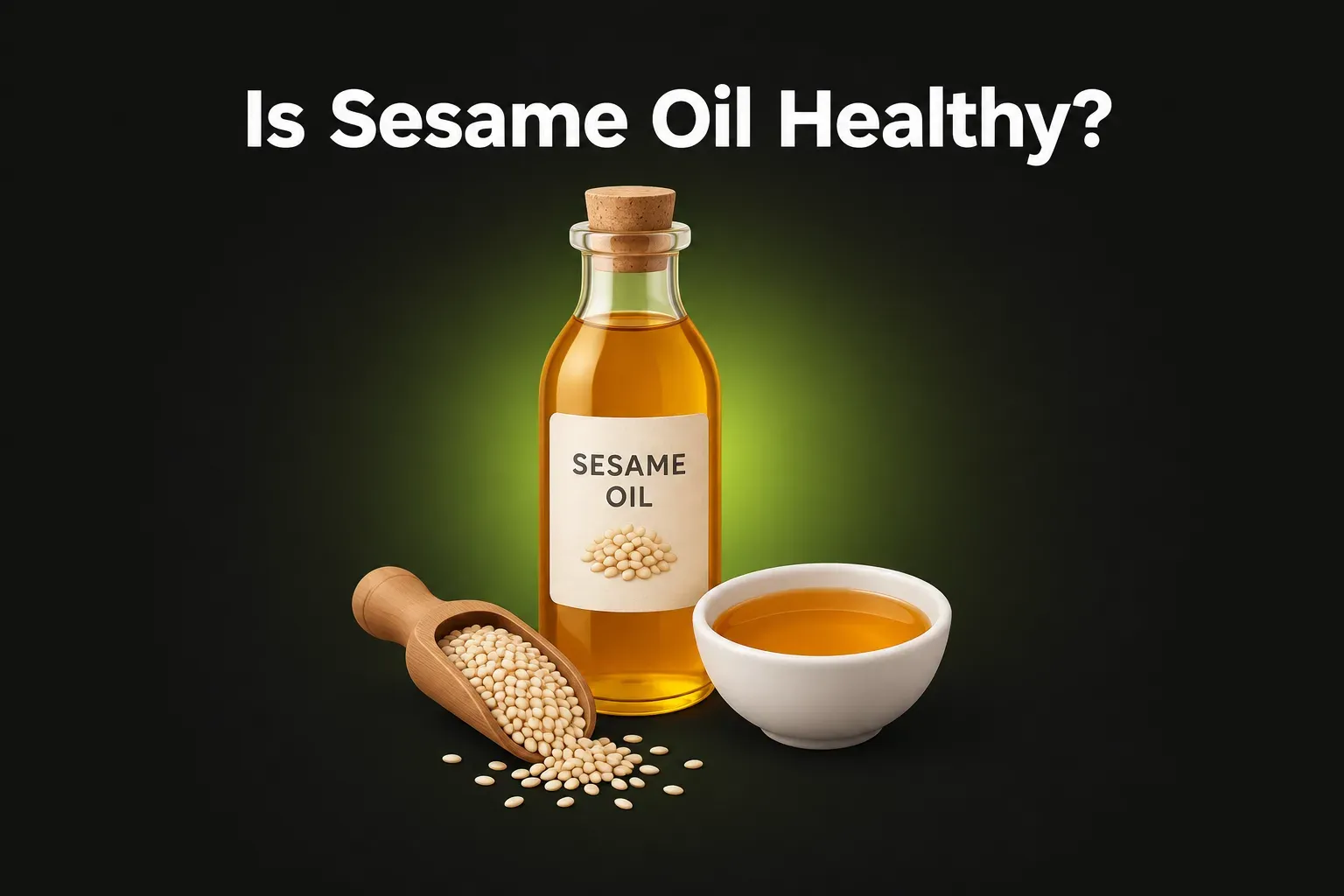
Use extra virgin olive oil raw to get the most of its plant compounds (polyphenols). Toasted sesame oil has a strong, nutty taste – a few drops are enough. It’s best for finishing a dish, not for frying. See is sesame oil healthy?
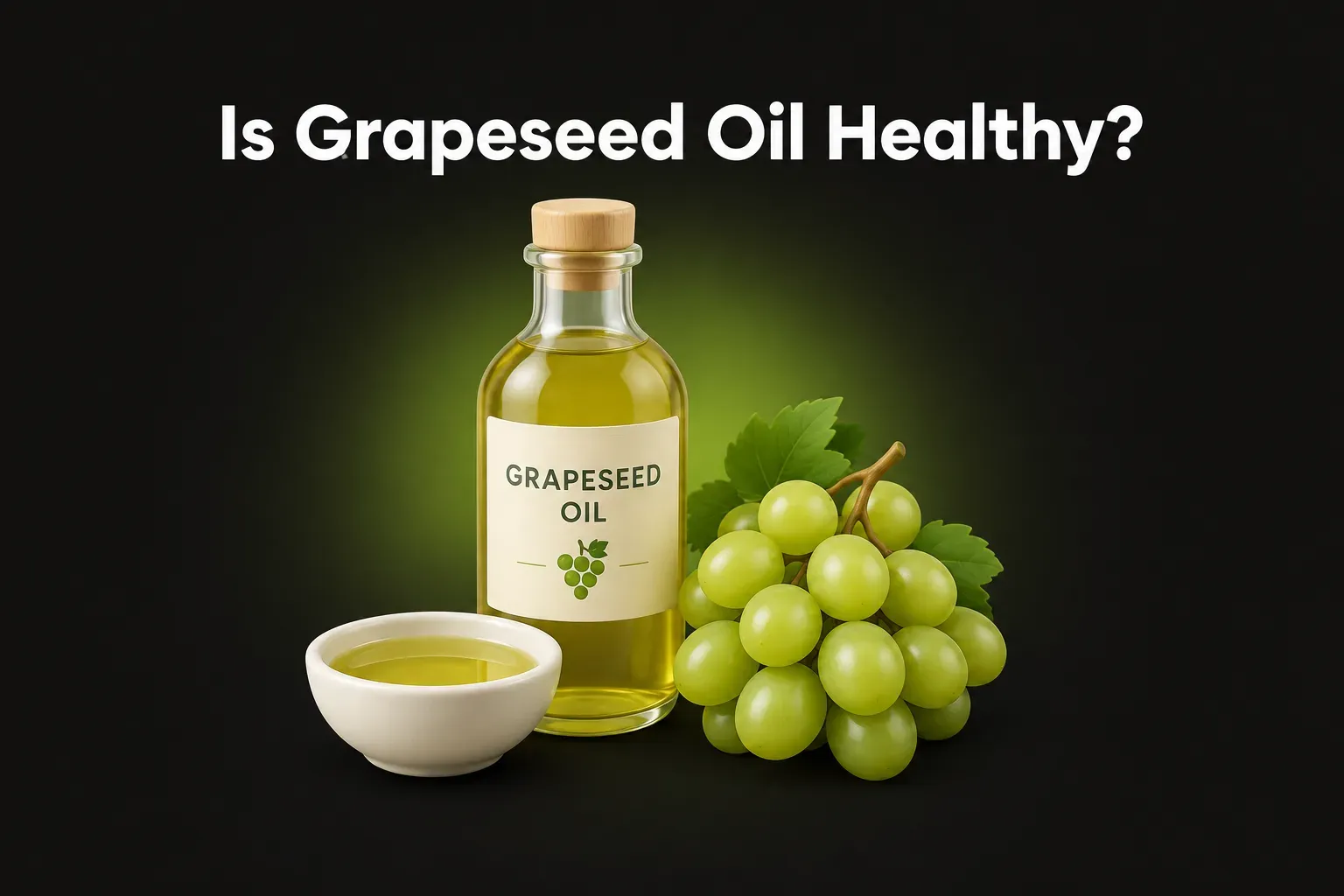
Grapeseed oil is often sold for high heat. But it has the most polyunsaturated fat in our table, so it’s better for dressings or quick, gentle cooking. More in is grapeseed oil healthy?
Reusing frying oil: is it safe?
Each time you heat oil, more of it breaks down. The oil gets darker, thicker and foamier. Its smoke point also drops, as the 2018 study showed. Here’s what research says about reused oil.
In people: researchers in Spain took cooking oil from 538 home kitchens. People whose oil had more broken-down fat were more likely to have high blood pressure. Using sunflower oil was also linked to higher risk (Soriguer et al., American Journal of Clinical Nutrition, 2003). This kind of study shows a link, not proof.
In rats: in one study, rats ate food with 15% soybean oil for 6 months. One group got fresh oil. Other groups got oil that had been used 5 or 10 times to fry sweet potatoes. The fresh-oil rats kept normal blood pressure. In the reused-oil rats, blood pressure went up, and their artery walls got thicker (Ng et al., International Journal of Experimental Pathology, 2012). Each group had only 6 rats. A lab in Nigeria found the same with palm oil heated 5 times. Rats that ate it for 16 weeks had higher blood pressure than rats fed fresh palm oil (Nkanu et al., Journal of Dietary Supplements, 2018).
Why do animal studies matter? Rats share most of our genes and body processes. And it would not be safe to feed people damaged oil for months to test it. Proof in people is still missing. But since several studies point the same way, it makes sense to limit reused oil as a precaution.
Tips for frying at home:
- Use a stable oil, like olive, peanut or high-oleic sunflower oil.
- Don’t let the oil smoke.
- Strain the oil after use, and store it in a cool, dark place with the lid on.
- Throw it out when it turns dark, thick or foamy, smells off, or starts to smoke at normal heat.
- Eat deep-fried food now and then, not every day.
Pick a better cooking oil in the store. With NutriSmart, you photograph the label or scan the barcode. The app lists the sweeteners, preservatives and colors, explains the risks of each one and gives the product a health score out of 100. It also tells you right away if a product is ultra-processed and which ingredients make it so. That helps with oil blends, sprays and fried snacks. Set an alert for a preservative like TBHQ, and the app warns you whenever a product you scan contains it.Get the app free
The bottom line
The healthiest cooking oil for most people is extra virgin olive oil. It has the best proof from studies in people, and it holds up well to heat. Avocado, canola, peanut and high-oleic sunflower oil are good choices too. Seed oils are not the poison some people claim, but they are not the best pick for long, hot frying. Coconut oil, butter, ghee and beef tallow are high in saturated fat, so use them now and then. Smoke point is only a rough guide – how stable the oil is matters more. And don’t reuse frying oil over and over.
FAQ
What is the healthiest cooking oil?
For most people, extra virgin olive oil. It has the best proof from studies in people, and it holds up well to heat. Avocado oil, canola oil and high-oleic sunflower oil are also good choices.
What is the healthiest oil for frying?
Pick an oil that is low in polyunsaturated fat and stays stable when hot. Extra virgin or regular olive oil, refined avocado oil, peanut oil and high-oleic sunflower oil are good picks. Keep the oil at about 350°F (175°C) and don't reuse it many times.
Is smoke point the best way to choose a frying oil?
No. A 2018 lab test found that oils with a high smoke point, like canola and grapeseed, made more broken-down fat when heated than olive or coconut oil. How stable the oil's fats are matters more.
Are seed oils bad for you?
Studies in people don't show that seed oils like canola, soybean or corn oil cause inflammation or heart disease. Swapping butter for these oils is linked to a lower risk of death. The bigger problem is the fried and ultra-processed foods many seed oils end up in.
Is coconut oil healthier than olive oil?
No. Coconut oil is more than 80% saturated fat. In 16 trials, it raised LDL ("bad") cholesterol more than other plant oils. Olive oil has far better proof for heart health.
Can you reuse frying oil?
A few times, if you strain it and store it in a cool, dark place. Throw it out when it turns dark, thick, foamy or smells off. Oil that has been reused many times has been linked to higher blood pressure.