Is Grapeseed Oil Healthy? Omega-6, Heat and Best Uses
Is grapeseed oil healthy? Omega-6 and vitamin E per tablespoon, smoke point vs heat stability, hexane and PAH concerns, and 8 brands compared.
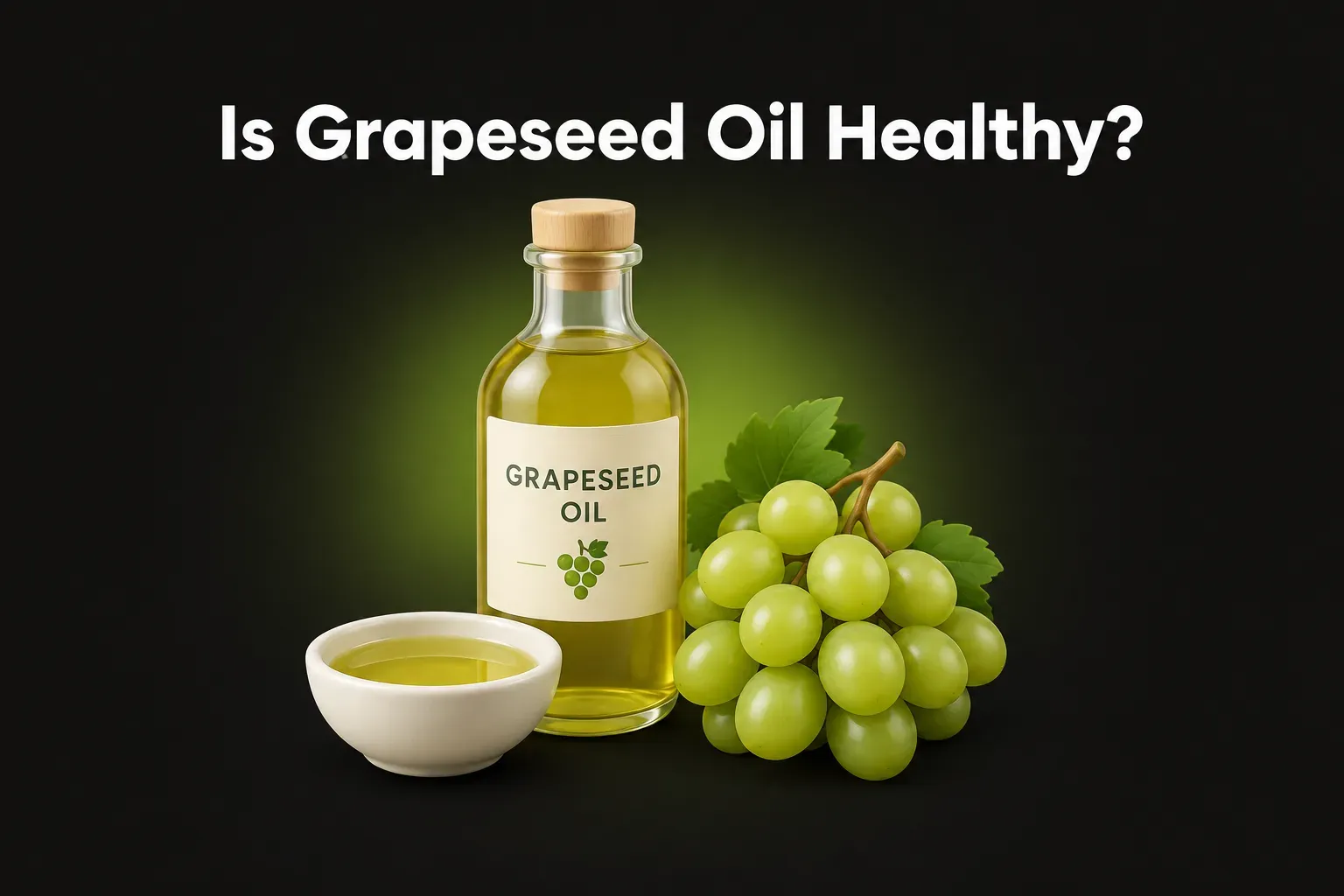
Grapeseed oil is made from the tiny seeds left over after making wine. It’s often sold as a light, healthy oil for high-heat cooking. But how much of that holds up?
The short answer: grapeseed oil is fine in small amounts, but it’s not a great cooking oil. A tablespoon has 120 calories, about 9.5 g of omega-6 fat and about a quarter of your daily vitamin E. Its high smoke point is real. But its fat breaks down fast when heated, so it’s a poor pick for frying. Use it for dressings and quick, gentle cooking, and choose expeller-pressed bottles if you want to avoid solvents.
Grapeseed oil nutrition per tablespoon
One tablespoon (0.5 oz / 13.6 g) of grapeseed oil has, according to the USDA:
- Calories: 120
- Total fat: 13.6 g
- Polyunsaturated fat: 9.5 g – almost all of it linoleic acid, the main omega-6 fat
- Monounsaturated fat: 2.2 g
- Saturated fat: 1.3 g
- Omega-3: about 0.01 g – close to zero
- Vitamin E: 3.9 mg, or about 26% of the daily value
So about 70% of the fat is omega-6. That’s more than almost any other common oil. Vitamin E is a nutrient that protects your cells from damage. Grapeseed oil has about twice as much as olive oil.
Grapeseed oil vs other cooking oils
Here’s how one tablespoon compares with other oils you can buy in the US.
| Oil (1 tbsp) | Saturated | Monounsaturated | Omega‑6 | Omega‑3 | Vitamin E |
|---|---|---|---|---|---|
| Grapeseed | 1.3 g | 2.2 g | 9.5 g | 0.0 g | 3.9 mg |
| Soybean | 2.1 g | 3.1 g | 6.9 g | 0.9 g | 1.1 mg |
| Peanut | 2.3 g | 6.2 g | 4.3 g | 0.0 g | 2.1 mg |
| Canola | 1.0 g | 8.9 g | 2.7 g | 1.3 g | 2.5 mg |
| Olive | 1.9 g | 9.9 g | 1.3 g | 0.1 g | 1.9 mg |
| Avocado | 1.6 g | 9.9 g | 1.8 g | 0.1 g | not listed |
| Sunflower, high‑oleic | 1.4 g | 11.7 g | 0.5 g | 0.0 g | 5.8 mg |
Source: USDA FoodData Central – grapeseed, soybean, peanut, canola, olive, avocado, high-oleic sunflower. Values per 100 g, multiplied to each oil’s USDA tablespoon weight (13.5–14 g) and rounded. All have about 120 calories.
What stands out:
- Grapeseed oil has the most omega-6 and the least monounsaturated fat of the group.
- Oils high in monounsaturated fat – like olive oil, avocado oil and high-oleic sunflower oil – hold up better to heat.
- Grapeseed oil is near the top for vitamin E. Only high-oleic sunflower oil has more here.
Is grapeseed oil good for high heat?
This is the biggest claim on grapeseed oil labels. The answer depends on what you measure.
The smoke point is the heat at which oil starts to smoke. Grapeseed oil’s is high. But smoke point doesn’t tell you how much the fat breaks down while you cook. Grapeseed oil is mostly polyunsaturated fat. This kind of fat reacts with air much faster when it’s hot.
In a 2018 test, a lab in Australia heated 10 store-bought oils. Each oil was heated to 464°F (240°C). Each was also kept at 356°F (180°C) for 6 hours. The lab then measured polar compounds – bits of damaged fat that form during heating (De Alzaa et al., Acta Scientific Nutritional Health, 2018).
| Oil (2018 test) | Smoke point | Stability | Polar compounds |
|---|---|---|---|
| Grapeseed | 514°F (268°C) | 6.6 h | 19.8% |
| Extra virgin olive | 404°F (207°C) | 32.7 h | 8.5% |
| Avocado | 386°F (197°C) | 10.2 h | 11.6% |
| Peanut, high‑oleic | 439°F (226°C) | 35.4 h | 10.7% |
| Canola | 492°F (256°C) | 10.8 h | 22.4% |
Source: De Alzaa, Guillaume and Ravetti, Acta Scientific Nutritional Health, 2018, tables 1 and 5. Stability = hours the fresh oil resisted damage in a standard lab test (longer is better). Polar compounds = average at the end of both heating tests (lower is better).
Grapeseed oil had the highest smoke point of all 10 oils. Yet it made more than twice the damaged fat of extra virgin olive oil. It also started with the most trans fat, which the authors link to refining. Keep in mind that the lab, Modern Olives, works in the olive oil business. It tested one store oil of each type, with no food in the pan. And the paper is not in PubMed.
Other labs point the same way. Researchers in England tested eight specialty oils. Grapeseed oil was the second least stable, ahead of only walnut oil (Kochhar and Henry, International Journal of Food Sciences and Nutrition, 2009).
Why does it matter? When oils rich in polyunsaturated fat are heated a long time, they form aldehydes. These are reactive compounds that can damage cells. A UK team found them in fast-food fries. Fries cooked again and again in regular sunflower oil had more each round (Moumtaz et al., Scientific Reports, 2019). Note that this work was funded by a maker of a rival frying oil. The same team says most proof of harm comes from animal and cell studies. They call for studies in people, which are still missing (Grootveld et al., Nutrients, 2020).
Brands don’t agree on the number either. La Tourangelle says its grapeseed oil has a smoke point of 450°F. But its own general guide lists grapeseed oil at 375°F. Spectrum says its oil is good up to 425°F. So treat the smoke point on a label as a rough guide, not a green light for frying.
Hexane vs expeller-pressed
Grape seeds hold little oil – about 6% to 20%, depending on the grape. To get more out, many makers use hexane. Hexane is a solvent made from petroleum. Afterward, the oil is refined to remove it. Pressing is the other way, and it uses no chemicals. Cold pressing, which uses little heat, gets less oil out (Martin et al., Foods, 2020).
Does hexane stay in the oil? Refining should remove almost all of it. The EU allows at most 1 mg of hexane per kg of oil (Directive 2009/32/EC). But a test in Malaysia of four cooking oils found one sunflower oil above that limit (Samsuri et al., International Journal of Analytical Chemistry, 2021).
Workers who breathe a lot of hexane can get nerve damage in their hands and feet. In animal studies, swallowed hexane also harmed nerves (ATSDR, CDC). Proof of harm from the tiny traces left in refined oil is missing. Still, if you’d rather avoid it, look for “expeller-pressed” or “cold-pressed” on the label. If the label says neither, you can’t tell how it was made.
PAHs: a problem from drying the seeds
PAHs (polycyclic aromatic hydrocarbons) are chemicals that form when things burn. One of them, benzo[a]pyrene, can cause cancer.
Grape seeds are wet after winemaking. Some plants dry them with hot smoke from burning fuel. Researchers in Italy tested oil from seeds before and after drying. Before drying, benzo[a]pyrene averaged 1.4 µg per kg. After drying, it averaged 20.2 µg per kg (Moret et al., Journal of the American Oil Chemists’ Society, 2000). The EU limit for cooking oil today is 2 µg per kg (Regulation (EU) 2023/915).
The good news: store-bought oils have tested much lower. A Danish survey of 69 oils, grapeseed included, found low levels in all but one sunflower oil (Fromberg et al., Food Additives and Contaminants, 2007). A Polish survey of 40 oils found grapeseed and other specialty oils at 0.10–1.44 µg per kg. But 4 of the 40 oils were over the limit (Jedra et al., Roczniki Państwowego Zakładu Higieny, 2008). These surveys are from Europe. We found no recent US testing of grapeseed oil.
The omega-6 question
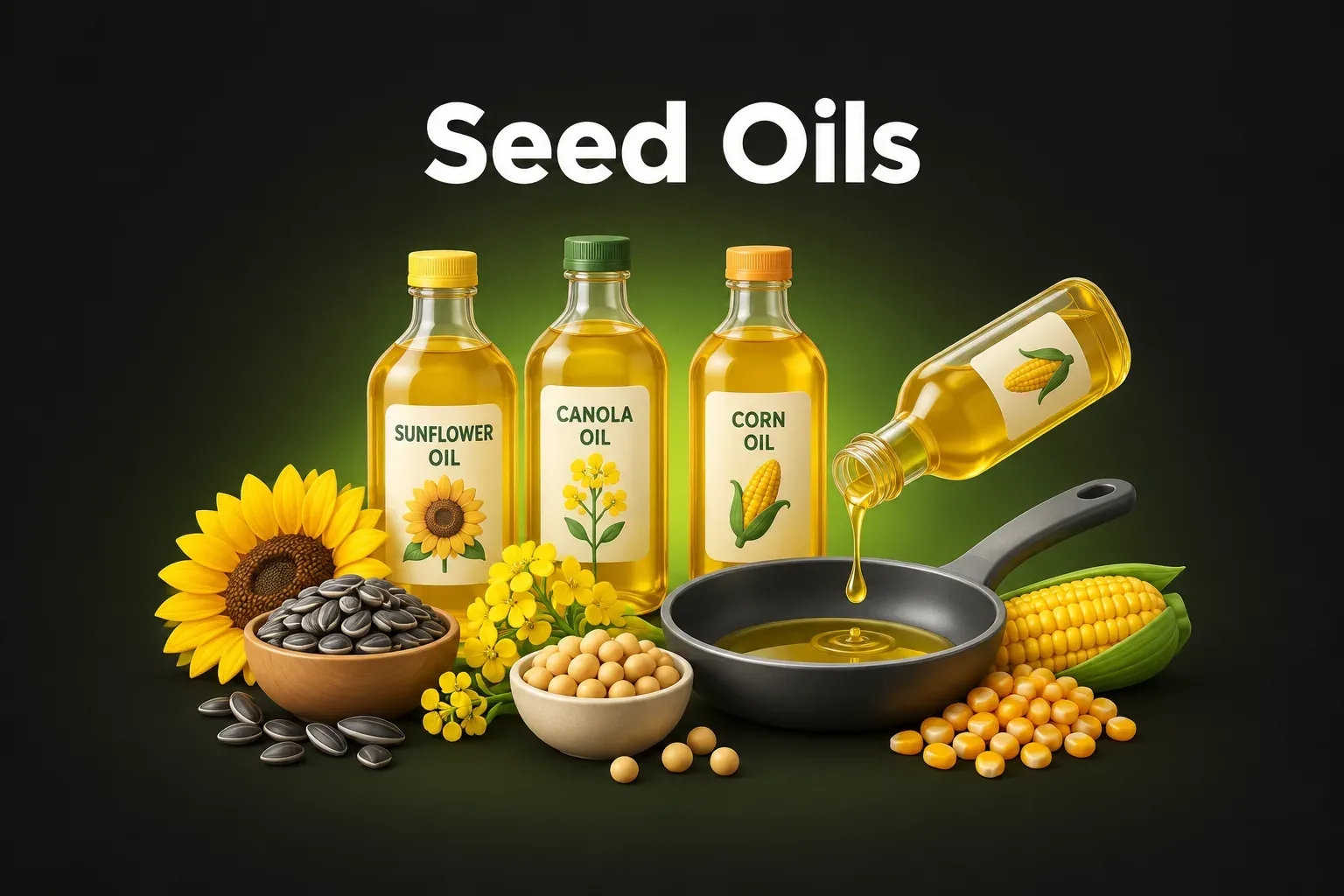
Grapeseed oil is one of the “hateful eight” seed oils people warn about online. The main worry is that its omega-6 fat fuels inflammation (the body’s alarm response). Here’s what studies in people show.
- Inflammation: a review of 15 trials in healthy people found that eating more linoleic acid did not raise signs of inflammation in the blood (Johnson and Fritsche, Journal of the Academy of Nutrition and Dietetics, 2012).
- Heart: 30 studies with 68,659 people were pooled. People with high levels of linoleic acid in their blood or body fat had a 22% lower risk of dying from heart and blood vessel disease than people with low levels (Marklund et al., Circulation, 2019). This kind of study shows a link, not proof. Two of the authors got research money from Unilever, a food company, for this work.
- The other side: an old trial in Sydney swapped saturated fat for safflower oil, which is also high in linoleic acid. 458 men who had had a heart problem took part. The safflower group had more deaths (Ramsden et al., BMJ, 2013).
There’s only one small trial on grapeseed oil itself. 44 women with extra weight followed a weight-loss diet for 8 weeks. Some got 15% of their calories from grapeseed oil, others from sunflower oil. The grapeseed group ended with lower signs of inflammation (Irandoost et al., International Journal of Food Sciences and Nutrition, 2013). That’s a hopeful sign, but too small to prove much.
Our take: omega-6 fat in normal amounts doesn’t look harmful. But grapeseed oil has almost no omega-3. If it’s your main oil, eat fatty fish, walnuts or flaxseed to balance it.
8 grapeseed oils compared
Here’s what 8 brands sold in the US say on their labels, per tablespoon.
| Product | Calories | Saturated fat | How it’s made (label or brand) |
|---|---|---|---|
| Pompeian 100% Grapeseed Oil | 120 | 1.5 g | Not stated; oil imported from France |
| La Tourangelle Grapeseed Oil | about 130 | 1 g | Expeller-pressed, refined; “no chemicals during extraction” |
| Napa Valley Naturals Grapeseed Oil | 120 | 1 g | Not stated in the ingredient list |
| Kirkland Signature Grape Seed Oil | 120 | 1.5 g | Not stated |
| 365 by Whole Foods Market Grapeseed Oil | 130 | 1 g | Expeller-pressed, refined |
| Spectrum Grapeseed Oil, Refined | 120 | 1.5 g | Expeller-pressed, refined; Italian oil |
| Olivari Grapeseed Oil | 120 | 1.5 g | Not stated |
| Monini Grapeseed Oil | 120 | 2 g | Refined; method not stated |
Sources: brand pages for Pompeian, La Tourangelle and Spectrum; Open Food Facts for La Tourangelle, Napa Valley Naturals, Kirkland, 365, Olivari and Monini, checked November 2026. The 365, Monini and Napa Valley Naturals records date from 2022–2024, so check the bottle. Small differences in calories and saturated fat come from rounding on labels.
What to notice:
- The nutrition is nearly the same in every bottle. Grapeseed oil is grapeseed oil.
- The real difference is how it’s made. La Tourangelle, 365 and Spectrum say expeller-pressed. The others don’t say.
- “Refined” means the oil was cleaned, bleached and heated. This removes color, smell and any leftover solvent. It gives a neutral taste and a high smoke point.
Best ways to use grapeseed oil
Grapeseed oil has a clean, light taste. That makes it useful in a few places:
- Salad dressings and mayo. It doesn’t overpower herbs or vinegar. Compare store-bought options in our healthiest salad dressing guide.
- Quick, gentle cooking. A short sauté of eggs or vegetables is fine.
- Baking. It works in muffins and quick breads that call for “vegetable oil”.
Skip it for:
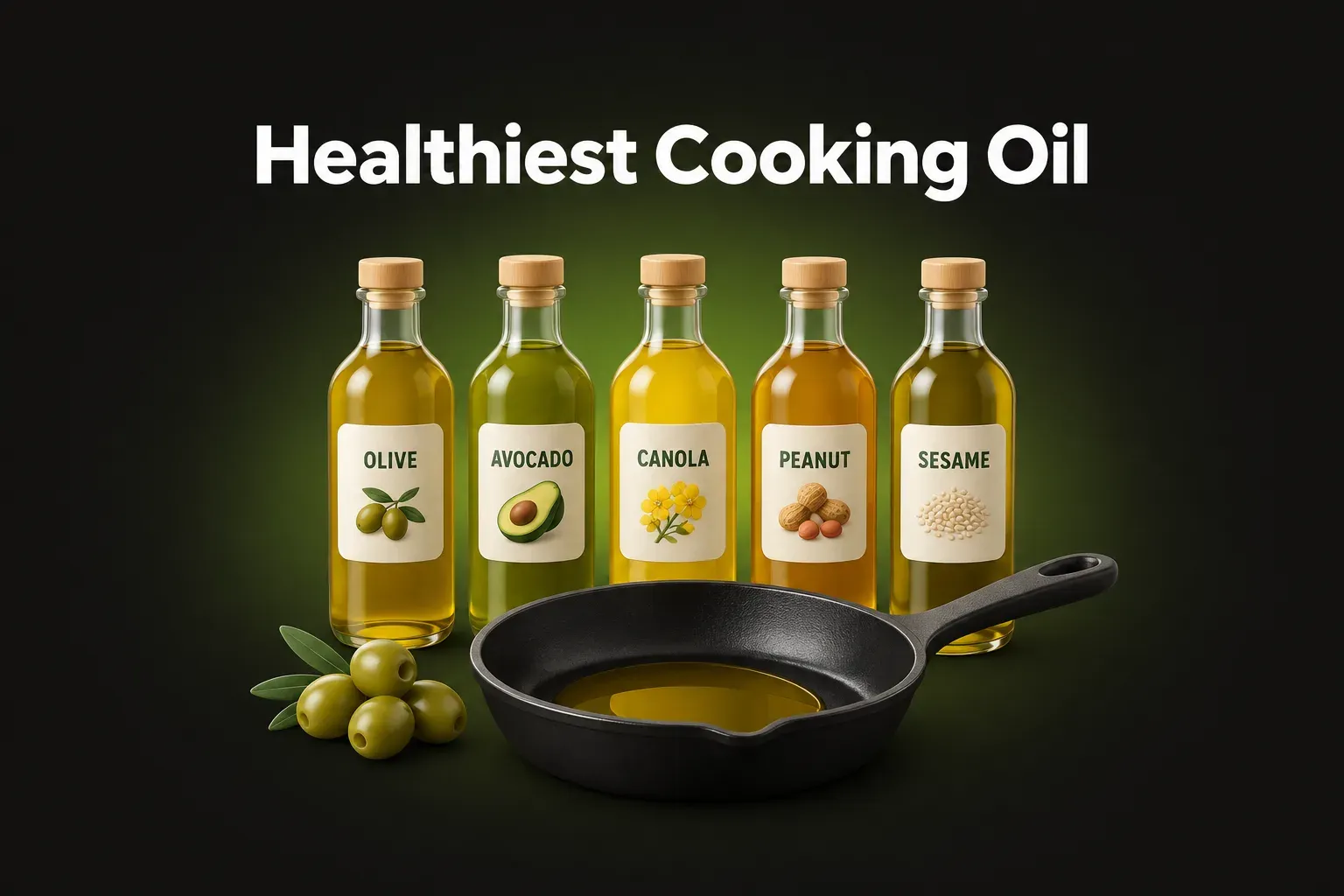
- Deep frying or long, hot roasting. Pick an oil with more monounsaturated fat, like olive, avocado or peanut oil. See our guide to the healthiest cooking oil.
- Reusing. Each round of heating makes more damaged fat.
Storage tip: keep the bottle cool, dark and tightly closed. Polyunsaturated fat goes rancid faster. If it smells stale or like paint, throw it out.
Spot grapeseed oil and other seed oils on labels. With NutriSmart, you photograph the label or scan the barcode. The app lists the sweeteners, preservatives and colors, explains the risks of each one and gives the product a health score out of 100. It also tells you right away if a product is ultra-processed, and which ingredients make it so. Set an alert for grapeseed oil or any other seed oil. The app then warns you whenever a dressing, mayo or snack you scan contains it.Get the app free
The bottom line
Grapeseed oil isn’t a superfood, and it isn’t poison. A tablespoon gives you about a quarter of your daily vitamin E. It also has lots of omega-6 fat, which most studies in people don’t link to harm. But its fat breaks down fast when hot, despite its high smoke point. Use it cold or for quick cooking, and fry with olive, avocado or high-oleic oils instead. Choose expeller-pressed bottles if you want to avoid hexane, and eat some omega-3 foods to balance it out.
FAQ
Is grapeseed oil healthy?
In small amounts, it's a fine oil for dressings and gentle cooking. A tablespoon has about 9.5 g of omega-6 fat and a quarter of your daily vitamin E. But it breaks down fast with heat, so it's a poor pick for frying.
Is grapeseed oil good for high-heat cooking?
Not really. It has a high smoke point, but in a 2018 lab test it made more than twice as much broken-down fat as extra virgin olive oil when heated. For frying, olive, avocado, peanut or high-oleic sunflower oil hold up better.
Is grapeseed oil inflammatory?
Studies in people don't show that. A review of 15 trials in healthy people found that eating more linoleic acid, its main omega-6 fat, did not raise signs of inflammation. The bigger issue is heating it too long.
Is grapeseed oil made with hexane?
Often, yes. Grape seeds hold little oil, so many makers use the solvent hexane to pull it out. If you want to avoid that, look for 'expeller-pressed' or 'cold-pressed' on the label.
Is grapeseed oil better than olive oil?
For most uses, no. Olive oil is mostly monounsaturated fat, which handles heat much better. Extra virgin olive oil also has stronger evidence for heart health. Grapeseed oil wins only on vitamin E and a neutral taste.
Does grapeseed oil have omega-3?
Almost none. USDA data shows about 0.01 g of omega-3 per tablespoon. Canola oil has about 1.3 g, and fatty fish has much more.