Polysorbate 60 (E435): What It Is and Is It Safe?
What polysorbate 60 (E435) is, why it's in whipped toppings, frosting and creamers, what studies on emulsifiers and the gut show, and how to avoid it.
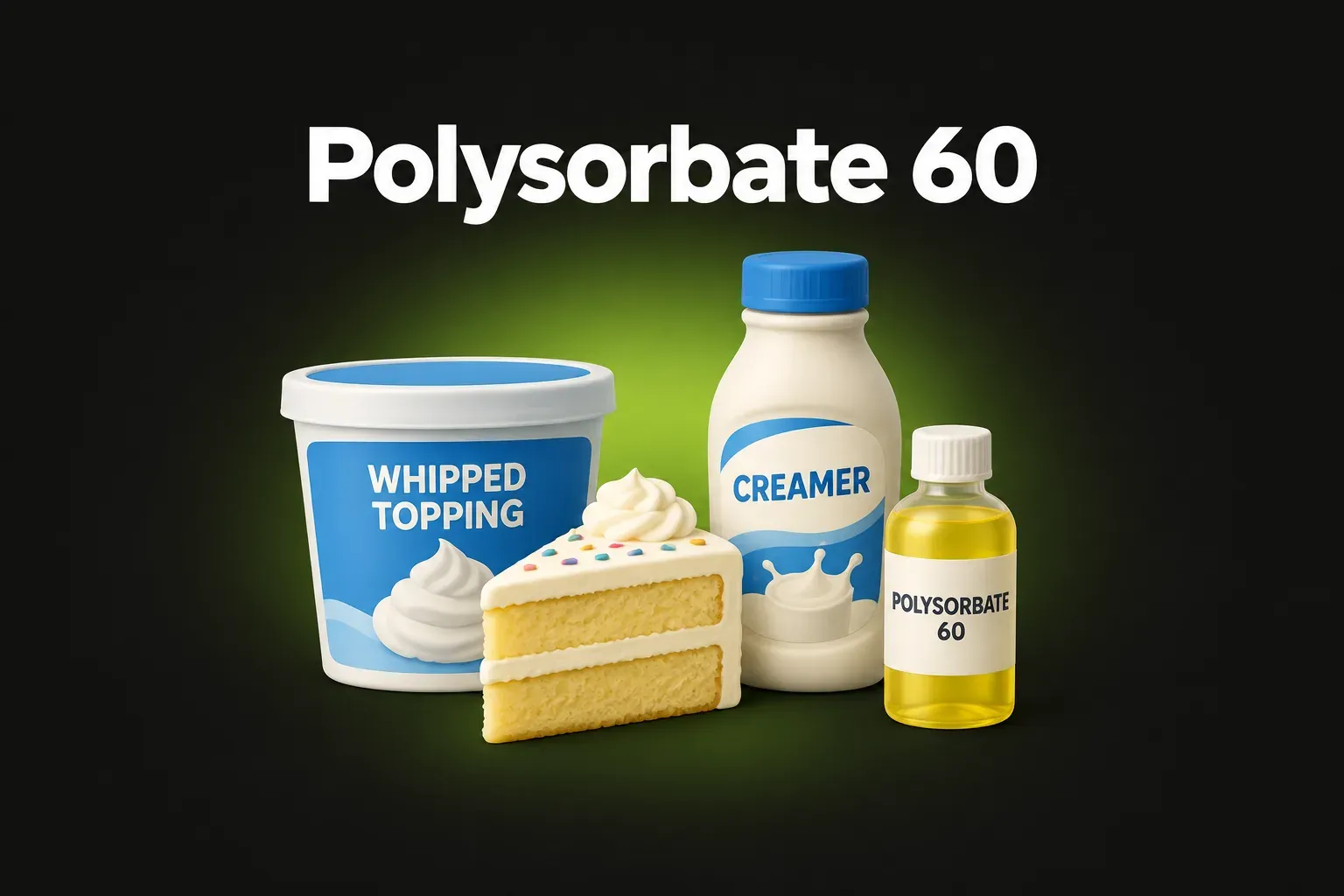
Polysorbate 60 is an emulsifier you’ll find in whipped toppings, cake frosting, coffee creamers, cake mixes, ice cream and baked goods. It keeps oil and water mixed, so foods stay smooth, fluffy and soft. Here’s what it is and what the research says.
The short answer: polysorbate 60 (E435) is a lab-made emulsifier made from sorbitol, a fatty acid and ethylene oxide. It’s approved in the US and EU, but it can contain traces of ethylene oxide and 1,4-dioxane, substances that can cause cancer (the amounts are limited by law). Its close relative polysorbate 80 damaged the protective gut lining and caused inflammation in mice. NutriSmart rates polysorbate 60 as moderate risk.
What is polysorbate 60?
Polysorbates are made in three steps: sorbitol (a sugar alcohol) is combined with a fatty acid, then reacted with ethylene oxide. The result is a yellowish liquid that loves both water and fat – a perfect emulsifier.
| Name | Fatty acid | Code |
|---|---|---|
| Polysorbate 20 | Lauric acid | E432 |
| Polysorbate 60 | Stearic acid | E435 |
| Polysorbate 80 | Oleic acid | E433 |
The number shows which fatty acid is used, not how “strong” it is.
Which foods contain polysorbate 60?
- Whipped toppings and aerosol cream
- Cake frosting, icing and cake decorations
- Cake, muffin and pancake mixes
- Coffee creamers and non-dairy creamers
- Ice cream and frozen desserts
- Bread, buns and baked goods (keeps them soft)
- Salad dressings and sauces
- Vitamins, supplements and cosmetics
Is polysorbate 60 safe?
Regulators consider it safe at the amounts used: the European Food Safety Authority set a group safe daily limit of 25 mg per kg of body weight for polysorbates. But there are open questions:
Traces of cancer-causing substances
Polysorbates are made with ethylene oxide, which the WHO’s cancer agency classifies as carcinogenic to humans, and the process can leave traces of 1,4-dioxane, classified as possibly carcinogenic. Rules limit how much of these can remain, and labs have developed methods to test polysorbate 60 for 1,4-dioxane (Kim et al., Foods, 2023). Exposure from food is small, but these are substances you’d rather not eat at all.
Effects on the gut
Most gut research has been done on its close relative, polysorbate 80. In mice, polysorbate 80 and another emulsifier thinned the protective mucus layer of the gut, changed gut bacteria and caused low-grade inflammation and weight gain (Chassaing et al., Nature, 2015). Polysorbate 80 also changed human gut bacteria in a lab model (Chassaing et al., Gut, 2017). Polysorbate 60 hasn’t been tested as thoroughly, so we don’t know whether it has the same effect – but they’re very similar molecules.
Why NutriSmart rates it moderate risk
There’s no direct evidence that polysorbate 60 harms people at food levels. But it can carry traces of carcinogens, its closest relative has worrying gut studies, and it’s found almost only in ultra-processed foods. That’s why it gets the same moderate rating as polysorbate 80.
How to avoid polysorbate 60
- Read labels – look for polysorbate 60 or E435 (and other polysorbates, E432–E436).
- Choose real whipped cream instead of whipped topping.
- Use milk or cream instead of non-dairy creamers.
- Bake from scratch or pick cake mixes and frostings with shorter ingredient lists.
- Eat fewer ultra-processed foods overall – read our guide to ultra-processed foods.
Spot polysorbate 60 on any label in seconds. With NutriSmart, you photograph the ingredient list or scan the barcode, and the app tells you right away if the product has polysorbate 60. Turn on an alert for it, and the app warns you every time a product you scan contains it. You’ll also see every other additive, the risks of each one and a health score out of 100.Get the app free
You can also read about other emulsifiers: polysorbate 80, mono- and diglycerides, DATEM, soy lecithin and carrageenan.
The bottom line
Polysorbate 60 (E435) is a lab-made emulsifier that keeps whipped toppings, frosting, creamers and baked goods smooth. It’s approved, but it can contain traces of cancer-causing ethylene oxide and 1,4-dioxane, and its close relative polysorbate 80 harmed the gut lining in mice. NutriSmart rates it moderate risk. Choosing real cream, homemade baking and fewer processed foods keeps it off your plate.
FAQ
What is polysorbate 60?
Polysorbate 60 is a lab-made emulsifier that helps oil and water mix. It's made from sorbitol, stearic acid (a fat) and ethylene oxide. In the EU it's E435. It keeps whipped toppings fluffy, frosting smooth and baked goods soft.
Is polysorbate 60 safe?
It's approved, but there are open questions. It can contain traces of ethylene oxide and 1,4-dioxane, cancer-causing substances from the manufacturing process, though the amounts are limited by law. Related emulsifiers like polysorbate 80 harmed the gut lining in mouse studies. NutriSmart rates it as moderate risk.
Is polysorbate 60 the same as polysorbate 80?
They're close relatives. Both are made the same way, but polysorbate 60 uses stearic acid and polysorbate 80 uses oleic acid. Polysorbate 80 has been studied much more, especially for its effects on gut bacteria.
Which foods contain polysorbate 60?
Whipped toppings, cake frosting and icing, cake and muffin mixes, coffee creamers, ice cream, salad dressings, baked goods and some candies. It's also used in vitamins and cosmetics.
Is polysorbate 60 vegan?
Usually yes. The stearic acid is mostly from vegetable oils like palm oil, but it can come from animal fat, and labels rarely say which.