Pringles Ingredients: What's Really in the Can
Pringles ingredients explained: dried potatoes, corn and rice flour, maltodextrin and emulsifiers, plus nutrition, acrylamide and healthier chips to try.
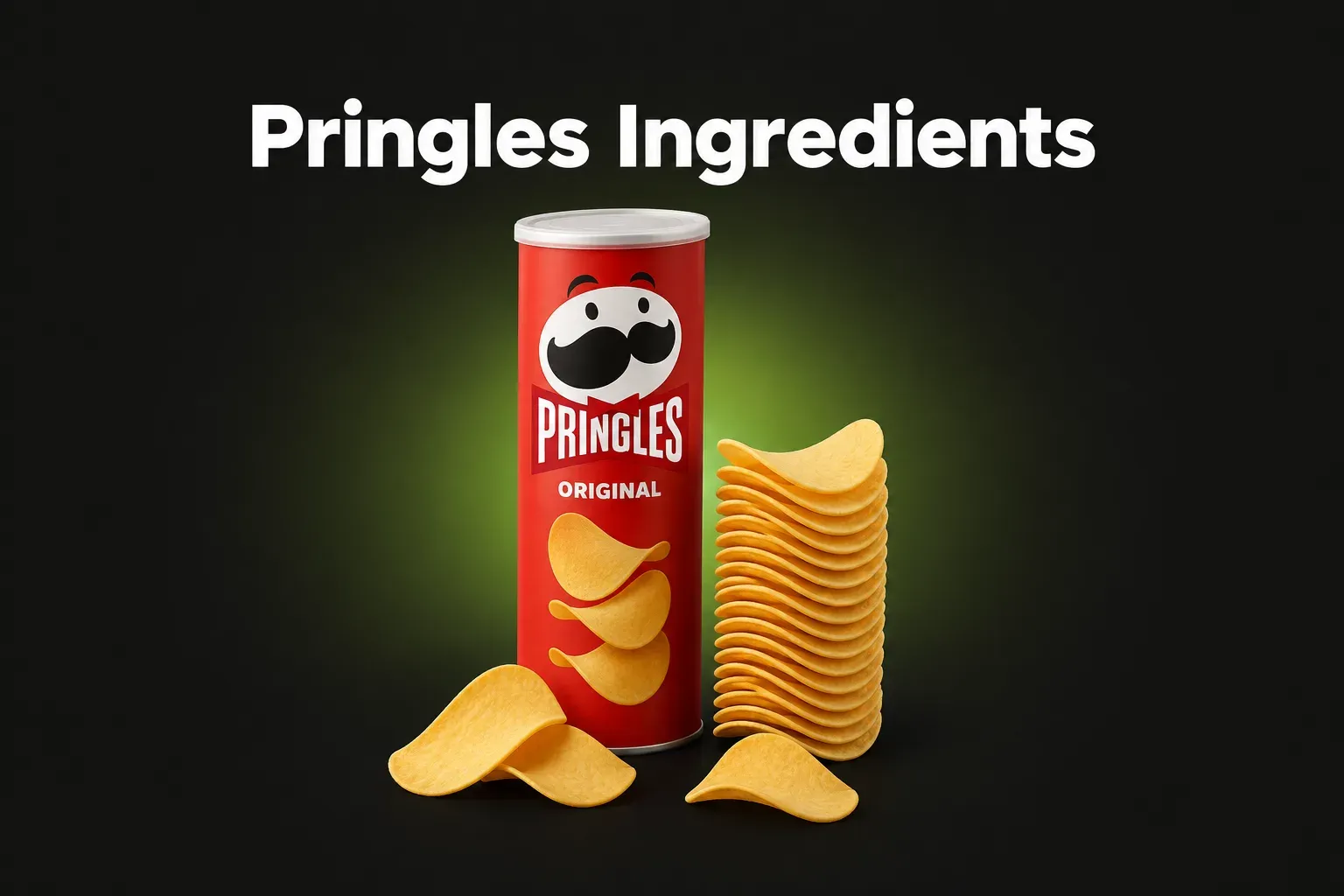
Pringles come in a tall can, and every crisp has the same curved shape. That alone tells you they aren’t made like regular potato chips.
The short answer: Pringles Original has nine ingredients: dried potatoes, vegetable oil, corn flour, cornstarch, rice flour, maltodextrin, mono- and diglycerides, salt and wheat starch. Pringles are made from a dough, not from potato slices. In a 2009 UK court case, they were found to be only about 42% potato. A 1 oz serving has 150 calories, 9 g of fat and 150 mg of sodium. Flavored Pringles add MSG, whey and colors. Pringles are fine as an occasional snack, but they are ultra-processed and easy to overeat.
Pringles Original ingredients, one by one
Here is the ingredient list on a US can of Pringles Original, in label order:
- Dried potatoes – potatoes that were cooked, dried and turned into flakes or flour. They are the main ingredient.
- Vegetable oil (corn, cottonseed, high oleic soybean and/or sunflower) – the oil the crisps are fried in. “And/or” means the mix can change from can to can.
- Degerminated yellow corn flour – corn flour with the germ removed. The germ holds most of the fat and many of the vitamins. So this flour keeps longer but has less nutrition.
- Cornstarch – pure starch from corn. It helps the dough hold together and makes the crisps crunchy.
- Rice flour – finely ground rice. It adds crunch and a light texture.
- Maltodextrin – a white powder made by breaking starch into short chains of sugar. In snacks, it’s used as a filler and to improve texture.
- Mono- and diglycerides – fats used as emulsifiers. An emulsifier helps oil and water mix. Here, they help keep the dough smooth and easy to shape.
- Salt – 150 mg of sodium per serving.
- Wheat starch – starch from wheat. Because of it, Pringles are not gluten-free. The can says “Contains wheat ingredients.”
Source: US label of Pringles Original 5.2 oz, Open Food Facts, checked November 2026.
Compare that with classic Lay’s, which has three ingredients: potatoes, vegetable oil and salt. That’s the big difference. Lay’s are sliced potatoes fried in oil. Pringles are a mix of potato flakes, flours and starches. This dough is pressed into one perfect shape, fried and stacked in a can.
How much potato is in Pringles?
The US label doesn’t give a percentage. But a UK court looked at this question in detail.
In the UK, potato chips (called “crisps”) carry a sales tax called VAT. Most other foods don’t. The maker of Pringles at the time argued they were not potato crisps. Its reason was that they contain too little potato. In 2009, the UK Court of Appeal disagreed. The judges noted that Pringles were about 42% potato and 33% fat. They ruled that Pringles are still close enough to potato crisps to be taxed like them (Court of Appeal, Revenue and Customs v Procter & Gamble UK, 2009).
So less than half of a Pringle was potato in that UK recipe. The US recipe may differ.
Pringles nutrition facts
Here’s what one serving of Pringles Original gives you. A serving is 1 oz (28 g), or about 15 crisps.
| Per 1 oz (28 g) | Amount |
|---|---|
| Calories | 150 |
| Total fat | 9 g |
| Saturated fat | 2.5 g |
| Sodium | 150 mg |
| Carbohydrates | 16 g |
| Fiber | less than 1 g |
| Sugar | 0 g |
| Protein | 1 g |
| Potassium | 110 mg |
Source: US label of Pringles Original 5.2 oz, Open Food Facts, checked November 2026.
What stands out:
- The whole can adds up fast. A 5.2 oz (147 g) can holds about 5 servings. That’s about 780 calories and 780 mg of sodium. The sodium alone is about a third of the 2,300 mg daily limit.
- More saturated fat than most chips. Pringles have 2.5 g per serving. Plain chips like Lay’s Classic and Kettle Brand have 1–1.5 g. One reason may be cottonseed oil. About a quarter of its fat is saturated (USDA FoodData Central).
- Almost no fiber or protein. So Pringles don’t keep you full for long.
- Zero sugar. That’s one point in their favor.
Flavored Pringles: MSG, whey and colors
Flavored Pringles use the same base plus a long list of seasonings. We checked two popular US flavors.
Sour Cream & Onion adds about 20 extra ingredients. Among them are whey (a milk protein), sour cream, MSG, onion powder, coconut oil, dextrose, sugar, natural flavors, yeast extract, disodium inosinate and disodium guanylate.
Cheddar Cheese adds whey, MSG, coconut oil, sugar, cheddar and blue cheese, butter, yeast extract, disodium inosinate and disodium guanylate. It also has two colors: paprika extract and turmeric extract. Both come from plants. Nacho Cheese Doritos use a similar mix of flavor boosters.
Source: US labels on Open Food Facts for Sour Cream & Onion and Cheddar Cheese, checked November 2026.
A few things to know about these extras:
- MSG (monosodium glutamate) makes food taste savory. In a careful trial, 130 people who believed they reacted to MSG got MSG on one day and a fake dose on another. Large doses without food (5 g) caused more symptoms than the fake dose. But the reactions didn’t repeat reliably on retesting, and none were serious (Geha et al., Journal of Allergy and Clinical Immunology, 2000).
- Disodium inosinate and guanylate boost the savory taste of MSG. They are often used together.
- Whey, milk and cheese mean flavored Pringles are not dairy-free. Both cans say they contain milk.
- Sodium goes up. Sour Cream & Onion has 160 mg per serving, and Cheddar Cheese has 180 mg.
Additives in Pringles: what studies show
Regulators like the FDA allow all the additives in Pringles. But independent studies raise some questions about two of them.
Mono- and diglycerides:
- A French study followed about 92,000 adults for almost 7 years. People who ate the most mono- and diglycerides had a 15% higher risk of cancer overall. Their risk of breast and prostate cancer was also higher (Sellem et al., PLOS Medicine, 2024).
- The same team studied over 95,000 adults. People who ate more of these emulsifiers had more heart disease and stroke (Sellem et al., BMJ, 2023).
- In mice, mono- and diglycerides made up 5.5% of the diet for 14 weeks. The mice handled blood fat and blood sugar worse. Their gut bacteria changed. A bacterial toxin linked to inflammation also rose in their blood (Panyod et al., Communications Biology, 2024).
Maltodextrin:
- Mice drank water with 5% maltodextrin for 5–6 weeks. Their gut made less of its protective mucus. When the gut was then irritated with a chemical, the inflammation was worse. After 10 weeks, mice got mild gut inflammation even without the chemical (Laudisi et al., Cellular and Molecular Gastroenterology and Hepatology, 2019).
- In another study, mice prone to gut inflammation ate food with 1% maltodextrin for up to 11 weeks. One in four got colitis (gut inflammation), versus about one in nine on normal food. It also started sooner (Zangara et al., Frontiers in Immunology, 2022).
Why do mouse studies matter? Mice share most of our genes and body processes. And testing a possible harm on people on purpose would put their health at risk. Still, proof in humans is missing. The studies in people show links, not cause. And a few crisps hold only small amounts. But several labs see similar warning signs. So it makes sense to limit these additives as a precaution.
Acrylamide: a concern for all fried chips
Acrylamide is a chemical that forms when starchy foods are fried, baked or roasted at high heat. It isn’t added, so it’s not on the label. Chips, fries, coffee and crackers are major sources. The European Food Safety Authority says acrylamide in food may raise the risk of cancer in all age groups (EFSA, 2015).
- In animals: mice and rats drank water with acrylamide for 2 years. They got more tumors in many organs, like the lungs, breasts and thyroid (Beland et al., Food and Chemical Toxicology, 2013).
- In women: a Dutch study followed 62,573 women aged 55–69 for about 11 years. Those who got the most acrylamide from food had a 78% higher risk of ovarian cancer. Breast cancer risk was not higher (Hogervorst et al., Cancer Epidemiology, Biomarkers & Prevention, 2007).
- In a chip-eating test: 14 healthy adults ate 160 g of potato chips every day for 4 weeks. That’s a bit more than one 5.2 oz can of Pringles. Signs of inflammation in their blood went up (Naruszewicz et al., American Journal of Clinical Nutrition, 2009).
Levels vary a lot. In a Spanish test of 70 chip samples, 27% were above the EU’s target level of 750 micrograms per kilogram (Mesias et al., Foods, 2020). Darker chips tend to have more. Smaller portions are the easiest way to get less.
Are Pringles bad for you?
One serving now and then won’t hurt a healthy person. The problems start when you eat them often or in large amounts.
- They’re ultra-processed. Pringles are made mostly from refined flours, starches, oil and additives. In a US trial, 20 adults ate an ultra-processed diet for 2 weeks and an unprocessed diet for 2 weeks. On the ultra-processed diet, they ate about 500 more calories a day and gained weight (Hall et al., Cell Metabolism, 2019). Learn more about ultra-processed food.
- Chips are linked to weight gain. Harvard researchers followed over 120,000 US adults. Of all the foods studied, potato chips were linked to the most weight gain. Each extra daily serving went with about 1.7 lb more over 4 years (Mozaffarian et al., New England Journal of Medicine, 2011).
- The can makes it easy to overeat. A big can has no natural stopping point. It’s easy to keep reaching in.
Pringles vs Lay’s, baked chips and popcorn
| Snack (serving) | Calories | Fat | Saturated fat | Sodium | Fiber | Protein |
|---|---|---|---|---|---|---|
| Pringles Original (1 oz) | 150 | 9 g | 2.5 g | 150 mg | under 1 g | 1 g |
| Pringles Sour Cream & Onion (1 oz) | 150 | 9 g | 2.5 g | 160 mg | under 1 g | 1 g |
| Pringles Cheddar Cheese (1 oz) | 150 | 9 g | 2.5 g | 180 mg | under 1 g | 1 g |
| Lay’s Stax Original (1 oz) | 150 | 8 g | 1 g | 130 mg | 1 g | 2 g |
| Lay’s Classic (1 oz) | 160 | 10 g | 1.5 g | 170 mg | 1 g | 2 g |
| Kettle Brand Sea Salt (1 oz) | 150 | 9 g | 1 g | 110 mg | 2 g | 2 g |
| Baked Lay’s Original (1.125 oz bag) | 150 | 5 g | 1 g | 150 mg | 1 g | 2 g |
| SkinnyPop Original popcorn (1 oz, 3¾ cups) | 150 | 10 g | 1 g | 75 mg | 3 g | 2 g |
Source: US labels on Open Food Facts for Pringles Original, Sour Cream & Onion, Cheddar Cheese, Lay’s Stax, Lay’s Classic, Kettle Brand, Baked Lay’s and SkinnyPop, checked November 2026. Recipes change – always check the package.
What stands out:
- Calories are almost the same, about 150 per serving.
- Pringles have the most saturated fat and the least fiber and protein.
- Lay’s Classic and Kettle Brand have just potatoes, oil and salt.
- Lay’s Stax, the Pringles look-alike, is also made from dried potatoes and starches. It has less saturated fat.
- Baked Lay’s have about half the fat. Like Pringles, they’re made from dried potatoes and starch. They also add sugar, dextrose and annatto for color.
- Popcorn gives you the most fiber and the least sodium for the same calories. Air-popped popcorn is even better. Read more in is popcorn healthy.
For more options, see our guide to the healthiest chips.
How to enjoy Pringles in a healthier way
- Count out a serving. Put about 15 crisps in a bowl and close the can. Don’t eat from the can in front of a screen.
- Choose Original over flavors if you want to avoid MSG, milk and extra sodium.
- Pair them with something filling, like a sandwich, vegetables or fruit.
- Try simpler chips or popcorn on most days. Look for short ingredient lists.
Check the ingredients in your Pringles. With NutriSmart, you photograph the label or scan the barcode. The app lists the sweeteners, preservatives and colors, explains the risks of each one and gives the product a health score out of 100. It also tells you right away if a snack is ultra-processed and which ingredients make it so. Set an alert for MSG or mono- and diglycerides. The app then warns you whenever a product you scan contains one of them.Get the app free
The bottom line
Pringles Original has nine ingredients, led by dried potatoes, oil, flours and starches. They’re made from a dough, and a UK court found them to be only about 42% potato in 2009. A 1 oz serving has 150 calories, like most chips, but more saturated fat and almost no fiber. Flavored cans add MSG, milk and more sodium. Pringles are fine as an occasional treat. For everyday snacking, chips with three ingredients or plain popcorn are better picks.
FAQ
What are the ingredients in Pringles Original?
Dried potatoes, vegetable oil (corn, cottonseed, high oleic soybean and/or sunflower), degerminated yellow corn flour, cornstarch, rice flour, maltodextrin, mono- and diglycerides, salt and wheat starch. That's nine ingredients, versus three in classic Lay's.
How much potato is in Pringles?
The US label doesn't say. In a 2009 UK court case, the judges noted that Pringles were about 42% potato. The rest was mostly fat, flours and starches.
Are Pringles gluten-free?
No. Pringles Original contains wheat starch, and the can says it contains wheat ingredients. People with celiac disease should pick chips labeled gluten-free.
Do Pringles have MSG?
Pringles Original doesn't list MSG. But many flavors do, including Sour Cream & Onion and Cheddar Cheese. They also add yeast extract and other flavor boosters.
Are Pringles bad for you?
A few crisps now and then are fine. But Pringles are an ultra-processed snack with few nutrients and lots of calories. A whole 5.2 oz can has about 780 calories.
Are Pringles healthier than Lay's?
Not really. Per ounce, they have about the same calories and sodium. Pringles have a bit less fat but more saturated fat, less fiber and three times as many ingredients.