Healthiest Energy Drink: How to Pick One (and 8 Compared)
What is the healthiest energy drink? 8 popular drinks compared by caffeine, sugar and sweeteners, what to look for on the can, and healthier swaps.
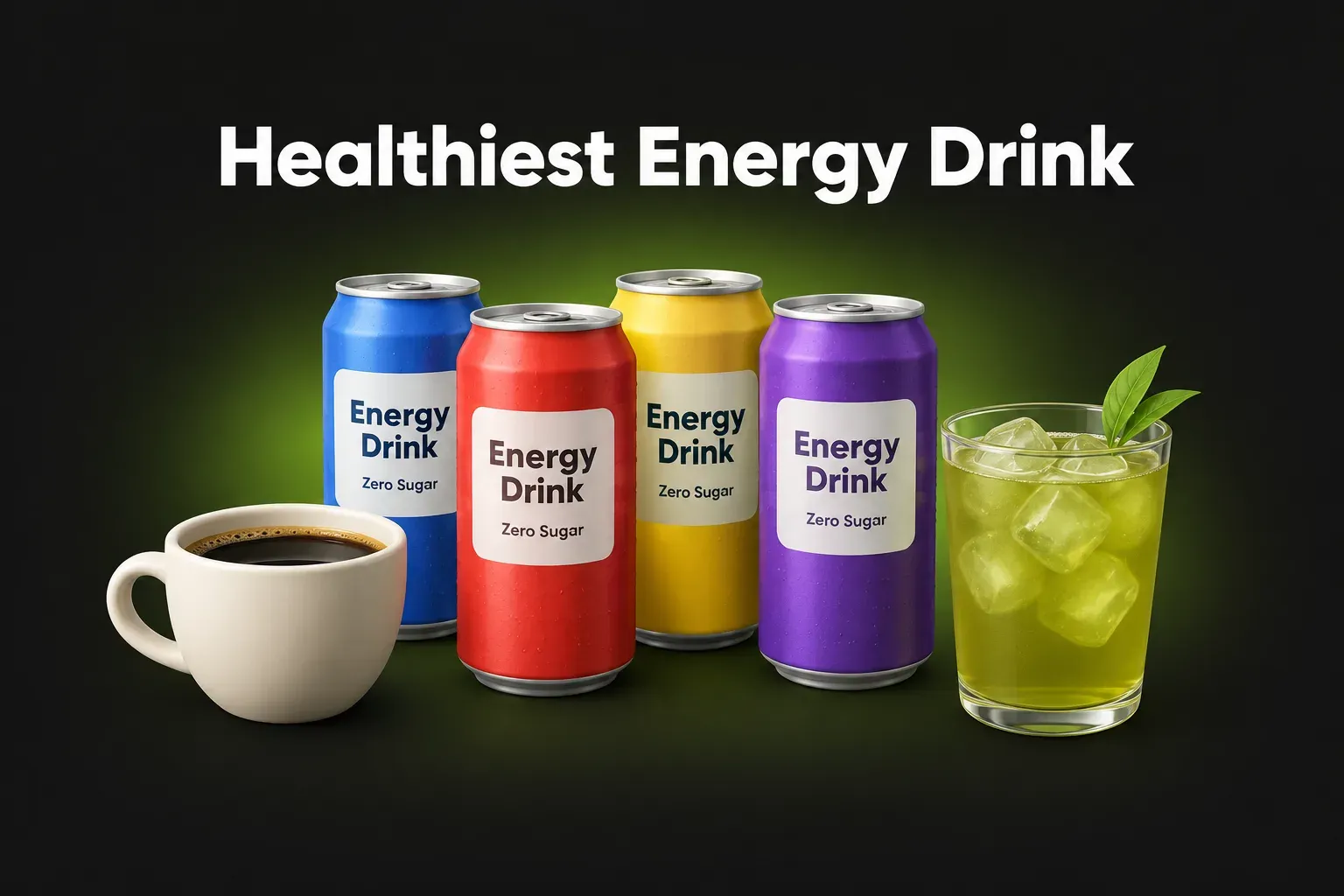
Energy drinks used to be all about sugar and a big caffeine kick. Now the shelves are full of “zero sugar”, “clean energy” and “natural caffeine” cans. So which one is the healthiest energy drink? The honest answer: none of them is a health drink – but some are clearly better than others.
The short answer: the healthiest energy drink has moderate caffeine (about 80–150 mg), little or no added sugar, no artificial dyes and a short ingredient list. Among popular drinks, Zevia Energy (stevia, 120 mg caffeine) and small sugar-free cans come closest. Black coffee or tea beat them all. Avoid sugary 16 oz cans with 50+ g of sugar and drinks with 200–300 mg of caffeine per can.
8 popular energy drinks compared
| Drink | Size | Caffeine | Sugar | Sweetener | Dyes |
|---|---|---|---|---|---|
| Red Bull | 8.4 oz | 80 mg | 27 g | Sugar | No* |
| Red Bull Sugarfree | 8.4 oz | 80 mg | 0 g | Aspartame + acesulfame K | No* |
| Monster Energy | 16 oz | 160 mg | 54 g | Sugar + sucralose | Color added |
| Monster Zero Ultra | 16 oz | 150 mg | 0 g | Erythritol + sucralose | No |
| Celsius | 12 oz | 200 mg | 0 g | Sucralose | No |
| C4 Energy Zero Sugar | 16 oz | 200 mg | 0 g | Sucralose + acesulfame K | Varies |
| Zevia Energy | 12 oz | 120 mg | 0 g | Stevia | No |
| Black coffee (for comparison) | 8 oz | about 95 mg | 0 g | None | No |
Labels from Open Food Facts (US products). *Red Bull lists “colors” without naming them. Recipes change – always check the can.
What stands out:
- Sugar: one 16 oz Monster has 54 g of sugar – more than the American Heart Association’s limit for a whole day (25 g for women, 36 g for men) (Johnson et al., Circulation, 2009).
- Caffeine: “fitness” drinks like Celsius and C4 have 200 mg – twice as much as a Red Bull.
- Sweeteners: almost every sugar-free can uses sucralose, acesulfame K, aspartame or erythritol. Zevia is the exception with stevia.
How to pick the healthiest energy drink: 5 checks
| Check | Aim for | Why |
|---|---|---|
| Caffeine | 80–150 mg per can | Enough to wake you up, far from the daily limit |
| Added sugar | 0–10 g | Many cans have 30–60 g |
| Sweetener | Stevia or monk fruit | Fewer health questions than sucralose or acesulfame K |
| Colors | None or from plants | Skip Red 40, Yellow 5, Yellow 6 |
| Extras | A short list | Secret “proprietary blends” hide how much of each you get |
Caffeine: the number that matters most
The FDA says up to 400 mg a day is usually safe for healthy adults (FDA), and the European Food Safety Authority adds that about 200 mg at once is fine for most adults (EFSA, 2015). A 200 mg can is the whole single-dose limit. Too much caffeine can cause a racing heart, jitters, anxiety, stomach trouble and bad sleep.
Energy drinks may do more than caffeine alone. In a small trial, 18 young adults drank 32 oz of an energy drink on one day and the same caffeine without the other ingredients on another. The energy drink changed their heart rhythm a bit more (a longer QT interval) and kept blood pressure higher for longer (Fletcher et al., Journal of the American Heart Association, 2017).
Sweeteners: sugar-free isn’t automatically healthy
Sugar-free drinks are better for weight and teeth. But the sweeteners have their own questions:
- In the French NutriNet-Santé study, higher intake of acesulfame K and sucralose was linked to more coronary heart disease, and aspartame to more stroke (Debras et al., BMJ, 2022).
- People with high blood levels of erythritol had more heart attacks and strokes, and lab tests showed it made blood clot more easily (Witkowski et al., Nature Medicine, 2023).
- These studies show links, not proof – but they’re a reason to prefer stevia or simply less sweet drinks.
Dyes and “blends”
Some energy drinks use Red 40, Yellow 5 or Yellow 6. In the EU, drinks with these dyes need a warning about children’s attention and activity. Watch also for “energy blends” with taurine, guarana, ginseng, L-carnitine or glucuronolactone: they’re usually safe in small amounts, but guarana adds more caffeine, and blends rarely show how much of each you get.
Healthier alternatives to energy drinks
| Drink | Caffeine | Why it’s better |
|---|---|---|
| Black coffee (8 oz) | about 95 mg | No additives, linked to good health in many studies |
| Cold brew or espresso | 60–200 mg | Same caffeine, nothing added |
| Green tea (8 oz) | about 30–50 mg | Gentle lift, antioxidants |
| Yerba mate, unsweetened | about 80 mg | Natural caffeine, no sweeteners |
| Water + a snack with protein | 0 | Tiredness is often thirst or hunger |
Coffee is the clear winner: moderate coffee drinking (about 3–4 cups a day) is linked to lower risks of several diseases in large reviews (Poole et al., BMJ, 2017), while studies on energy drinks are mostly about side effects.
Who should skip energy drinks
- Children and teens – the American Academy of Pediatrics says energy drinks are not appropriate for them and should not be consumed (AAP, 2011).
- Pregnant or breastfeeding women – limit is 200 mg of caffeine a day in total.
- People with heart rhythm problems, high blood pressure, anxiety or sleep problems.
- Anyone mixing them with alcohol – caffeine hides how drunk you feel.
Compare energy drinks in the store. With NutriSmart, you photograph the label or scan the barcode. The app shows the sugar, lists the sweeteners, dyes and preservatives, explains the risks of each one and gives every can a health score out of 100 – so you can see which one is really better.Get the app free
You can also read whether Celsius is bad for you and whether Monster is bad for you.
The bottom line
No energy drink is truly healthy, but some are much better than others. Pick one with moderate caffeine (80–150 mg), little or no sugar, no artificial dyes and a short ingredient list – stevia-sweetened drinks like Zevia Energy come closest. Avoid sugary 16 oz cans and 200–300 mg “fitness” drinks, and remember that a plain cup of coffee or tea gives you the same lift with nothing added.
FAQ
What is the healthiest energy drink?
The healthiest energy drink has a moderate amount of caffeine (about 80–150 mg), little or no added sugar, no artificial dyes and a short ingredient list. Plain coffee, tea or a stevia-sweetened drink with moderate caffeine fit best. No energy drink is truly healthy, though – they're best as an occasional pick-me-up.
Which energy drink has the least sugar?
Zero-sugar drinks like Celsius, Monster Zero Ultra, Red Bull Sugarfree and Zevia Energy have 0 g of sugar. But most of them replace sugar with sweeteners like sucralose, acesulfame K or aspartame. Zevia uses stevia.
How much caffeine is too much in an energy drink?
The FDA says up to 400 mg a day is usually safe for healthy adults, and about 200 mg at once. Many energy drinks have 150–300 mg per can, so one can plus a couple of coffees can already reach the limit.
Are sugar-free energy drinks healthier?
They're better for your weight and teeth because they have no sugar. But they still have the same caffeine, and the sweeteners aren't harmless – large studies link some of them to heart disease. Sugar-free is better, not healthy.
Is coffee healthier than energy drinks?
Usually yes. Black coffee has about 95 mg of caffeine per cup, almost no calories and no additives, and many studies link moderate coffee drinking to good health. Energy drinks add sugar or sweeteners, colors and extra stimulants.
Who should not drink energy drinks?
Children and teens, pregnant or breastfeeding women, people with heart problems, high blood pressure or anxiety, and anyone sensitive to caffeine. The American Academy of Pediatrics says energy drinks are not appropriate for children and teens.