Is Cream Cheese Healthy? Nutrition, Brands and Bagel Tips
Is cream cheese healthy? Calories, saturated fat and protein per 2 tbsp, light, whipped, Greek and plant-based kinds, and 10 brands compared.
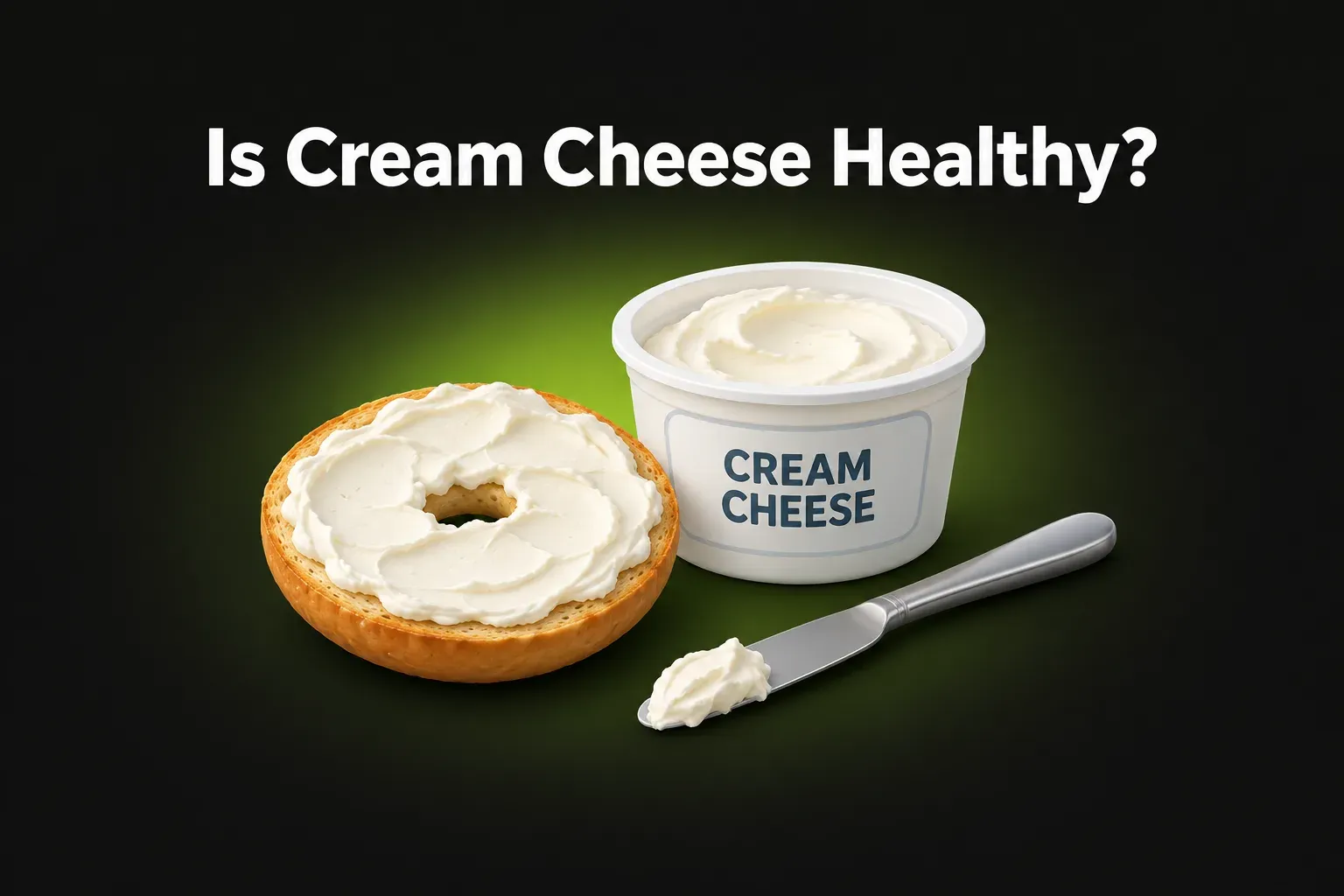
Cream cheese is the classic bagel spread. It’s also in cheesecake, frosting, dips and sushi rolls. But is it good for you, or just tasty?
The short answer: cream cheese is fine in small amounts, but it’s not a health food. Two tablespoons of regular cream cheese have about 100 calories and 6 g of saturated fat. That’s almost half of what heart experts suggest for a whole day. It has under 2 g of protein. Whipped, 1/3 less fat and Greek versions are lighter. Many plant-based spreads are not healthier. The best tubs have a short ingredient list, and the real key is how thick you spread it.
Cream cheese nutrition facts
Here is regular cream cheese per 2 tablespoons and per ounce. The numbers come from the USDA food database.
| Nutrient | 2 tbsp (29 g) | 1 oz (28 g) |
|---|---|---|
| Calories | 101 | 99 |
| Fat | 10.0 g | 9.8 g |
| Saturated fat | 5.9 g | 5.7 g |
| Protein | 1.8 g | 1.7 g |
| Sodium | 91 mg | 89 mg |
| Calcium | 28 mg | 28 mg |
| Vitamin A | 89 µg | 87 µg |
Source: USDA FoodData Central – cream cheese. Values per 100 g, multiplied by 29 g and 28.35 g and rounded.
What stands out:
- Saturated fat is the main issue. The American Heart Association suggests about 13 g a day on a 2,000-calorie diet (AHA). Two tablespoons use up almost half of that.
- Protein is low. Cream cheese is mostly fat and water. It has far less protein than most cheeses.
- Sodium is fairly low. About 90 mg is only 4% of the 2,300 mg daily value.
- Vitamin A is a small plus. Two tablespoons give about 10% of the daily value.
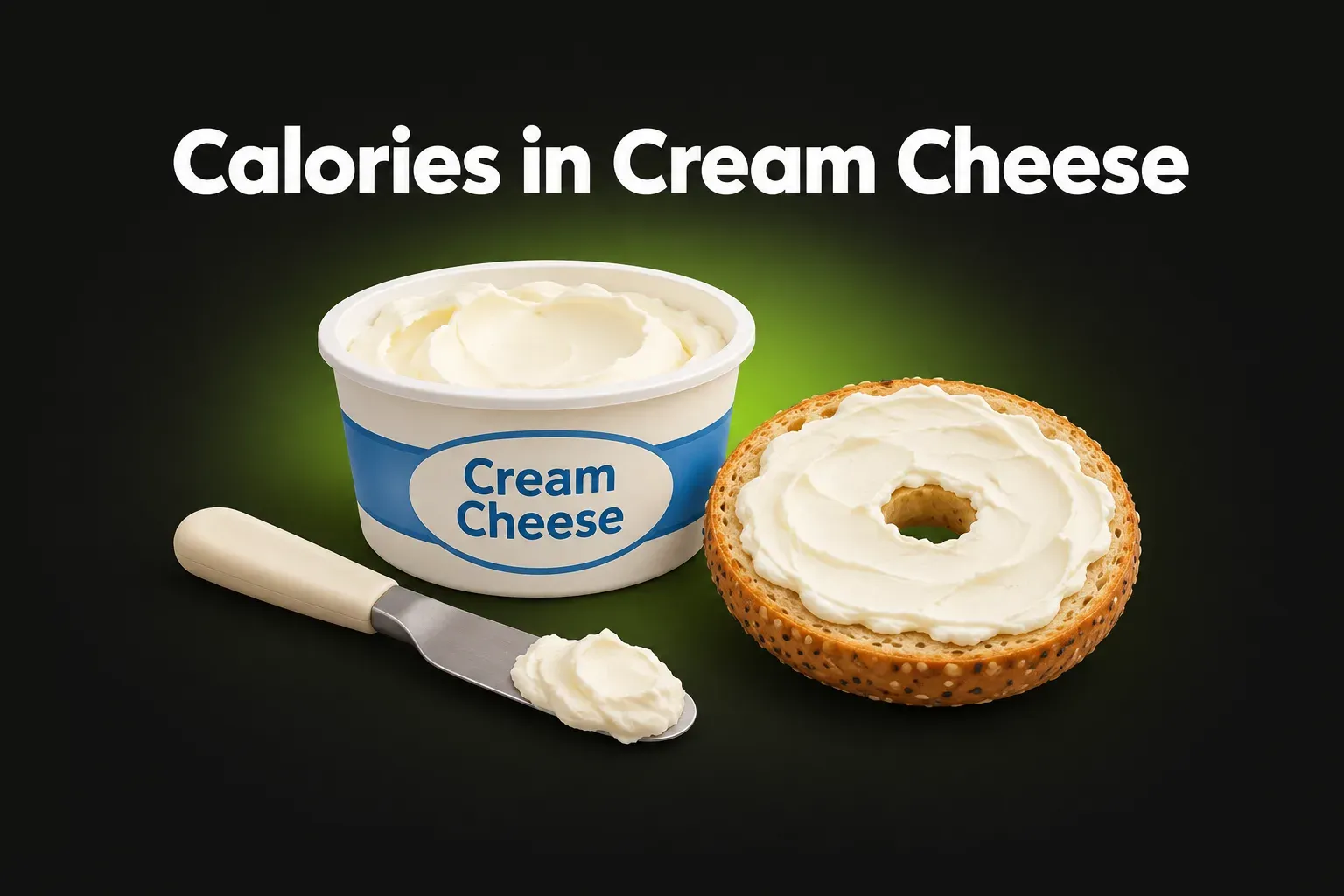
For more on portions, see our guide to calories in cream cheese. Sour cream is a close cousin – see is sour cream healthy?
Cream cheese vs other spreads
Here is how cream cheese compares with other spreads, per tablespoon.
| Spread (1 tbsp) | Calories | Saturated fat | Protein | Sodium |
|---|---|---|---|---|
| Cream cheese | 51 | 2.9 g | 0.9 g | 46 mg |
| Salted butter | 102 | 7.3 g | 0.1 g | 91 mg |
| Hummus | 36 | 0.4 g | 1.2 g | 64 mg |
| Cottage cheese, 1% | 10 | 0.1 g | 1.7 g | 57 mg |
Source: USDA FoodData Central – cream cheese, salted butter, hummus, 1% cottage cheese. Weights used: 14.5 g, 14.2 g, 15 g and 14.1 g.
Spoon for spoon, cream cheese has half the calories of butter. But people rarely spread just one tablespoon of cream cheese. Hummus and cottage cheese are much lighter, and both give you more protein.
Regular, light, whipped, Greek and plant-based
Cream cheese comes in many styles. Here is what each one means.
- Regular (brick or tub). US law says cream cheese must have at least 33% milkfat (21 CFR 133.133). The brick is the firm block. The tub is softer and easier to spread.
- 1/3 less fat (Neufchâtel). Neufchâtel must have 20% to under 33% milkfat (21 CFR 133.162). It tastes almost the same and has about a third less fat.
- Whipped. This is cream cheese with air whipped in. A spoonful weighs less, so it has fewer calories per spoon. Philadelphia’s whipped tub also has some skim milk, so it’s a bit lighter per gram too.
- Greek. These add yogurt cultures and extra milk protein. They have less fat and more protein. But they often have a longer ingredient list.
- Plant-based. These are made from coconut oil, almonds, oats or soy. Some are lower in saturated fat. Others have as much as dairy cream cheese, or more.
10 cream cheeses compared
Here are 10 real products sold in the US. Serving sizes differ, so look at the second column.
| Product | Serving | Calories | Sat. fat | Protein | Sodium | Gums and preservatives |
|---|---|---|---|---|---|---|
| Philadelphia Original (brick) | 1 oz (28 g) | 100 | 6 g | 2 g | 110 mg | Carob bean gum |
| Philadelphia Original (tub) | 2 tbsp (31 g) | 80 | 4.5 g | 2 g | 125 mg | Carob bean, xanthan and guar gums; sorbic acid |
| Philadelphia 1/3 Less Fat (Neufchâtel brick) | 1 oz (28 g) | 70 | 4 g | 2 g | 120 mg | Xanthan, carob bean and guar gums |
| Philadelphia Whipped | 2 tbsp (22 g) | 50 | 2.5 g | 1 g | about 90 mg | Carob bean and xanthan gums, modified food starch; natamycin |
| Good Culture Plain | 2 tbsp (30 g) | 80 | 5 g | 1 g | 75 mg | None – cream, nonfat milk, sea salt, cultures |
| Great Value Cream Cheese Spread (Walmart) | 2 tbsp (31 g) | 80 | 4.5 g | 2 g | 105 mg | Xanthan, guar and carob bean gums; sorbic acid |
| Green Mountain Farms Greek Cream Cheese | 2 tbsp (28 g) | 60 | 2 g | 4 g | 85 mg | Xanthan, locust bean and guar gums; potassium sorbate |
| Kite Hill Plain (almond milk) | 2 tbsp (33 g) | 70 | 0 g | 2 g | 200 mg | Xanthan and guar gums |
| Violife Just Like Cream Cheese Original (tub) | 2 tbsp (30 g) | 70 | 6 g | 0 g | 140 mg | None – coconut oil and potato starch base |
| Tofutti Better Than Cream Cheese Plain | 1 oz (30 g) | 90 | 4 g | 1 g | 125 mg | Locust bean, guar and xanthan gums |
Sources: Open Food Facts for Philadelphia Original brick, Philadelphia Original tub, Philadelphia Neufchâtel, Philadelphia Whipped, Great Value, Green Mountain Farms, Kite Hill and Violife; brand sites for Good Culture and Tofutti; US retailer listings for whipped sodium and ingredients. Checked November 2026. Recipes change – always check the package.
What to notice:
- The Philadelphia brick has the shortest list of the big brands: milk, cream, salt, one gum and cultures. The tub version adds more gums, whey and a preservative to stay soft.
- Good Culture has no gums or preservatives at all. It also has the least sodium in the table. But it has only 1 g of protein.
- Greek cream cheese has the most protein (4 g) and the least saturated fat of the dairy options.
- Kite Hill has almost no saturated fat but the most sodium. Violife has as much saturated fat as the dairy brick and no protein.
Is the fat in cream cheese bad for your heart?
Saturated fat raises LDL cholesterol (the “bad” cholesterol that builds up in blood vessels). But research suggests not all dairy fat acts the same.
- Cheese vs butter. In a Canadian trial, 92 adults with extra belly fat ate diets with the same amount of saturated fat for 4 weeks each. The fat came from cheese or from butter. LDL was 3.3% lower on the cheese diet than on the butter diet. But both raised LDL more than diets rich in unsaturated fats – the kind in most plant oils (Brassard et al., American Journal of Clinical Nutrition, 2017).
- The “dairy matrix”. In an Irish trial, 164 overweight adults over 50 ate about 40 g of dairy fat a day for 6 weeks. One group got all of it inside cheddar cheese. Another group got butter, milk protein powder and a calcium pill instead. The cheddar group ended up with lower LDL (Feeney et al., American Journal of Clinical Nutrition, 2018). Scientists think the structure of hard cheese – its “matrix” – may soften the effect of its fat.
- Large studies. A review of 15 studies looked at cheese and heart disease. People who ate the most cheese had a 14% lower risk than those who ate the least (Chen et al., European Journal of Nutrition, 2017). Some authors work for a dairy company. A study of 136,384 adults in 21 countries linked eating dairy to fewer heart problems and deaths. Cheese on its own was not clearly linked either way (Dehghan et al., Lancet, 2018).
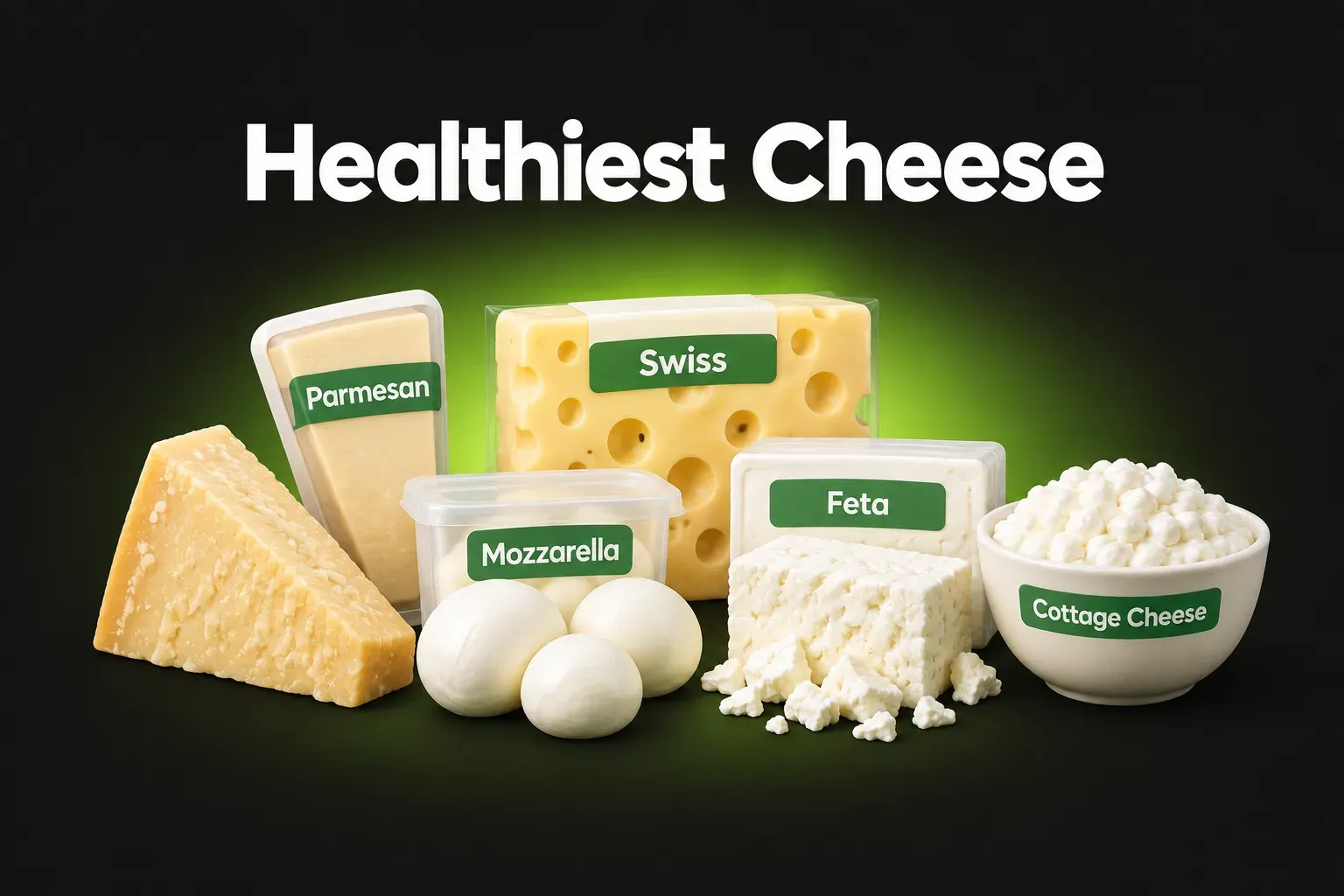
The catch: cream cheese is not cheddar. Per 100 g, cheddar has about 23 g of protein and 710 mg of calcium. Cream cheese has about 6 g of protein and 97 mg of calcium (USDA). So it’s closer to cream or butter than to hard cheese. The “matrix” benefit may be much smaller. These large studies only show links, not proof. A little cream cheese is fine. A thick layer every day adds up. See our guide to the healthiest cheese for better everyday picks.
What’s added to cream cheese
Gums: carob bean, xanthan and guar
Most cream cheeses use one or more gums. These are thickeners that keep the cheese smooth and stop water from leaking out. Carob bean gum (also called locust bean gum) and guar gum come from seeds. Xanthan gum is made by bacteria. All three act like fiber, and the amounts in a spoonful are small.
Regulators allow them. But independent studies raise some questions:
- A large French study followed 104,139 adults for about 7 years. Each extra 500 mg a day of guar gum was linked to an 11% higher risk of type 2 diabetes. For xanthan gum, it was 8% higher (Salame et al., Lancet Diabetes & Endocrinology, 2024). This shows a link, not proof.
- A mouse study fed mice a diet with 7.5% guar gum for 4 weeks. That is far more than a person gets from food. The mice then got a chemical that causes gut inflammation (colitis). The guar gum mice got much worse colitis than mice fed cellulose, a different fiber. Their gut bacteria seemed to be the cause (Paudel et al., Gut Microbes, 2024).
Why do mouse studies matter? Mice share most of our genes and body processes. Testing additives on people for years would put their health at risk. Proof of harm in people is still missing. The amounts in cream cheese are small, so this is no reason to panic. But if you eat a lot of processed food, gums add up from many products.
Sorbic acid and potassium sorbate
Many tubs add sorbic acid as a preservative. The Greek one in our table uses potassium sorbate. They are the same preservative in two forms. It keeps mold away after you open the tub.
Here is what independent research found:
- Mice got 150–1,000 mg of potassium sorbate per kg of body weight for 10 weeks. They developed liver inflammation and changes in their gut bacteria. These got better 5 weeks after they stopped (Xiao et al., Food and Chemical Toxicology, 2024).
- Rats drank potassium sorbate for 8 weeks, at 300 mg per kg of body weight a day. Lab tests call that dose free of visible harm. The rats still lost helpful Lactobacillus bacteria in the gut (Rezaei et al., Journal of the Science of Food and Agriculture, 2026).
- People: the French study tracked 105,260 adults for about 7.5 years. Those who ate more sorbates (mostly potassium sorbate) had a 14% higher risk of cancer. Their risk of breast cancer was 26% higher (Hasenböhler et al., BMJ, 2026). The same team linked potassium sorbate to a higher risk of type 2 diabetes (Hasenböhler et al., Nature Communications, 2026).
These studies show links and animal effects, not proof in people. But several labs see warning signs. So it makes sense to limit sorbates as a precaution. Easy fix: the Philadelphia brick and Good Culture have no added preservative.
Philadelphia Whipped uses natamycin instead. It’s a mold blocker made by bacteria.
Is plant-based cream cheese healthier?
Not always. It depends on the base.
- Coconut oil spreads, like Violife and Philadelphia Plant-Based, have 6 g of saturated fat per 2 tablespoons. That’s as much as the dairy brick. They also have no protein. Philadelphia Plant-Based has 170 mg of sodium, plus three gums and sorbic acid (Open Food Facts). A review of 16 trials looked at coconut oil. It raised LDL by about 10 mg/dL more than soybean or canola oil (Neelakantan et al., Circulation, 2020).
- Almond spreads, like Kite Hill, have almost no saturated fat and 2 g of protein. But Kite Hill has the most sodium in our table.
- Soy spreads, like Tofutti, use palm oil and have 4 g of saturated fat.
Plant-based spreads make sense if you avoid dairy. For heart health, almond-based ones are the better pick.
Cream cheese on a bagel: portions matter
The bagel matters more than the spread. A medium plain bagel (105 g) has about 277 calories on its own (USDA). Here’s what the spread adds:
| Medium bagel plus | Calories | Saturated fat |
|---|---|---|
| 1 tbsp cream cheese | about 328 | 2.9 g |
| 2 tbsp cream cheese | about 379 | 5.9 g |
| 4 tbsp cream cheese (thick layer) | about 480 | 11.7 g |
Source: USDA FoodData Central – bagel, plain and cream cheese. Bagel fat not included.
A thick layer uses up almost all 13 g of a day’s saturated fat. Read more about calories in a bagel.
Easy swaps:
- Measure once. One tablespoon covers a bagel half. Spread it thin.
- Pick whipped. You get the same taste for about half the calories per spoon.
- Try Greek or 1/3 less fat for less saturated fat.
- Add protein. Top it with smoked salmon or an egg so you stay full longer.
- Go smaller. A bagel thin or a slice of whole-grain toast has far fewer calories than a full bagel.
Need a daily target? Try our calorie calculator.
See what’s really in your cream cheese. With NutriSmart, you photograph the label or scan the barcode. The app lists the sweeteners, preservatives and colors, explains the risks of each one and gives the product a health score out of 100. It also tells you right away if a cream cheese is ultra-processed, and which ingredients make it so. Set an alert for sorbic acid or guar gum, and the app warns you whenever a tub you scan contains it.Get the app free
The bottom line
Cream cheese is fine in small amounts, but it’s not a health food. Two tablespoons have about 100 calories and 6 g of saturated fat, with very little protein. Hard cheese may be gentler on the heart than butter. But cream cheese is much closer to cream, so don’t count on that benefit. Pick a short ingredient list, like the Philadelphia brick or Good Culture. Try whipped, Greek or 1/3 less fat to cut back. Plant-based isn’t automatically better. Most of all, watch how thick you spread it.
FAQ
Is cream cheese healthy?
In small amounts, it's fine for most people. Two tablespoons have about 100 calories and 6 g of saturated fat, but under 2 g of protein. It's a treat to measure, not a health food.
Is cream cheese healthier than butter?
Per tablespoon, yes. Cream cheese has about half the calories and less than half the saturated fat of butter. But people often spread much more cream cheese than butter.
Is whipped cream cheese healthier?
Yes, a bit. Air is whipped in, so a spoonful weighs less. Two tablespoons of Philadelphia Whipped have 50 calories and 2.5 g of saturated fat, vs 100 calories and 6 g in an ounce of the brick.
Is light cream cheese or Neufchâtel better?
It has about a third less fat. Philadelphia's Neufchâtel brick has 70 calories and 4 g of saturated fat per ounce, vs 100 calories and 6 g for the original. Some light tubs add more gums and a preservative.
Is plant-based cream cheese healthier?
Not always. Spreads made with coconut oil, like Violife and Philadelphia Plant-Based, have as much saturated fat as dairy cream cheese and no protein. Almond-based Kite Hill has almost no saturated fat but more salt.
How much cream cheese should I put on a bagel?
About 1 tablespoon per bagel half, or 2 tablespoons for a whole bagel. That adds about 100 calories. A thick layer of 4 tablespoons adds about 200 calories and most of a day's saturated fat limit.