Is Sushi Healthy? Calories, Mercury and Raw Fish Safety
Is sushi healthy? Calories, protein and sodium in 10 popular items, the sugar in sushi rice, mercury by fish, raw fish safety and how to order lighter.
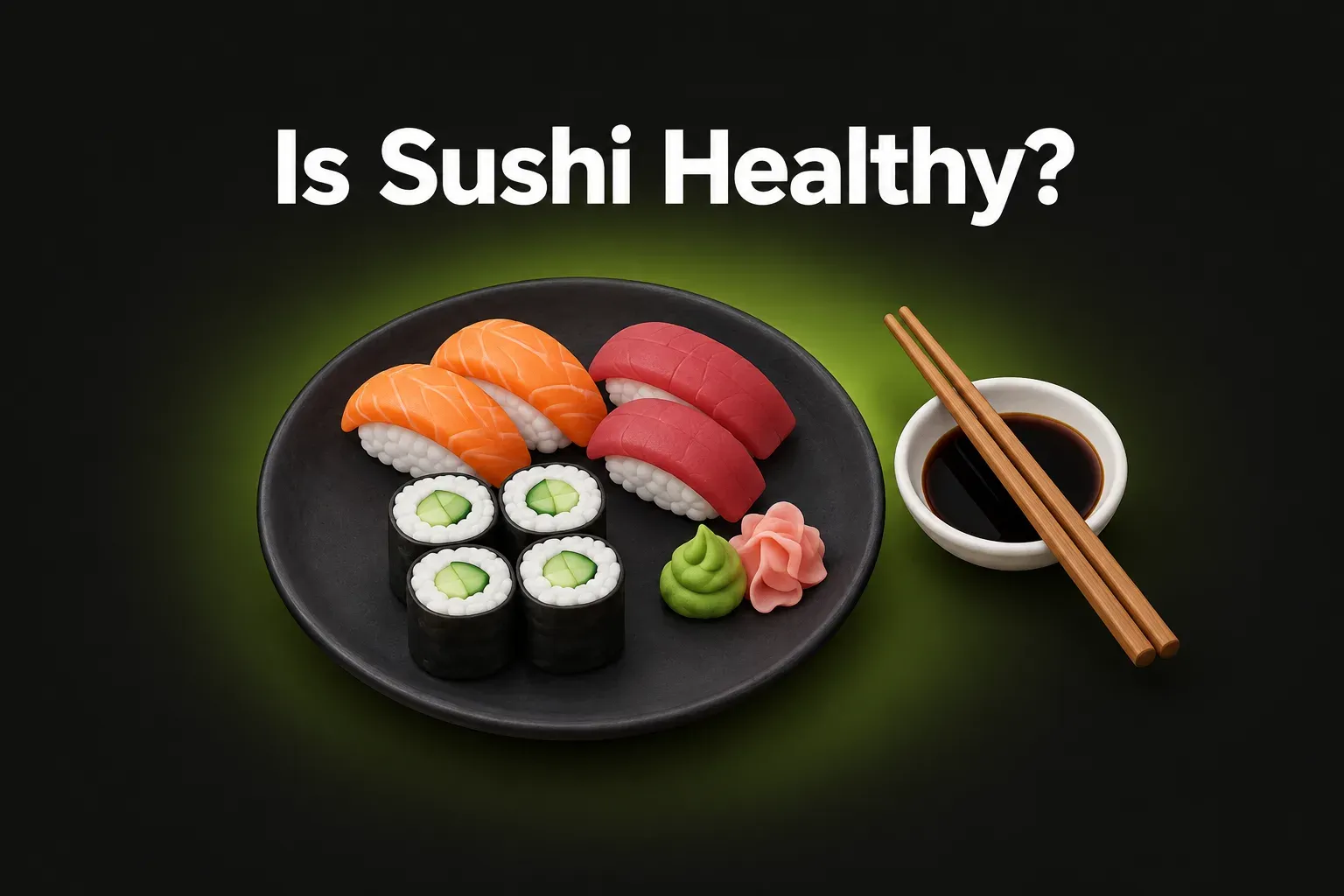
Sushi looks like the perfect light meal: fish, rice and seaweed in neat little pieces. But a plate of sushi can be lean and full of protein – or as heavy and salty as fast food.
The short answer: yes, sushi can be healthy. Sashimi, nigiri and simple rolls with fish and vegetables give you lean protein and omega-3 fats for few calories. The trouble comes from tempura, cream cheese, spicy mayo and sweet sauces. Lots of white rice and soy sauce add up too. Pick fish that are low in mercury, like salmon. And skip raw fish if you’re pregnant or have a weak immune system.
Calories, protein and carbs in 10 popular sushi items
These numbers come from the official nutrition sheet of Benihana, a large US Japanese restaurant chain. Restaurant rolls are often bigger than the rolls in nutrition tables. So these are realistic numbers for a meal out.
| Item | Serving | Calories | Protein | Carbs | Sugar | Fat | Sodium |
|---|---|---|---|---|---|---|---|
| California roll | 7 oz (198 g) | 280 | 13 g | 55 g | 10 g | 5 g | 680 mg |
| Spicy tuna roll | 6 oz (170 g) | 340 | 13 g | 56 g | 12 g | 6 g | 924 mg |
| Salmon avocado roll | 8 oz (227 g) | 460 | 10 g | 48 g | 15 g | 21 g | 1,100 mg |
| Philadelphia roll | 7 oz (198 g) | 380 | 13 g | 54 g | 13 g | 13 g | 680 mg |
| Shrimp tempura roll | 7 oz (198 g) | 330 | 9 g | 52 g | 12 g | 10 g | 890 mg |
| Dragon roll | 11 oz (312 g) | 510 | 26 g | 67 g | 13 g | 21 g | 1,552 mg |
| Tuna nigiri | 1 piece | 40 | 3 g | 6 g | 1 g | 1 g | 75 mg |
| Salmon sashimi | 4 slices (2 oz / 57 g) | 70 | 10 g | 0 g | 0 g | 3 g | 50 mg |
| Edamame | 6 oz (170 g) | 210 | 18 g | 17 g | 4 g | 9 g | 435 mg |
| Miso soup | 1 bowl (6.45 oz / 183 g) | 30 | 2 g | 4 g | 0 g | 1 g | 950 mg |
Source: Benihana US nutrition information (January 2025, the current sheet on the Benihana website, checked November 2026). Values rounded. Rolls at other restaurants differ in size and recipe.
What stands out:
- Sashimi and nigiri are the lightest. Four slices of salmon sashimi have 70 calories and 10 g of protein. There’s no rice at all.
- Most rolls are mostly rice. A spicy tuna roll has 56 g of carbs but only 13 g of protein.
- Specialty rolls add up fast. One dragon roll has 510 calories and over 1,500 mg of sodium. That’s two-thirds of the daily limit.
- Edamame is a great side. A 6 oz bowl has 18 g of protein and about 9 g of fiber.
- Miso soup is light but salty. It has only 30 calories, but 950 mg of sodium. Read more in is miso soup healthy?
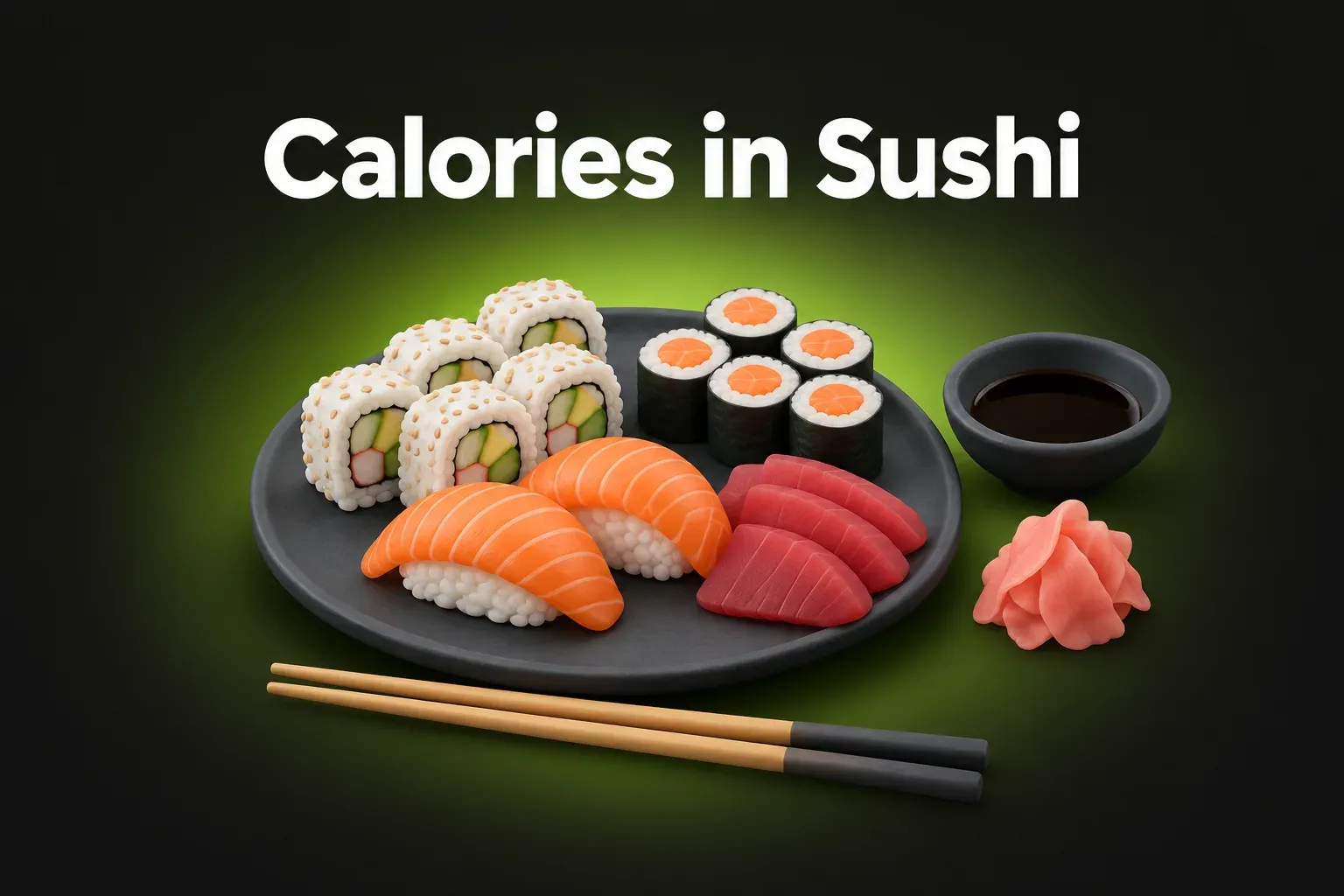
For comparison, the USDA lists a 6-piece California roll (180 g) at about 169 calories (USDA FoodData Central). The Benihana roll is bigger. So your roll may have more or less, depending on where you eat. See more rolls and pieces in our guide to calories in sushi.
The good parts of sushi
Fish gives you lean protein. Raw farmed salmon has about 17 g of protein in 3 oz (85 g). Raw yellowfin tuna has about 21 g (USDA: salmon, tuna). Protein keeps you full for longer. Find more options in our list of high-protein foods.
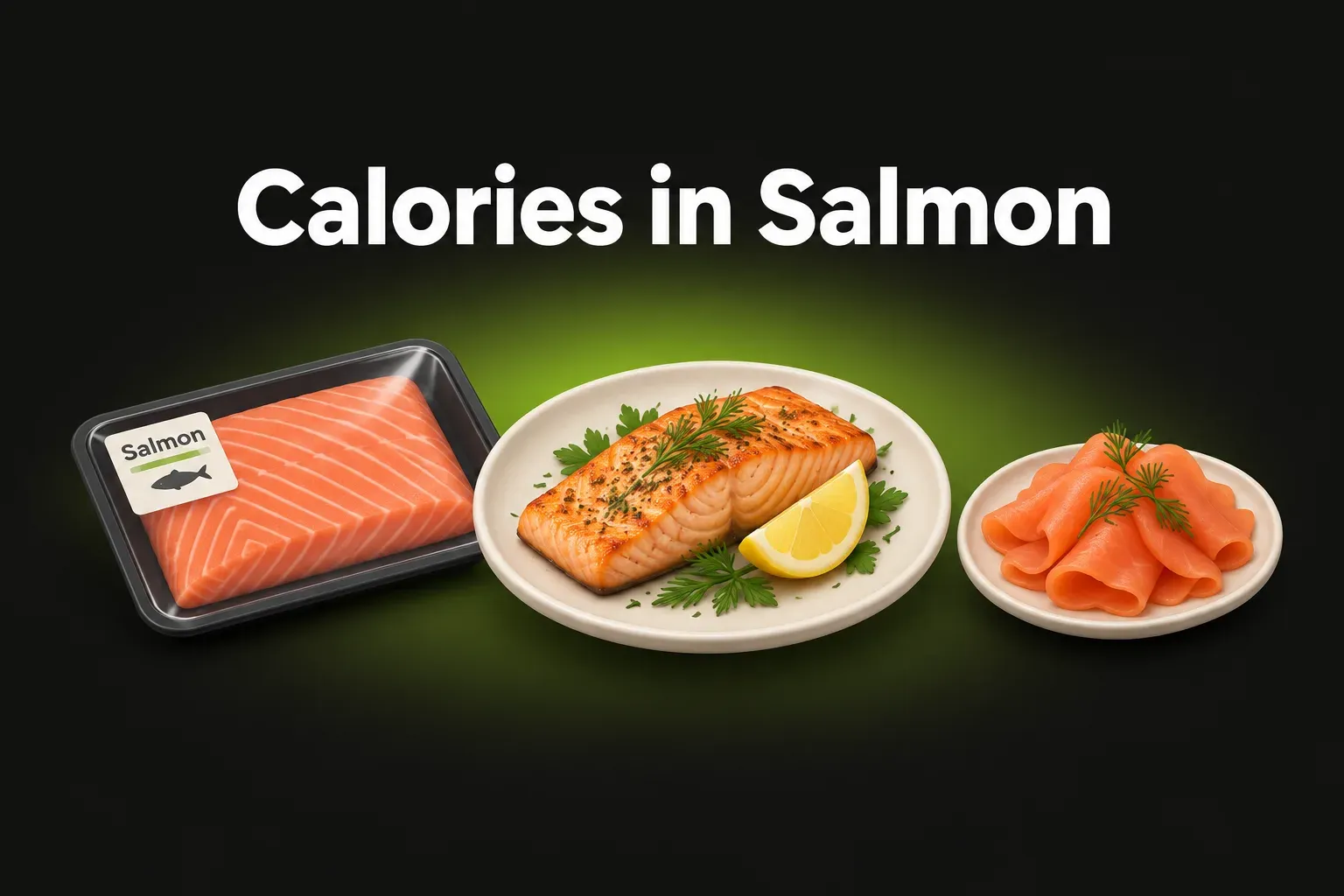
Oily fish gives you omega-3 fats. These are healthy fats for your heart and brain. Salmon is one of the best sources. A large review looked at many studies on fish and health. Eating fish 1–2 times a week was linked to a 36% lower risk of dying from heart disease. The benefit was strongest for fish rich in omega-3s, like salmon (Mozaffarian and Rimm, JAMA, 2006). Read more about calories in salmon.
Seaweed, avocado, cucumber and edamame add some fiber, vitamins and minerals. Avocado also adds healthy fat – but more calories too.
White rice and the sugar in it
Sushi rice is white rice mixed with rice vinegar, sugar and salt. That’s why even plain rolls have some sugar. In the table above, most rolls have 10–15 g of sugar. Most of it is added sugar, from the rice and from sweet sauces. That’s about 2½–4 teaspoons per roll.
The American Heart Association sets a daily limit for added sugar. For most women, it’s about 6 teaspoons (25 g). For most men, it’s about 9 teaspoons (36 g) (Johnson et al., Circulation, 2009). Two rolls can get you close.
White rice also has little fiber, so your body digests it fast. One review pooled 7 large studies with over 352,000 people. Each daily serving of white rice was linked to an 11% higher risk of type 2 diabetes. The link was strongest in China and Japan. People there ate white rice 3–4 times a day (Hu et al., BMJ, 2012). In Western countries, people ate it only 1–2 times a week. There, the link was not clear. These studies show a link, not proof of cause. Still, a sushi night now and then is fine. It’s the daily habit that matters.
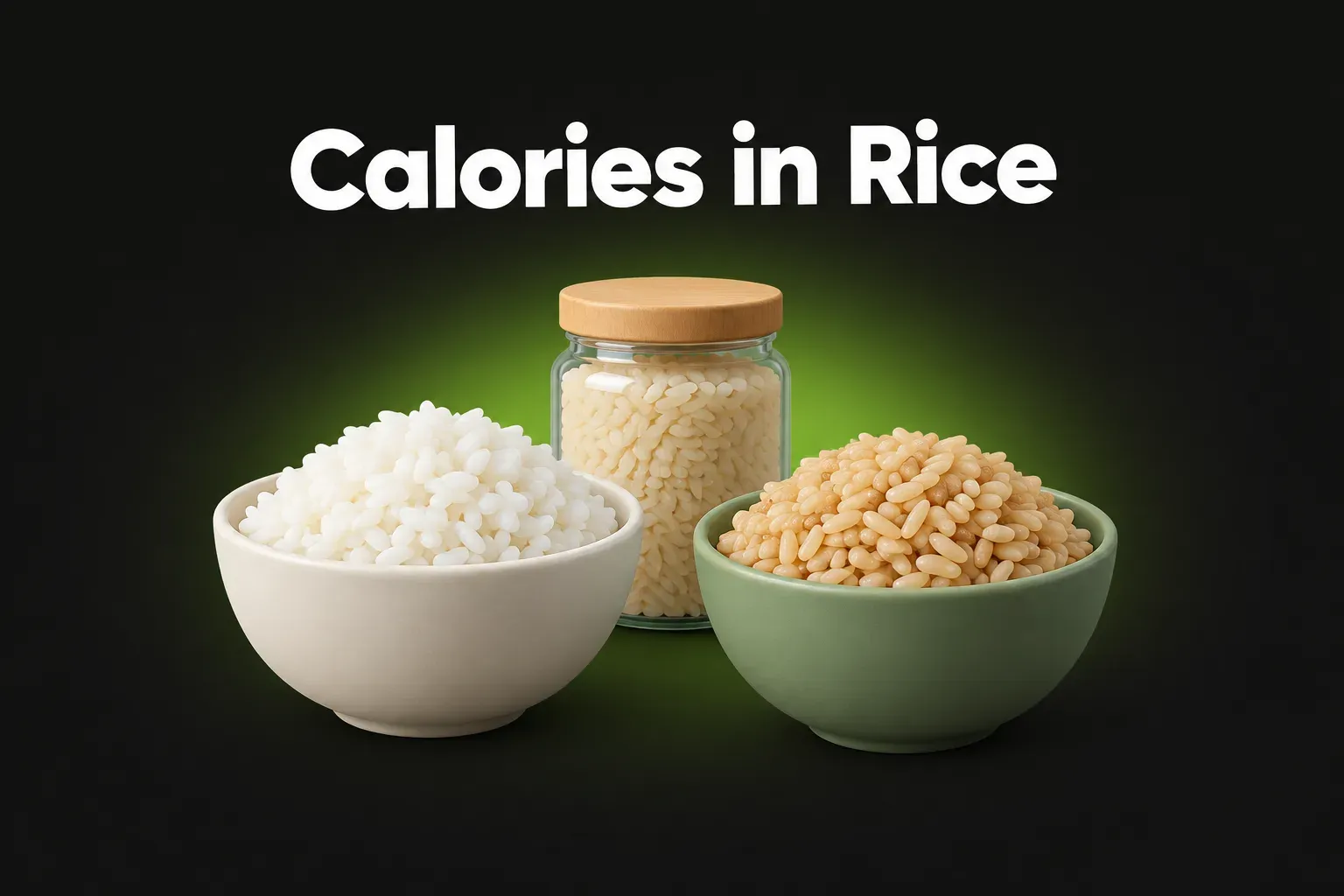
Tip: ask for brown rice if the restaurant has it. Or order more sashimi and fewer rolls. See how the two rices compare in our guide to calories in rice.
Soy sauce, mayo and tempura: where the extras hide
Soy sauce has almost no calories. But 1 tablespoon has about 880 mg of sodium (USDA). The daily limit for adults is 2,300 mg (FDA). Too much sodium can raise your blood pressure.
Here’s how one meal adds up, using the numbers above:
- Spicy tuna roll: 924 mg
- Miso soup: 950 mg
- 1 tablespoon of soy sauce: about 880 mg
That’s about 2,750 mg – more than a whole day’s limit in one meal. Reduced-sodium soy sauce has about 575 mg per tablespoon (USDA). That’s better, but still a lot.
Spicy mayo is mostly mayonnaise mixed with chili sauce. One tablespoon of mayo has about 94 calories and 10 g of fat (USDA). Spicy rolls often have it inside and drizzled on top. Compare brands in our guide to the healthiest mayo.
Cream cheese in a Philadelphia roll adds about 51 calories per tablespoon (USDA). Most of its fat is saturated fat. Read more in is cream cheese healthy?
Tempura means the filling is dipped in batter and deep-fried. “Crunchy” on a menu usually means fried flakes on top. Fried food soaks up oil, so the calories climb fast. Eel sauce is sweet and adds more sugar.
Many cooked rolls, like the California roll, use imitation crab. It’s made from fish, but with starch, sugar and salt added. Read more in is imitation crab healthy?
Mercury: which sushi fish to watch
Mercury is a metal that builds up in big fish that eat smaller fish. Too much can harm the brain and nerves. It matters most for babies, young kids and pregnant women.
| Sushi fish | Japanese name | Mercury (ppm) | FDA advice |
|---|---|---|---|
| Scallop | Hotate | 0.003 | Best choice |
| Shrimp | Ebi | 0.009 | Best choice |
| Salmon | Sake | 0.022 | Best choice |
| Squid | Ika | 0.024 | Best choice |
| Pollock (imitation crab) | Kani kama | 0.031 | Best choice |
| Crab | Kani | 0.065 | Best choice |
| Yellowfin tuna | Kihada / ahi | 0.354 | Good choice (once a week) |
| Albacore tuna | Bincho | 0.358 | Good choice (once a week) |
| Bigeye tuna | Mebachi / ahi | 0.689 | Choice to avoid |
Sources: mean mercury levels from the FDA’s mercury tests in commercial fish; advice from the FDA’s Advice about Eating Fish. ppm = parts per million. The advice is for people who are or may become pregnant, are breastfeeding, and for children.
On a menu, maguro just means tuna. Ahi can be yellowfin or bigeye. So if you care about mercury, ask which tuna it is.
Bluefin tuna (often sold as toro, the fatty belly) is not on the FDA list. But one study tested 100 tuna sushi samples from restaurants and supermarkets in three US states. DNA tests showed which kind of tuna each one was. Bigeye and bluefin had mercury levels near or above the limits set by the US, Canada, the EU, Japan and the WHO (Lowenstein et al., Biology Letters, 2010).
What this means for you: salmon, shrimp and crab are very low in mercury. If you love tuna, enjoy it now and then, not every day. Mix in other fish. For pregnant women, the FDA suggests 2–3 servings a week (4 oz each) from the “best choices” list, or 1 serving from the “good choices” list. During pregnancy, that fish should be cooked.
Is raw fish safe?
For most healthy adults, sushi from a good restaurant is low-risk. But raw fish can carry two kinds of germs.
Parasites. Some fish carry tiny worms called Anisakis. If you eat a live one, it can cause strong belly pain and vomiting. Cases of this illness have risen worldwide over the last 50 years. Raw fish dishes like sushi and sashimi are a main source. Freezing and cooking kill the worms (Della-Morte et al., European Review for Medical and Pharmacological Sciences, 2023). That’s why the FDA Food Code tells restaurants to freeze most fish for raw dishes first. One option is -4°F (-20°C) for 7 days. Most kinds of tuna don’t need it. Neither does farmed fish like salmon that is raised on pellet feed.
Bacteria like Listeria. Freezing doesn’t kill all germs. Listeria is a germ that can grow even in the fridge. Raw and smoked fish are among the foods that can carry it. Pregnant women are about 10 times more likely to get sick from it than other healthy adults. It can cause miscarriage, stillbirth or early birth (FDA).
Who should skip raw fish? The FDA says these groups should avoid raw or undercooked fish, including sashimi and raw sushi (FDA):
- Pregnant women
- Children
- Older adults
- People with a weak immune system
If you’re in one of these groups, you can still order rolls with only cooked fillings. Think shrimp tempura, cooked eel, a California roll or a veggie roll. Ask your doctor if you’re not sure.
Is grocery store sushi healthy?
Grocery store sushi is handy and often cheaper. But is it safe? One small US study tested 105 samples of raw sushi, poke and ceviche. They came from restaurants and grocery stores in Orange County, California. None had Salmonella or the type of Listeria that makes people sick. Levels of E. coli and similar bacteria were acceptable or borderline (Marquis et al., Heliyon, 2023).
Still, a few tips help:
- Check the date and time it was made. Buy it fresh and eat it the same day.
- Keep it cold. Don’t leave it in a hot car or on the counter for hours.
- Read the label if there is one. Grocery rolls often have spicy mayo, cream cheese or tempura flakes too.
- Look at the ingredients. Imitation crab, sweet sauces and sugar in the rice are common.
- Pick simple packs like salmon or tuna rolls, nigiri, or a veggie roll.
Pregnant women should skip packs with raw fish here too.
How to order sushi lighter
- Start with miso soup or edamame. You’ll be less hungry for rolls. Edamame adds protein and fiber.
- Make sashimi or nigiri the main part of your meal. You get more fish and less rice.
- Choose simple rolls with fish, cucumber or avocado.
- Watch for these menu words: tempura, crunchy, spicy, Philadelphia, cream cheese and eel sauce.
- Ask for sauces on the side, or skip the spicy mayo.
- Ask for brown rice, or “light rice” if the restaurant offers it.
- Dip the fish side, not the rice, in soy sauce. Or use reduced-sodium soy sauce.
- Stop at 2 rolls, or share a specialty roll.
A meal of miso soup, 4 slices of salmon sashimi, 2 tuna nigiri and a California roll has about 460 calories and 31 g of protein, using the table above. Two specialty rolls can pass 900 calories. Want more light meal ideas? See our list of low-calorie foods. Find your daily number with the calorie calculator. For more seafood, see calories in shrimp.
Track your sushi meal without guessing. With NutriSmart, you just photograph what you eat. The app counts the calories, protein, carbs and fat on your plate. Then it shows how much you have left for your daily target.Get the app free
The bottom line
Sushi can be a healthy meal. Sashimi, nigiri and simple fish rolls give you lean protein and omega-3 fats for few calories. The problems are specialty rolls with tempura, cream cheese and spicy mayo. Lots of white rice with sugar adds up too, and so do salty soy sauce and miso soup. Choose fish low in mercury, like salmon and shrimp. Eat bigeye or bluefin tuna only now and then. If you’re pregnant or have a weak immune system, stick to cooked rolls.
FAQ
Is sushi healthy?
It can be. Sashimi, nigiri and simple fish rolls give you lean protein and omega-3 fats for few calories. Rolls with tempura, cream cheese or spicy mayo, plus lots of soy sauce, are much heavier and saltier.
What is the healthiest sushi to order?
Sashimi is the lightest, because it has no rice. At Benihana, four slices of salmon sashimi (2 oz) have 70 calories and 10 g of protein. Nigiri and simple rolls with fish or cucumber come next.
How many calories are in a sushi roll?
A simple 6-piece roll has about 170–185 calories in USDA data. Restaurant rolls are often bigger. At Benihana, a California roll has 280 calories and a dragon roll has 510.
Is the rice in sushi bad for you?
Not in normal amounts, but it adds up. Sushi rice is white rice mixed with vinegar, sugar and salt. Many restaurant rolls have 10–15 g of sugar each. Ask for brown rice or choose sashimi to cut back.
Which sushi fish is highest in mercury?
Bigeye tuna is on the FDA's list of fish to avoid. Bluefin tuna is also high in mercury. Salmon, shrimp, crab and squid are very low in mercury.
Can you eat sushi while pregnant?
The FDA says pregnant women should avoid raw fish, including sashimi and raw sushi. Rolls with only cooked fillings, like a shrimp tempura or veggie roll, are the safer choice. Ask your doctor what's right for you.