What Is Pectin? Uses, Benefits and Is It Safe?
What pectin (E440) is, how it's made from fruit, why it's in jam and gummies, its benefits for cholesterol and digestion, and the rare allergy linked to cashews.
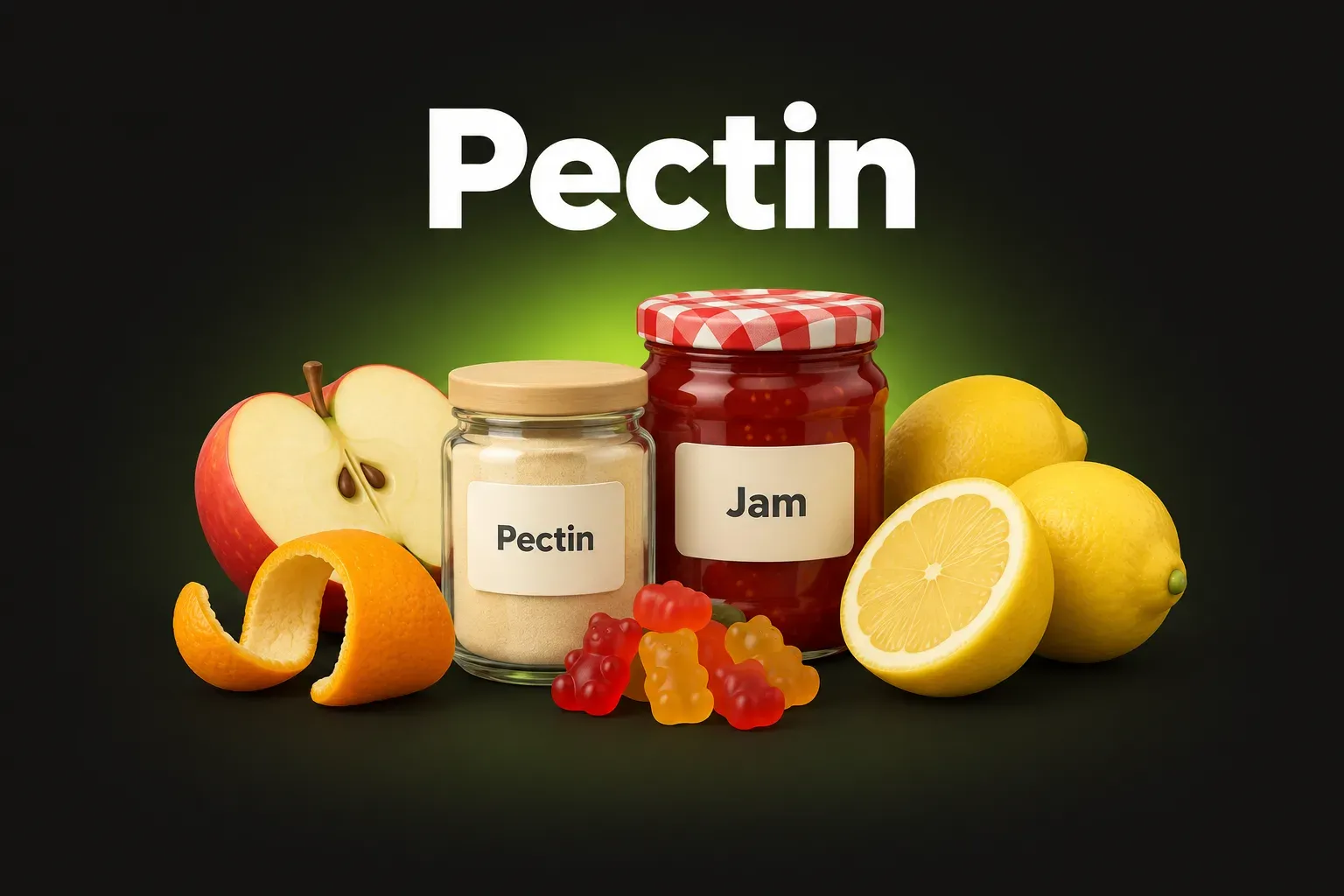
Pectin is the reason jam sets and gummy candies are chewy. It’s on the labels of jams, jellies, yogurts, fruit fillings and many gummies. And it’s one of the few additives that’s actually a natural fiber from fruit.
The short answer: pectin is a fiber from fruit, mostly apples and citrus peel. It’s safe for almost everyone, and it’s vegan (unlike gelatin). As a fiber, it can lower cholesterol and help with diarrhea. The only worries are gas or bloating in large amounts and a rare allergy in people who are allergic to cashews or pistachios. Keep in mind: pectin itself is fine, but the jams and gummies it’s in are usually full of sugar.
What is pectin?
Pectin is a natural fiber that holds plant cells together. It’s found in most fruits and vegetables, with the most in:
- citrus peel (the white part, called the pith)
- apples, especially the peel and core
- quinces, plums, gooseberries and currants
Store-bought pectin is made from citrus peel or apple pulp left over from making juice. It’s heated in slightly sour water, then filtered and dried into a powder.
When pectin is heated with sugar and acid, it turns into a gel – that’s how jam and jelly set. There are two main types:
| Type | How it gels | Used in |
|---|---|---|
| High-methoxyl pectin | Needs lots of sugar and acid | Classic jams and jellies |
| Low-methoxyl and amidated pectin (E440ii) | Needs calcium, little or no sugar | Low-sugar jams, yogurts, desserts |
On labels, you’ll see it as pectin, fruit pectin, apple pectin, citrus pectin, amidated pectin or E440.
Where you’ll find pectin
- Jams, jellies and marmalades
- Gummy candies and fruit snacks – often as a vegan alternative to gelatin
- Yogurts, desserts and fruit fillings
- Fruit juices and drinks – to make them thicker
- Supplements – as a fiber supplement or in “modified citrus pectin” products
- Medicines – in some older anti-diarrhea products and throat lozenges
Benefits of pectin
Cholesterol
In the gut, pectin grabs bile acids (digestive juices made from cholesterol) and carries them out of the body. So the body uses up more cholesterol to make new ones. In a careful study, apple and citrus pectin lowered LDL (“bad”) cholesterol by about 7–10%. Just 6 g a day for three weeks lowered it by 6–7% (Brouns et al., European Journal of Clinical Nutrition, 2012). The European Food Safety Authority agrees that 6 g of pectin a day helps keep blood cholesterol normal.
The amount in a spoonful of jam is far too small to matter. But eating whole apples, citrus and other fruit every day adds up.
Blood sugar
Pectin makes food leave the stomach more slowly, so sugar gets into the blood more slowly too. This helps keep blood sugar from jumping after meals. Read more about high fiber foods and the glycemic index.
Diarrhea
A study in Bangladesh looked at children with diarrhea that lasted a long time. Some ate a rice diet with added pectin. 59% of them got better by day 3, and 82% by day 4. On the same diet without pectin, only 15% and 23% got better (Rabbani et al., Gastroenterology, 2001). Pectin soaks up water. It also feeds good gut bacteria, which make healthy fatty acids that help the gut heal.
Gut bacteria
Your gut bacteria feed on pectin. They turn it into short-chain fatty acids, which feed the cells lining your colon. Some thickeners are made in labs, such as carboxymethylcellulose or polysorbate 80. Pectin is different: it’s a natural part of fruit and vegetables that people have always eaten.
Is pectin safe?
For almost everyone, yes. Pectin is approved in the US and EU. In 2017, the European Food Safety Authority decided there was no need to set a daily limit.
The possible downsides:
- Gas and bloating: like any fiber, large amounts – mostly from supplements – can cause gas, bloating or cramps. Add fiber slowly and drink enough water.
- Allergy (rare): a few people, mostly children, have had severe allergic reactions to citrus pectin. Many of them were also allergic to cashews or pistachios. A 2023 study found a protein in citrus seeds and citrus pectin that the body can mistake for cashew and pistachio (Konstantinou et al., Annals of Allergy, Asthma & Immunology, 2023; Ferdman et al., Annals of Allergy, Asthma & Immunology, 2006). If you have a cashew or pistachio allergy, ask your allergy doctor about pectin.
- Medicines: large amounts of fiber supplements can make some medicines work less well. Take them a few hours apart.
- The sugar around it: pectin itself has almost no calories, but jams, jellies and gummies are usually 50–70% sugar.
What about “modified citrus pectin”?
Modified citrus pectin is a supplement made by breaking pectin into smaller pieces. It’s often sold to prevent cancer or “detox”, but there’s very little proof it works in people. Don’t use it instead of medical treatment.
Pectin vs gelatin
| Pectin | Gelatin | |
|---|---|---|
| Source | Fruit (apples, citrus) | Animal bones and skin |
| Vegan | Yes | No |
| Fiber | Yes | No (it’s a protein) |
| Gels with | Sugar and acid, or calcium | Cooling |
| Used in | Jams, gummies, yogurts | Gummies, marshmallows, desserts |
How to get pectin the healthy way
- Eat whole fruit – apples, pears, oranges, plums and berries – rather than juice.
- Leave the peel on apples and pears, where much of the pectin is.
- Choose low-sugar jams made with low-methoxyl pectin, or make your own with less sugar.
- Don’t count gummies as fiber – the amount of pectin is small, and the sugar is high.
- If you take a fiber supplement, start small and drink plenty of water.
Spot pectin on any label in seconds. With NutriSmart, you photograph the ingredient list or scan the barcode, and the app tells you right away if the product has pectin. Turn on an alert for it, and the app warns you every time a product you scan contains it. You’ll also see every other additive, the risks of each one and a health score out of 100.Get the app free
You can also read about other thickeners: xanthan gum, guar gum and carrageenan.
The bottom line
Pectin is a natural fiber from apples and citrus that makes jam set and gummies chewy. It’s safe for almost everyone and vegan. As part of whole fruit, it helps lower cholesterol and is good for digestion. The main downsides are bloating in large amounts and a rare allergy linked to cashews and pistachios. Pectin isn’t the problem in jam and gummies – the sugar is.
FAQ
What is pectin?
Pectin is a natural fiber found in fruits and vegetables, especially in apples and citrus peel. It's a soluble fiber, which means it mixes with water. When heated with sugar and acid, it turns into a gel. That's why it's used to make jam, jelly and gummy candies.
Is pectin safe?
Yes, for almost everyone. Pectin is a natural fiber found in fruit. The European Food Safety Authority found no need to set a daily limit. Large amounts can cause gas or bloating. Very rarely, people allergic to cashews or pistachios can react to citrus pectin.
Is pectin vegan?
Yes. Pectin comes from fruit, so vegans can use it instead of gelatin, which is made from animal bones and skin. Gummies and jellies made with pectin are fine for vegans and vegetarians.
Does pectin lower cholesterol?
Yes. In a careful study, apple or citrus pectin lowered LDL cholesterol by about 6–10%. EFSA agrees that 6 g of pectin a day helps keep blood cholesterol normal. The small amounts in jam won't make a difference. But eating whole apples, citrus and other fruit helps.
Is pectin good for diarrhea?
It can help. A study in Bangladesh looked at children with diarrhea that lasted a long time. A rice diet with pectin helped many more children get better within three to four days than the same diet without it. Pectin was also used in some older medicines for diarrhea.
What is E440?
E440 is the European code for pectin. E440(i) is pectin and E440(ii) is amidated pectin, a slightly changed form that gels with less sugar. On labels you'll see "pectin", "fruit pectin", "gelling agent: pectin" or "E440".