Calories in Ramen: Instant Packs, Cups and Restaurant Bowls
How many calories are in ramen – a pack of instant noodles, a cup and a restaurant bowl – plus sodium, tonkotsu vs shoyu, toppings and how to make it healthier.
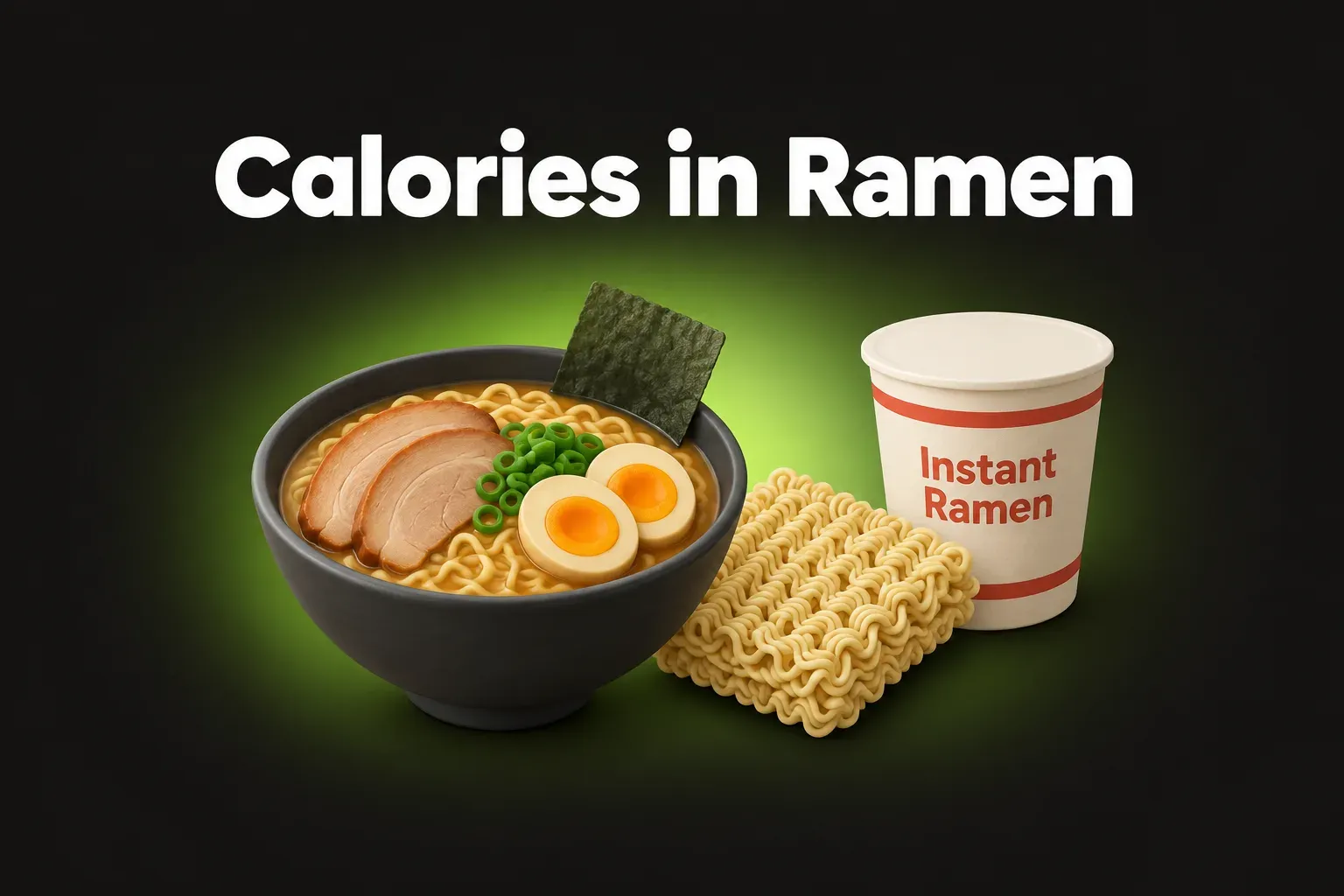
Ramen comes in two very different forms: the cheap instant noodles you make in three minutes, and the big, rich bowls served in Japanese restaurants. Both are delicious, both are salty – and their calories are not small.
The short answer: a whole pack of instant ramen has about 380 calories and about 1,600 mg of sodium. A cup of instant noodles has about 280–300 calories. A restaurant bowl of ramen has about 760 calories, and a rich tonkotsu bowl can pass 1,000. Ramen is mostly refined flour, fat and salt, with little fiber.
Calories in instant ramen
Values for instant ramen are from the US Department of Agriculture (USDA FoodData Central):
| Instant ramen | Weight | Calories | Sodium |
|---|---|---|---|
| Whole pack with seasoning | about 87 g | about 380 kcal | about 1,600 mg |
| Half a pack (“1 serving” on many labels) | about 43 g | about 190 kcal | about 800 mg |
| Instant noodle cup | about 64 g | about 280–300 kcal | about 1,200 mg |
| Prepared ramen soup | 1 cup (245 g) | 162 kcal | 691 mg |
Tip: many brands list a pack as 2 servings. The calories on the front can look small, but almost everyone eats the whole pack.
Instant ramen nutrition facts
| Nutrient | Per 100 g (dry) | Per pack (87 g) |
|---|---|---|
| Calories | 440 kcal | 383 kcal |
| Carbohydrates | 60.3 g | 52.5 g |
| – of which sugars | 2.0 g | 1.7 g |
| Fiber | 2.9 g | 2.5 g |
| Protein | 10.2 g | 8.9 g |
| Fat | 17.6 g | 15.3 g |
| – of which saturated | 8.1 g | 7.1 g |
| Sodium | 1,860 mg | 1,618 mg |
Instant noodles are fried to dry them, usually in palm oil – that’s where most of the saturated fat comes from. A pack has only about 9 g of protein and 2.5 g of fiber, so it doesn’t keep you full for long. And one pack gives you about 70% of the sodium you should eat in a whole day (2,300 mg).
Calories in restaurant ramen
Restaurant ramen is a full meal. USDA averages give about 127 calories per 100 g (USDA), so a typical bowl of about 600 g has around 760 calories and 2,000 mg of sodium. The broth makes a big difference:
| Ramen or topping | Calories |
|---|---|
| Shio (salt) or shoyu (soy sauce) ramen, 1 bowl | about 450–650 kcal |
| Miso ramen, 1 bowl | about 550–750 kcal |
| Tonkotsu (pork bone) ramen, 1 bowl | about 700–1,000+ kcal |
| Soft-boiled egg (ajitama) | about 70–80 kcal |
| 2 slices of chashu pork | about 150–250 kcal |
| Extra noodles (kaedama) | about 200–300 kcal |
| Corn and butter topping | about 80–120 kcal |
| 5 pan-fried gyoza on the side | about 250–300 kcal |
Tonkotsu broth is creamy because pork bones and fat are boiled for hours – it’s the richest choice. Clear shio and shoyu broths are lighter. A soft-boiled egg is the best topping for the calories: it adds about 6 g of protein. Read more about calories in an egg.
What to check on the label
- Servings per pack: if it says 2, double the calories and sodium.
- Sodium: compare brands – some have 30–40% less.
- Fried or air-dried: air-dried (non-fried) noodles usually have less fat.
- Additives: many seasonings contain MSG and disodium inosinate to boost flavor, and some fried noodles contain TBHQ, a preservative that keeps the oil from going bad.
Is ramen good for weight loss?
Not as it comes. Instant ramen has a lot of calories for a small portion, little protein and fiber, and a lot of salt – so you’re hungry again soon. Restaurant ramen is a big meal with lots of fat and sodium. You don’t have to give it up, but make it better:
- Use half the seasoning packet – or less – to cut the sodium.
- Add protein: an egg, leftover chicken, tofu or shrimp.
- Add vegetables: frozen mixed vegetables, spinach, cabbage or bok choy.
- At a restaurant, choose shio or shoyu over tonkotsu, skip extra noodles and leave some broth.
We compare 9 instant ramens in is ramen bad for you? For another noodle soup, read is pho healthy? To compare noodle types, see the healthiest noodles.
Remember that you lose weight only when you eat fewer calories than you burn. Read more about the calorie deficit and find your number with our calorie calculator.
Check your instant ramen in seconds. With NutriSmart, you scan the barcode or photograph the label, and the app shows you the additives – like TBHQ or MSG – the risks of each one and a health score out of 100, so you can compare brands right in the store. At home, snap a photo of what you eat, and the app counts the calories for you.Get the app free
You can also read about palm oil and our high protein dinner ideas.
The bottom line
A whole pack of instant ramen has about 380 calories and 1,600 mg of sodium, a cup about 280–300 calories, and a restaurant bowl about 760 – more for tonkotsu. Ramen is mostly refined flour, fat and salt. Use half the seasoning, add protein and vegetables, and keep rich restaurant bowls for special meals.
FAQ
How many calories are in a pack of instant ramen?
About 380 calories in a whole pack (about 87 g with the seasoning), according to USDA data. Many labels list the pack as 2 servings, so check whether the calories on the label are for half the pack.
How many calories are in a cup of instant noodles?
About 280–300 calories in a standard cup of about 64 g, with around 1,200 mg of sodium.
How many calories are in a bowl of restaurant ramen?
About 760 calories in a typical restaurant bowl of about 600 g, according to USDA averages. Rich tonkotsu ramen can have 1,000 calories or more, and lighter shio or shoyu bowls about 450–650.
How much sodium is in instant ramen?
About 1,600 mg in a whole pack with the seasoning – about 70% of the 2,300 mg daily limit. Using half the seasoning packet cuts the sodium a lot.
Is ramen good for weight loss?
Not as it comes. Instant ramen is mostly refined flour and fat, with little protein or fiber, so it doesn't keep you full. You can make it better by using half the seasoning and adding an egg, chicken or tofu and lots of vegetables.
Are instant noodles fried?
Most are. The noodles are fried in oil, often palm oil, to dry them. That's why a pack has about 15 g of fat. Air-dried (non-fried) noodles usually have less fat.