Healthiest Protein Powder: How to Choose a Clean One
What is the healthiest protein powder? Whey, plant, casein and collagen compared, which sweeteners and additives to skip, heavy metals and testing seals.
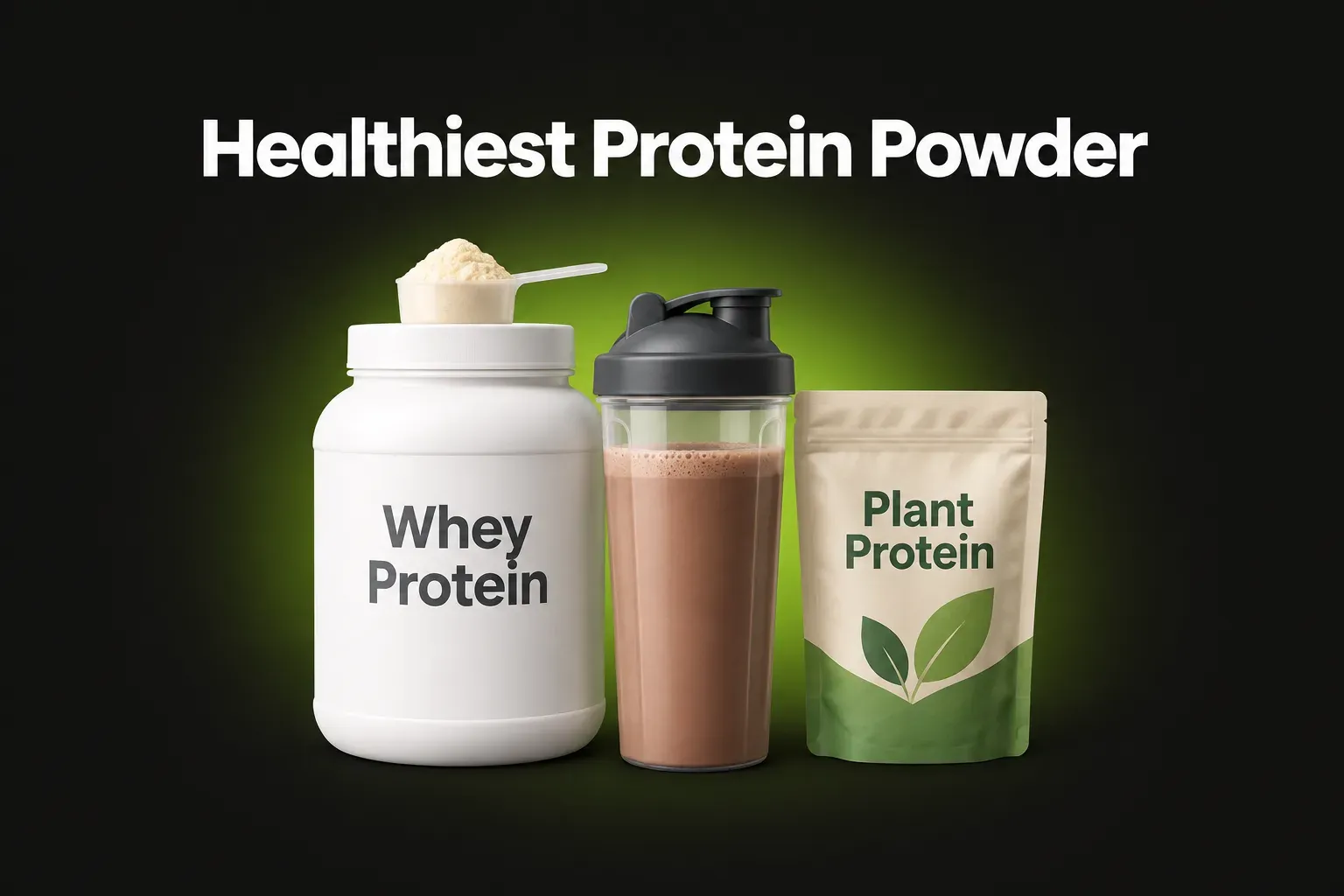
Protein powder is one of the easiest ways to get more protein – in a shake, in oatmeal or in a smoothie. But the tubs on the shelf range from one clean ingredient to long lists of sweeteners, gums and “proprietary blends”. And because supplements aren’t checked before they’re sold, quality varies a lot. So what’s the healthiest protein powder?
The short answer: look for a powder with one main protein (like whey isolate, pea or soy), about 20–25 g of protein per scoop, 0–2 g of added sugar, no artificial sweeteners (or only stevia or monk fruit) and an independent testing seal such as NSF Certified for Sport or Informed Choice. Unflavored powders are usually the cleanest.
Types of protein powder compared
| Type | Protein quality | Good for | Watch out for |
|---|---|---|---|
| Whey isolate | Complete, very high in leucine | Muscle, most people | Milk allergy; flavored versions add sweeteners |
| Whey concentrate | Complete | Budget choice | A bit more lactose and fat |
| Casein | Complete, slow to digest | Before bed, staying full | Thick texture, milk allergy |
| Soy | Complete | Dairy‑free | Soy allergy |
| Pea | Nearly complete | Dairy‑free, soy‑free | Earthy taste, check metal testing |
| Pea + rice blend | Complete | Vegan | Check metal testing |
| Collagen | Incomplete | Extra protein only | Lacks tryptophan, low leucine |
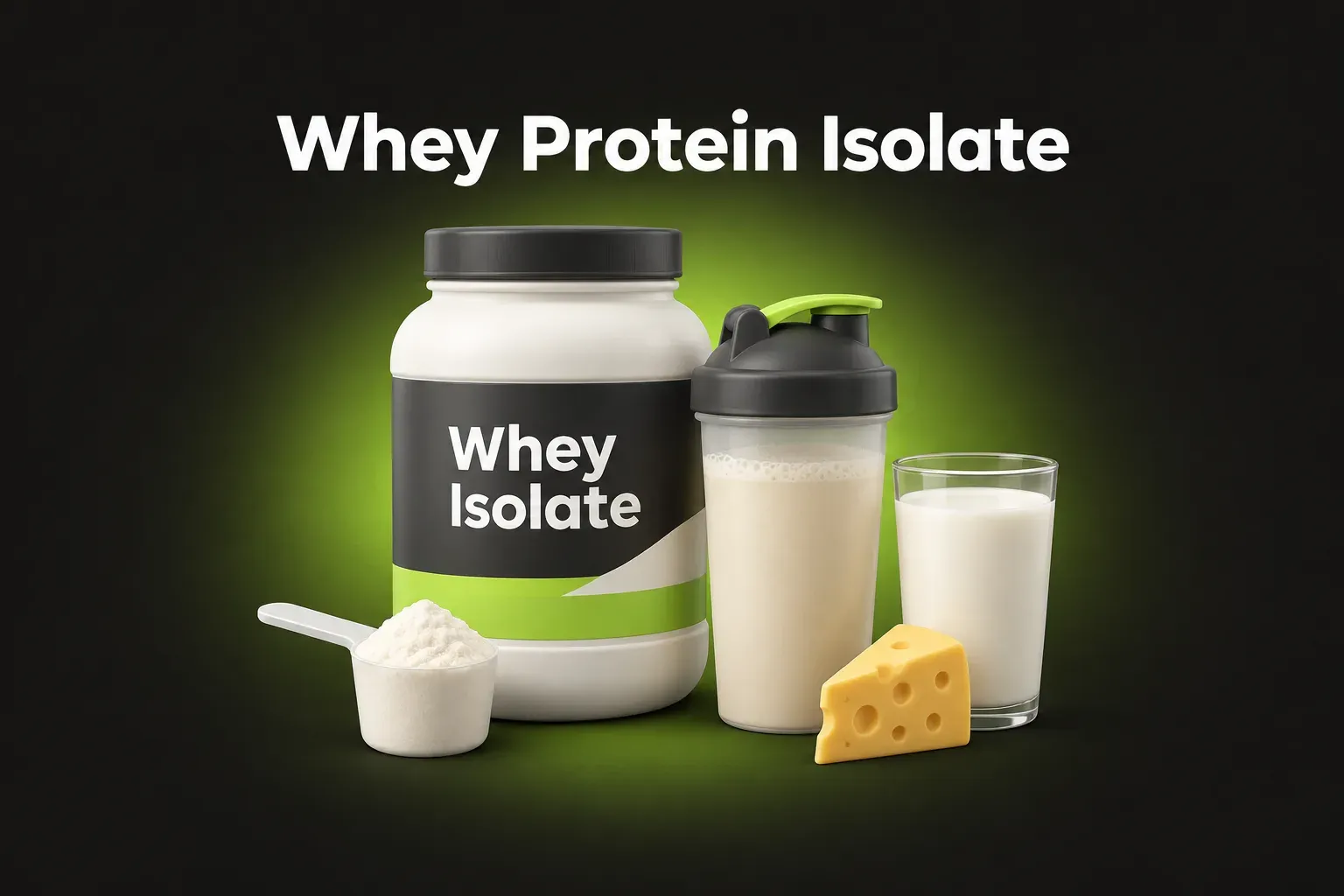
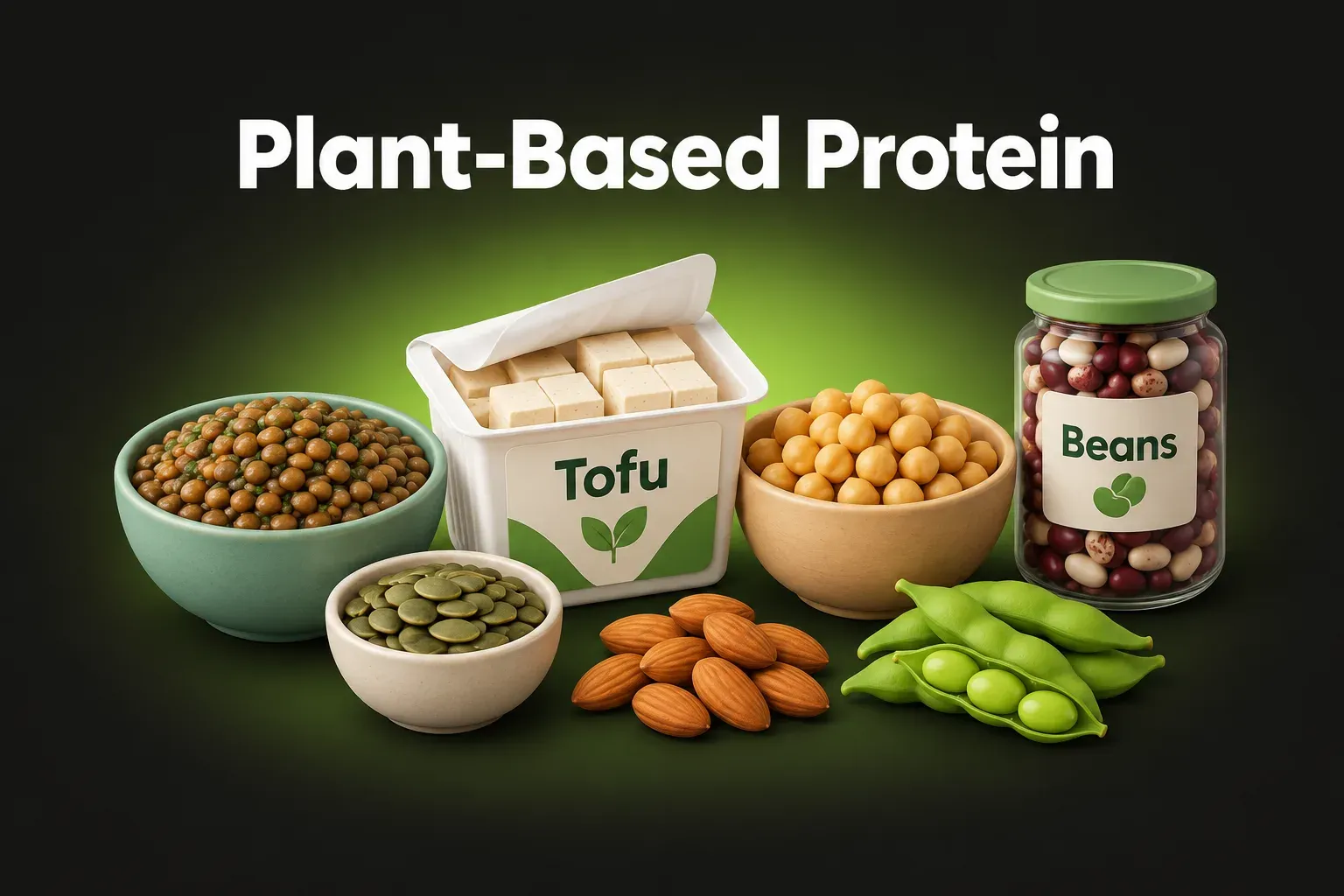
A complete protein has all the building blocks (amino acids) your body needs, and leucine is the one that starts muscle building. Whey is the best-studied powder for muscle. Plant blends (pea + rice) are a good dairy-free choice. Collagen is popular, but it’s not a complete protein, so it shouldn’t be your main powder. Read more about whey protein isolate and plant-based protein.
How much protein do you actually need?
- Adults with little activity: about 0.8 g per kg of body weight a day.
- Active adults and people building muscle: about 1.4–2.0 g per kg a day (Jäger et al., ISSN Position Stand, 2017).
For a 70 kg adult who works out, that’s about 100–140 g a day. Most people can get much of it from food – eggs, yogurt, fish, chicken, beans. Protein powder is a convenient extra, not a must. See our guide to high protein foods.
How to pick the healthiest protein powder: 6 checks
| Check | Aim for |
|---|---|
| Protein per scoop | 20–25 g |
| Ingredient list | Short – protein first, few extras |
| Added sugar | 0–2 g |
| Sweetener | None, stevia or monk fruit |
| Testing seal | NSF Certified for Sport, Informed Choice or Informed Sport |
| Blends | No “proprietary blend” hiding amounts |
1. A short ingredient list
The simplest powders have one ingredient. For example, unflavored Naked Whey lists only whey protein concentrate (made from milk), with 25 g of protein per 30 g scoop (Open Food Facts). A popular flavored whey, Optimum Nutrition Gold Standard Double Rich Chocolate, has 24 g of protein, cocoa, lecithin, artificial flavor and acesulfame K (Open Food Facts).
2. Sweeteners
Most flavored powders use sucralose and/or acesulfame K. Large observational studies link these to a higher risk of heart disease (Debras et al., BMJ, 2022). Many plant powders use erythritol, which was linked to blood clotting in a 2023 study (Witkowski et al., Nature Medicine, 2023). If you use powder every day, unflavored or stevia/monk fruit-sweetened powders are the safer bet – add cocoa, fruit or cinnamon yourself.
3. Gums, fillers and “amino spiking”
Many powders add thickeners like xanthan gum, guar gum or carrageenan, plus maltodextrin as filler. Some cheap brands have been caught “amino spiking” – adding cheap amino acids like glycine to make the protein number on the label look higher. A clear amino acid profile and a testing seal help avoid this.
4. Heavy metals and testing seals
The FDA does not approve supplements before they go on sale – companies are responsible for safety (FDA). Tests by consumer groups have found lead, cadmium and arsenic in some protein powders. Scientists who checked these results found that one to three scoops a day was unlikely to cause harm, with the lowest levels in whey and the highest in “mass gainer” powders (Bandara et al., Toxicology Reports, 2020).
Plants take up metals from soil, so plant powders are worth checking especially carefully. The best protection is a third-party seal like NSF Certified for Sport or Informed Choice, which test for contaminants and banned substances.
Who should be careful with protein powder
- People with kidney disease – ask your doctor how much protein is safe.
- Children and teens – food is better; powders aren’t needed.
- Pregnant or breastfeeding women – pick a tested, unflavored powder and check with your doctor.
- People with milk or soy allergies – read the label carefully; “non-dairy” doesn’t always mean milk-free.
Check your protein powder in seconds. With NutriSmart, you photograph the label or scan the barcode. The app shows the protein and sugar per scoop, flags sweeteners, gums and other additives, explains the risks of each one and gives the powder a health score out of 100. Set an alert for sucralose, and the app warns you every time a product you scan contains it.Get the app free
You can also read our guides to the healthiest protein bars and high protein snacks.
The bottom line
The healthiest protein powder has one main protein, 20–25 g of protein per scoop, little or no sugar, no artificial sweeteners and a third-party testing seal. Whey isolate is the best-studied choice; pea, soy or pea-and-rice blends are good dairy-free options; collagen shouldn’t be your main powder. Use it as an extra – most of your protein should still come from real food.
FAQ
What is the healthiest protein powder?
A protein powder with one main ingredient – usually whey protein isolate or a pea or soy protein – about 20–25 g of protein per scoop, little or no added sugar, no artificial sweeteners or with stevia or monk fruit, and a third-party testing seal like NSF Certified for Sport or Informed Choice.
Is whey or plant protein healthier?
Both can be healthy. Whey is a complete protein that the body uses very well, and tests usually find fewer heavy metals in whey. Plant proteins like pea or soy are good for people who avoid dairy; blends of pea and rice give a more complete mix of amino acids.
Are protein powders safe?
Most are safe for healthy adults in normal amounts. But the FDA doesn't approve supplements before they're sold, so quality varies. Choose powders tested by an independent lab, stick to one or two scoops a day, and talk to your doctor if you have kidney disease.
Do protein powders have heavy metals?
Some do. Tests have found lead, cadmium and arsenic in some protein powders. A safety review found typical use – one to three scoops a day – was unlikely to cause harm, with the lowest levels in whey and the highest in mass-gainer powders. A third-party testing seal is the best way to lower the risk.
How much protein powder per day?
One to two scoops (about 20–50 g of protein) a day is plenty for most people. Most of your protein should still come from food. Active adults need about 1.4–2.0 g of protein per kg of body weight a day; less active adults about 0.8 g.
Is collagen a good protein powder?
Not as your main protein. Collagen is missing an essential amino acid (tryptophan) and is low in leucine, which helps build muscle. It's fine as an extra, but whey, soy or pea protein are better for building muscle.