Is Pesto Healthy? Calories, Oils and 9 Pestos Compared
Is pesto healthy? Calories, fat and sodium per 1/4 cup, olive oil vs sunflower oil, jarred vs fridge pesto, 9 store pestos compared and homemade tips.
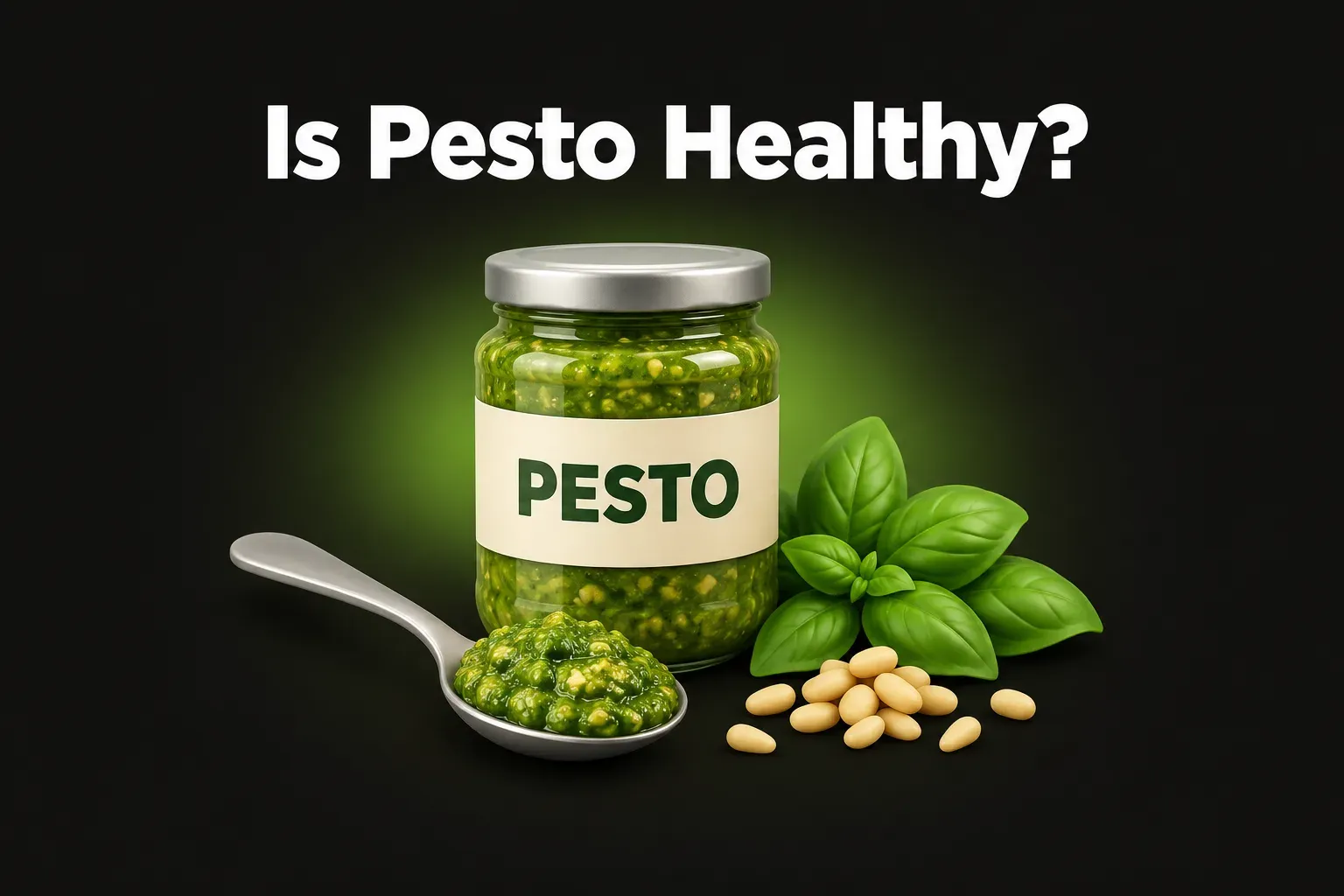
Pesto is the bright green sauce from Genoa, Italy. It’s made from basil, oil, cheese, pine nuts and garlic. It tastes fresh and “green”, but is pesto healthy?
The short answer: pesto is healthy in small amounts. Basil gives you plenty of vitamin K, and olive oil and nuts give you good fats. But pesto is mostly oil. A 1/4 cup has about 190–330 calories and 400–960 mg of sodium. Many jars also use cheaper seed oils instead of olive oil. So use 1–2 tablespoons, not a big scoop, and read the label.
Pesto nutrition per 1/4 cup
Most US labels use a serving of 1/4 cup (about 60 g). Here is what the USDA food database shows for three types of pesto:
| Pesto (1/4 cup) | Calories | Fat | Sat. fat | Sodium | Protein |
|---|---|---|---|---|---|
| Refrigerated (fridge case) | 263 | 23.7 g | 4.5 g | 380 mg | 6.2 g |
| Shelf-stable (jar) | 260 | 25.9 g | 4.5 g | 609 mg | 3.0 g |
| Classic recipe (olive oil, pine nuts) | 371 | 37.9 g | 6.6 g | 632 mg | 5.5 g |
Source: USDA FoodData Central – refrigerated, shelf-stable, pesto sauce recipe. Values per 100 g, multiplied to 1/4 cup (61–64 g) and rounded.
What stands out:
- Fat makes up most of the calories. More than 80% of pesto’s calories come from fat. That’s because oil is the main ingredient after basil.
- Saturated fat is moderate. It’s about 4–7 g and comes from the cheese and the oil. Most of the fat is the healthier unsaturated kind.
- Sodium is high. The FDA’s daily limit is 2,300 mg. One 1/4 cup of jarred pesto gives you about a quarter of that.
- Protein is low. Pesto has only 3–6 g per 1/4 cup. It’s a sauce, not a protein food.
- The classic recipe has the most calories. The USDA recipe uses a full 1/2 cup of olive oil per batch. More oil means more calories.
Store-bought pesto compared
We checked current labels for 9 pestos sold in the US. The gap between them is big – from 190 to 330 calories and from 400 to 960 mg of sodium.
| Pesto (1/4 cup) | Where | Calories | Fat | Sodium | First oil | Other ingredients to note |
|---|---|---|---|---|---|---|
| Barilla Rustic Basil | Shelf | 190 | 18 g | 600 mg | Sunflower | Spinach, cashews, potato flakes, yeast extract |
| Barilla Creamy Genovese | Shelf | 300 | 26 g | 760 mg | Sunflower | Cashews, whey, sugar |
| Classico Traditional Basil | Shelf | 230 | 22 g | 590 mg | Soybean | Citric acid, lactic acid, natural flavor |
| Trader Joe’s Basil Pesto (jar) | Shelf | 250 | 26 g | 960 mg | Sunflower | Potatoes, cashews, lactic acid |
| Mezzetta Basil Pesto | Shelf | 320 | 32 g | 620 mg | Extra virgin olive | Water, almonds, pine nuts, lactic acid |
| Buitoni Basil Pesto | Fridge | 300 | 28 g | 400 mg | Extra virgin olive | Canola oil, whey, whey protein, walnuts |
| Rana Basil Pesto | Fridge | 310 | 31 g | 680 mg | Sunflower | Lactose, dry milk, dehydrated potatoes, natural flavor |
| Kirkland Signature Basil Pesto | Fridge | 330 | 30 g | 630 mg | Sunflower | Pine nuts, olive oil, citric acid |
| Trader Joe’s Pesto Genovese | Fridge | 210 | 21 g | 400 mg | Not named | Walnuts, Parmesan, garlic |
Sources: Buitoni and Mezzetta websites (Mezzetta lists 2 Tbsp, doubled here to 1/4 cup); label photos on Open Food Facts for Barilla Rustic Basil, Classico, Trader Joe’s jar, Rana, Kirkland and Trader Joe’s Pesto Genovese; USDA Branded Foods label for Barilla Creamy Genovese, with the same numbers on Open Food Facts. The Trader Joe’s Pesto Genovese lid lists “basil, oil, Parmesan cheese, walnuts & garlic” but doesn’t name the oil. Recipes change, so check the jar you buy.
What stands out:
- Most pestos don’t lead with olive oil. Six of the nine list sunflower or soybean oil first. Only Mezzetta and Buitoni put extra virgin olive oil first.
- Sodium can be more than twice as high. Buitoni and Trader Joe’s fridge pesto have 400 mg. The Trader Joe’s jar has 960 mg – 42% of the daily limit in one serving.
- Fewer calories can mean more fillers. Barilla Rustic Basil has the fewest calories here, at 190. It has less oil and adds spinach and potato flakes.
- Some jars add sugar. Barilla Creamy Genovese lists sugar. It has 4 g of total sugar and about 1 g of added sugar per serving. That’s small, but classic pesto has none.
Olive oil vs sunflower and canola oil
All oils have about the same calories – about 120 per tablespoon. See calories in olive oil. The difference is the type of fat and the extra plant compounds.
Extra virgin olive oil is the traditional pesto oil. It’s high in monounsaturated fat (the kind found in olives, avocados and nuts). It also has polyphenols – natural plant compounds that act as antioxidants. Read more in is olive oil healthy?
The best-known trial on olive oil is PREDIMED. It followed 7,447 people in Spain, aged 55 to 80, with a high risk of heart disease. One group ate a Mediterranean diet and got free extra virgin olive oil. Another group was only told to eat less fat. Over about 5 years, the olive oil group had about 30% fewer heart attacks, strokes and heart deaths than that group (Estruch et al., New England Journal of Medicine, 2018).
A Harvard study followed about 92,000 US nurses and other health workers for 28 years. People who ate more than 1/2 tablespoon of olive oil a day had a 19% lower risk of dying from heart disease. That was compared with people who rarely or never used it (Guasch-Ferré et al., Journal of the American College of Cardiology, 2022). Swapping butter, margarine or mayo for olive oil was linked to a lower risk. But olive oil did not beat other plant oils taken together.
Sunflower, canola and soybean oil are cheaper. They have less of the plant compounds found in extra virgin olive oil. Sunflower and soybean oil often have much more omega-6 fat than olive oil. Labels rarely say which type of sunflower oil is used. Read more about sunflower oil, canola oil and seed oils in general, or compare them all in our guide to the healthiest cooking oil.
Our take: olive oil pesto is the better pick. But the bigger health factor is how much pesto you eat, not which oil it uses.
What else is in the jar
Classic pesto has seven ingredients: basil, olive oil, pine nuts, Parmesan, pecorino, garlic and salt. Jars often add a few more:
- Potato flakes or potatoes – thicken the sauce and add body. Classic pesto doesn’t use them.
- Cashews, almonds or walnuts – used in place of some or all of the pine nuts. Check the label if you have a nut allergy.
- Whey, lactose and dry milk – dairy powders. They add a creamy taste and bulk.
- Lactic acid and citric acid – acids that help keep the sauce fresh and safe. Lactic acid is the same acid found in yogurt.
- Ascorbic acid – vitamin C. It helps the basil stay green.
- Natural flavors and yeast extract – boost the savory taste. Yeast extract adds a natural, MSG-like flavor.
- Sugar – a small amount in some jars.
None of these is a big safety worry in the amounts used. But together, they can make a pesto ultra-processed. That means it’s made with factory ingredients you wouldn’t use at home. Fridge pesto isn’t always simpler. Rana’s has lactose, dry milk and potatoes. Buitoni’s has whey and canola oil.
The good parts: basil, olive oil, nuts and cheese
Pesto does bring real nutrition to the plate:
- Vitamin K. A 1/4 cup of store-bought pesto has about 95–118 mcg of vitamin K, based on USDA data. That’s about 80–100% of the Daily Value (120 mcg). Your body needs vitamin K for blood clotting and healthy bones.
- Good fats. Olive oil and nuts are mostly unsaturated fat. That’s the kind linked to better heart health.
- Nuts. A Harvard study followed about 119,000 US adults for up to 30 years. People who ate nuts every day were 20% less likely to die during the study than people who ate none (Bao et al., New England Journal of Medicine, 2013). A spoon of pesto has only a few nuts, though.
- Calcium. The cheese adds some. The labels above show about 6–15% of the Daily Value per 1/4 cup.
If you take warfarin (a blood thinner), pesto’s vitamin K matters. Doctors advise eating about the same amount of vitamin K from week to week (MedlinePlus). You don’t have to skip pesto. Just keep your portions steady and talk to your doctor before changing your diet.
Portion size: the real key
It’s easy to use too much pesto. Here’s what that means in calories:
- 1 tablespoon has about 50–85 calories.
- 2 tablespoons have about 95–165 calories.
- 1/4 cup has about 190–330 calories.
Now add pasta. Two ounces (56 g) of dry pasta has about 200 calories. With a 1/4 cup of pesto, that’s about 390–530 calories before any chicken or cheese on top. A restaurant plate is often bigger. Our guide to the healthiest pasta can help you pick a more filling base.
Easy ways to use less:
- Thin it with pasta water. A splash of the starchy water spreads 2 tablespoons over a full plate.
- Use it as a topping. A spoon on grilled chicken, fish, eggs or roasted vegetables goes a long way.
- Mix it with plain Greek yogurt for a lighter dip or sandwich spread.
- Measure it once. See what 2 tablespoons looks like on your plate. Then you’ll know by eye. Use our calorie calculator to see how it fits your day.
Is homemade pesto healthier?
Homemade pesto isn’t automatically lower in calories. The USDA classic recipe has the most calories in our first table. But you control every ingredient:
- Use extra virgin olive oil, not a seed oil.
- Use less oil. The USDA recipe uses 1/2 cup of olive oil. Using 1/4 cup instead cuts about 500 calories from the whole batch.
- Cut the salt. The cheese is already salty. Taste before you add any extra salt.
- Add greens. Spinach, arugula or kale add volume and nutrients with very few calories.
- Store it well. Keep it in the fridge in a closed jar with a thin layer of oil on top, and use it within a few days. Freeze the rest – ice cube trays make handy portions.
How to pick a healthier jar
- Read the first ingredients. Look for basil first and extra virgin olive oil as the first oil.
- Compare sodium. Aim for about 500 mg or less per 1/4 cup.
- Keep the list short. Fewer powders, flavors and fillers usually means a pesto closer to the classic recipe.
- Check for sugar. Classic pesto has none.
- Check for nuts if you have an allergy. Many jars use cashews, almonds or walnuts.
Scan your pesto before you buy. With NutriSmart, you photograph the label or scan the barcode. The app lists the sweeteners, preservatives and colors, explains the risks of each one and gives the product a health score out of 100. It also tells you right away if a pesto is ultra-processed, and which ingredients make it so. You can set an alert for an ingredient you want to avoid, like sunflower oil or cashews. The app then warns you on every scanned product that contains it.Get the app free
The bottom line
Pesto is a healthy sauce in small amounts. Basil, olive oil, nuts and cheese bring vitamin K, good fats and lots of flavor. But pesto is mostly oil, with about 190–330 calories and up to 960 mg of sodium per 1/4 cup. Many jars swap olive oil for sunflower, canola or soybean oil and add fillers like potato flakes or whey. Pick a jar with olive oil first and less sodium, or make your own. Then use 1–2 tablespoons, not a big scoop.
FAQ
Is pesto healthy?
Pesto can be part of a healthy diet in small amounts. It's made from basil, oil, cheese, nuts and garlic, so it has good fats and lots of vitamin K. But a 1/4 cup has about 190–330 calories and up to 960 mg of sodium, so the portion matters.
How many calories are in pesto?
Store-bought pesto has about 190–330 calories per 1/4 cup (about 60 g), based on current labels. That's about 50–85 calories per tablespoon. A classic homemade recipe can reach about 370 calories per 1/4 cup.
Is pesto good for weight loss?
It can fit, but it's easy to overdo. Pesto is mostly oil, so calories add up fast. Use 1–2 tablespoons per serving instead of a big scoop, and track the total.
Is store-bought pesto as healthy as homemade?
Not always. Many jars use sunflower, canola or soybean oil instead of olive oil. Some add potato flakes, whey, sugar or natural flavors. Homemade lets you choose olive oil and cut the salt.
Is pesto high in sodium?
Often, yes. Jars and tubs range from about 400 to 960 mg of sodium per 1/4 cup. That's 17–42% of the daily limit of 2,300 mg. Compare labels, because the gap between brands is big.
Which store-bought pesto is healthiest?
Look for olive oil as the first oil, a short ingredient list and less than about 500 mg of sodium per 1/4 cup. In our comparison, Buitoni and Trader Joe's refrigerated Pesto Genovese had the least sodium, at 400 mg.